
About Jean de Bernieres-Louvigny
Lived 1602 – 1659 (aged 56–57). Jean de Bernieres-Louvigny was a French writer, mystic and chamberlain.
Jean de Bernières-Louvigny (9 August 1602 – 3 May 1659) was a French mystic, lay spiritual director, ascetic writer, and charitable patron associated with seventeenth-century French interior spirituality. A central figure in the spiritual circle gathered around the Hermitage of Caen, he influenced Catholic devotional culture in France and New France through his writings, correspondence, and direction of clergy, missionaries, and religious communities.
His teaching emphasized inward recollection, continual prayer, abandonment to divine providence, and the transformation of the soul through surrender to grace. Modern scholarship has situated him within a wider current of “experimental” or interior theology that stressed experiential knowledge of God and the hidden life of prayer. Although later readers sometimes associated this spirituality with Quietism, historians generally distinguish Bernières and the Caen circle from the more radical forms of passivity condemned by the Catholic Church.
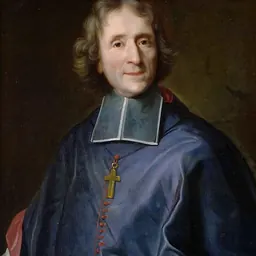
Bernières played an important role in a spiritual lineage extending from Chrysostome de Saint-Lô through Jacques Bertot, Madame Guyon, and François Fénelon, while his writings later entered German Protestant devotional culture through the translations and adaptations of Gerhard Tersteegen.
Life
Jean de Bernières was born in Caen into a prosperous Norman family connected with royal administration and commerce. Educated in law, he later held administrative responsibilities connected with the royal finances of Normandy. Following a period of intense religious conversion and ascetic discipline, he increasingly devoted himself to prayer, charitable activity, and spiritual direction.
Bernières came under the influence of the Capuchin friar Chrysostome de Saint-Lô, a major figure in the French school of interior spirituality. Through this relationship he entered a network of devout laypeople, clergy, missionaries, and contemplatives centred on inward prayer and evangelical poverty.
In Caen he established the Hermitage (Ermitage), a house of prayer, retreat, and charitable activity that became an important centre of spiritual life in seventeenth-century Normandy. Although not a monastery, the Hermitage functioned as a gathering place for clergy, religious, and lay seekers pursuing contemplative prayer and spiritual renewal.
Bernières devoted substantial personal wealth to charitable works, hospitals, relief for the poor, and missionary activity. He was closely associated with the early missions to New France. The future bishop François de Laval, first bishop of Quebec, resided for a time at the Hermitage before departing for Canada.
He died at Caen in 1659.
Spirituality
Bernières belonged to a broader seventeenth-century movement of French interior spirituality influenced by recollection traditions, the French school of spirituality, Franciscan devotion, and contemplative prayer. His writings stressed inward transformation rather than merely external religious observance.
Central themes in his spirituality included:
inward recollection and silence before God; continual prayer and attention to the divine presence; abandonment to providence; purification of self-love; conformity to Christ through inward self-emptying; experiential knowledge of God in the depths of the soul.
His spirituality emphasized the “interior life” (vie intérieure) as the true centre of Christian existence. Modern scholars have associated his writings with traditions of “experimental theology” that emphasized lived spiritual transformation and experiential awareness of God.
Writings
Bernières’s writings circulated widely in manuscript before appearing in print after his death. His best-known work is Le Chrétien intérieur (The Interior Christian), a devotional and mystical treatise describing the inward path of prayer and surrender to God.
His works combine practical spiritual instruction with reflections on contemplation, grace, self-denial, and divine union. They were widely read in devotional circles associated with contemplative prayer and interior recollection.
Reception and influence
Bernières exerted considerable influence upon the development of French interior spirituality. Through the Hermitage of Caen and its associated networks, his ideas shaped the spirituality of clergy, missionaries, and devotional writers in both France and New France.
His disciple Jacques Bertot became spiritual director to Madame Guyon, helping transmit elements of the Caen tradition into later currents of French mysticism associated with Guyon and François Fénelon.
Bernières also influenced Protestant devotional culture. In the eighteenth century, the German Reformed Pietist Gerhard Tersteegen translated and adapted portions of his writings for Protestant readers interested in contemplative spirituality.
Twentieth- and twenty-first-century scholarship has increasingly treated Bernières as an important representative of early modern Catholic mysticism and the wider European tradition of interior religion.
Works
Le Chrétien intérieur Œuvres spirituelles Lettres spirituelles
Don’t just read it —
keep it.
Full-length biographies made to live with: read them, listen on the way to work, watch them tonight.
- E-book
- Audio
- Video
Instant download · yours to keep · every purchase keeps this site free
Important facts
People in Jean de Bernieres-Louvigny's life
Named in this biography and alive at the same time



Related people
Same field, nearest in time

Contemporaries
People whose lives overlapped Jean de Bernieres-Louvigny's





Frequently asked questions
Who was Jean de Bernieres-Louvigny?
French mystic (1602–1659)
When was Jean de Bernieres-Louvigny born?
Jean de Bernieres-Louvigny was born in 1602 in Caen.
When did Jean de Bernieres-Louvigny die?
Jean de Bernieres-Louvigny died on 3 May 1659 in Caen.
What was Jean de Bernieres-Louvigny's occupation?
Jean de Bernieres-Louvigny was a writer, mystic and chamberlain.
What nationality was Jean de Bernieres-Louvigny?
Jean de Bernieres-Louvigny was French.
Sources & further reading
· Wikipedia: Jean de Bernieres-Louvigny
· DBpedia: Jean de Bernieres-Louvigny
Cite this page
APA: Biography.guide. (2026). Jean de Bernieres-Louvigny. https://biography.guide/jean-de-bernieres-louvigny/
MLA: "Jean de Bernieres-Louvigny." Biography.guide, https://biography.guide/jean-de-bernieres-louvigny/.
Chicago: "Jean de Bernieres-Louvigny." Biography.guide. https://biography.guide/jean-de-bernieres-louvigny/.
Data last updated: 2026-09-24 · Spot an error? Report a correction.
Page generated 2026-09-27 05:06 UTC