
About Jean Bouchéty
Lived 1920 – 2006 (aged 86). Jean Bouchéty was a French conductor, double-bassist, composer, bassist and musician.
Jean Bouchéty (March 1, 1920, L'Étang-la-Ville — July 19, 2006) was a French musician, bassist, composer and conductor. He has composed several soundtracks.
Biography
Period jazz In 1949, Jean Bouchéty was a double bass player in Geo Daly's jazz quartet, alongside Bernard Peiffer on piano and Roger Paraboschi on drums. They recorded the first 78 rpm by Geo Daly: "Nine O'Clock Jump" and "Moonglow" first with the Swing record label, then at Jazztime.
Conductor Jean Bouchéty accompanied with his orchestra a certain number of French singers in studio recordings. 1958: Hugues Aufray for the song "Le Poinçonneur des Lilas". 1959: Jean Philippe for the single whose song "Oui oui oui oui" represented France at the Eurovision Song Contest 1959. 1960: José Bartel for the song "In the streets of Bahia". 1961: Eddy Mitchell for the two songs on the 100% rock disc which is the first record of Les Chaussettes Noires. "Betty" by Mitchell and Bouchéty. "La Bamba Rock" (a version of Ritchie Valens's "La Bamba" arranged by Bouchéty). 1963: Claude François for several songs including "Dis-lui", "Walk Straight Ahead" and "I Would Like to Get Married". 1964: Eddy Mitchell for several songs including "Always a Corner That Reminds Me" 1964: Jean-Jacques Debout for the single including the songs "Our Fingers Crossed" 1966: Éric Charden for the song "You Will not See Me" (texts by Bryan Mu, aka Eric Charden). 1966: Eddy Mitchell for the album including "I Forgot to Forget It", "Société anonyme", "And Now", "What I'm Looking for is in You" 1966: Michel Orso for the song "Angélique" 1967: Michel Polnareff for the songs "Cuddly Soul", "The King of Ants", "Ta Ta Ta", "Under Which Star Am I Born?" 1967: Éric Charden for "The World is Gray, the World is Blue" 1967: Nicoletta for several songs including "Vis ta vie" and "Think of the Summer" 1967: Jacqueline Taïeb for "7 O'clock in the Morning" 1967: Michel Fugain for "I Will Not Have Time" 1968: Michel Fugain for the song "À nous deux Paris (Je pars)" 1968: Jacqueline Dulac for the song "Le Printemps à Paris". 1968: Nicoletta for several songs including "He Died the Sun" and "Live for Love" 1968: Eddy Mitchell for several songs including "I Love You Only" and "I Seed the Wind" 1970: Nicoletta for several songs including "La solitude ça existe pas" 1970: Mireille Mathieu for the songs "C'est Dommage" and "C'est un peu la France" 1971: Mireille Mathieu for the songs "Give Your Heart, Give Your Life", "I Do Not Know, Do Not Know", "You I Desire" 1972: Michel Fugai] and The Big Bazaar. All songs including "Une belle histoire" and "Fais comme l'oiseau" 1972: Daniel Guichard for the album including "La Tendresse" and "Do Not Cry Like That" 1973: Éric Vincent for the songs "Sans famille" and "So Many Things" 1974: Dalida for the song "He Had Just Turned 18" 1976: Éric Vincent for the songs "A Country Somewhere" and "The Flowers Fade Between My Fingers" 1980: Éric Vincent for the album "Harmoniques" 1983: Éric Vincent for the album "Voyage for the Immediate"
Soundtracks Maurice Geoffrey and Jean Bouchéty Jean-François Boulet, Alfred Rode, conductor of the orchestra: Jean Bouchéty (Éditions Salvet) 1965: Yoyo by Pierre Étaix, orchestration of Jean Bouchéty 1966: The Game Is Over by Roger Vadim, music by Jean Bouchéty and Jean-Pierre Bourtayre 1966: As Long as You've Got You're Health by Pierre Étaix, (as orchestrator) 1973: I Don't Know Much, But I'll Say Everything by Pierre Richard, musical arrangement by Jean Bouchéty 1975: Trop c'est trop by Didier Kaminka 1976: Under the Doctor by Gerry Poulson 1978: Lovelier than Love by Hans Dittmer 1980: C'est Encore Loin L'Amerique? by Roger Coggio 1980: Cherchez l'erreur by Serge Korber, music: Jean Bouchéty and Roger Candy 1981: Belles, blondes et bronzées by Max Pecas, music: Jean Bouchéty and Roger Candy 1981: Comment draguer toutes les filles by Michel Vocoret, music: Jean Bouchéty and Roger Candy 1982: Le Bourgeois gentilhomme (based on the play of the same name by Molière) by Roger Coggio, music: Jean Bouchéty and Roger Candy
Don’t just read it —
keep it.
Full-length biographies made to live with: read them, listen on the way to work, watch them tonight.
- E-book
- Audio
- Video
Instant download · yours to keep · every purchase keeps this site free
Important facts
People in Jean Bouchéty's life
Named in this biography and alive at the same time

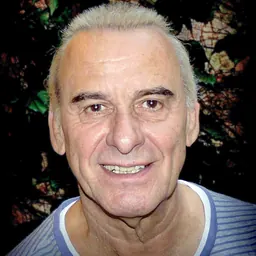
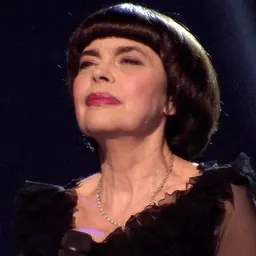
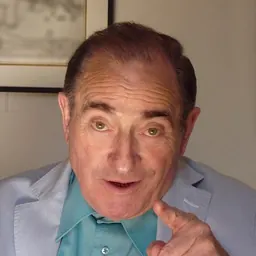

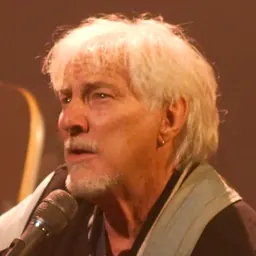
Related people
Same field, nearest in time


Contemporaries
People whose lives overlapped Jean Bouchéty's






Frequently asked questions
Who was Jean Bouchéty?
French bassist, composer, and conductor (1920-2006)
When was Jean Bouchéty born?
Jean Bouchéty was born on 1 March 1920 in L'Étang-la-Ville.
When did Jean Bouchéty die?
Jean Bouchéty died on 19 July 2006 in 17th arrondissement of Paris.
What was Jean Bouchéty's occupation?
Jean Bouchéty was a conductor, double-bassist, composer, bassist and musician.
What nationality was Jean Bouchéty?
Jean Bouchéty was French.
Sources & further reading
Cite this page
APA: Biography.guide. (2026). Jean Bouchéty. https://biography.guide/jean-bouchety/
MLA: "Jean Bouchéty." Biography.guide, https://biography.guide/jean-bouchety/.
Chicago: "Jean Bouchéty." Biography.guide. https://biography.guide/jean-bouchety/.
Data last updated: 2026-09-22 · Spot an error? Report a correction.
Page generated 2026-09-27 05:05 UTC