
About Jean Barbault
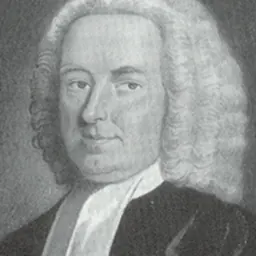
Lived 1705 – 1762 (aged 56–57). Jean Barbault was a French painter, graphic artist and printmaker.
Jean Barbault (c. 1718–1762) was a French painter, etcher and printmaker, who worked in Rome for most of his life. He is noted for paintings of local people, wearing traditional costumes or Oriental costumes and for his work documenting iconic Roman monuments and antiquities which were published in two volumes.
Life and career
Jean Barbault was born in Viarmes, France in around 1718 and was a student of Jean Restout II in Paris. Very little is known of his early life.
In 1745 he failed to win the Prix de Rome, but travelled to Rome in 1747 at his own expense and survived by undertaking engraving work. He spent most of his career in Italy, where he lived from around 1747. In 1748, he made engravings for the Varie vedute di Roma antica e moderna published in Rome.
Many of his works are small paintings depicting individual figures, either Italian women, or his fellow artists. Some twenty works made up the series, of which the painting, The Greek Sultana, originates. In these works, painters are represented wearing fantastical "Oriental" costumes which were very much in vogue during the mid-18th century. In this regard, Barbault became one of the earliest proponents of the representation of traditional costume, a custom that became fashionable and was emulated by many later French artists.
One of his larger works in oil on paper – almost four metres wide – depicts a group of artists taking part in a carnival procession entitled The Four Corners of the World (1751). It now forms part of the collection of the Musée des Beaux-Arts et d’Archéologie at Besançon. He is perhaps better known for his etchings, especially the two sets of prints he published, namely: Monuments de Rome ancienne and Rome Moderne, both published in folio form. He also made a few engravings, including The Martyrdom of St. Peter, after Subleyras, and The Arrival of Columbus in America, after Solimena.
He died in Rome in 1762, at the age of 43
An exhibition of his work was held in Beauvais, touring to Angers, Valence and Dijon, in 1974–75; another, which included about half of his known paintings, was staged at the Musée des Beaux-Arts in Strasbourg in 2010. doi:10.3931/e-rara-79835 (Digitized edition at E-rara). Les Plus Beaux Edifices de Rome Moderne, 1763 [Published posthumously]
Painting and etching The Painter Clément in Turkish Costume, 1748, red chalk, private collection The Greek Sultana, 1748 Temple Priest, 1748 Neapolitan Herder and a Cow leaving a Cave, circa 1750, oil on canvas, Musée des Beaux-Arts, Strasbourg Ruins with Pyramids, 1754 Peasant Woman of Frascati, 1762, oil on canvas La Vénitienne, date unknown Self-portrait, date unknown, Cini collection, Venice Two small paintings of Roman Ruins, Museum Cerralbo, Madrid.
Gallery
Don’t just read it —
keep it.
Full-length biographies made to live with: read them, listen on the way to work, watch them tonight.
- E-book
- Audio
- Video
Instant download · yours to keep · every purchase keeps this site free
Important facts
People in Jean Barbault's life
Named in this biography and alive at the same time
Related people
Same field, nearest in time



Contemporaries
People whose lives overlapped Jean Barbault's





Frequently asked questions
Who was Jean Barbault?
French painter (1718-1762)
When was Jean Barbault born?
Jean Barbault was born in 1705 in Viarmes.
When did Jean Barbault die?
Jean Barbault died on 28 May 1762 in Rome.
What was Jean Barbault's occupation?
Jean Barbault was a painter, graphic artist and printmaker.
What nationality was Jean Barbault?
Jean Barbault was French.
Sources & further reading
Cite this page
APA: Biography.guide. (2026). Jean Barbault. https://biography.guide/jean-barbault/
MLA: "Jean Barbault." Biography.guide, https://biography.guide/jean-barbault/.
Chicago: "Jean Barbault." Biography.guide. https://biography.guide/jean-barbault/.
Data last updated: 2026-09-20 · Spot an error? Report a correction.
Page generated 2026-09-27 05:17 UTC