
About Jean-Baptiste Denys
Lived 1635 – 1704 (aged 68–69). Jean-Baptiste Denys was a French philosopher, physician and mathematician.
Jean-Baptiste Denys ( – 3 October 1704) was a French physician notable for having performed the first fully documented human blood transfusion, a xenotransfusion. He studied in Montpellier and was the personal physician to King Louis XIV.
Early life Jean-Baptiste Denys was born in the 1630s, although his birth went unnoticed and undocumented. His father was an artisan who specialized in water pumps, which were seeing an increase in popularity and sophistication during the time of his birth. Denys' passion for medicine was also influenced due to his own suffering from asthma.
Education Denys obtained a bachelor's in theology at the and a medical degree from the Faculty of Medicine in Montpellier. Denys' ambition drew him to attempt a career in Paris, but the university's poor reputation made him an outsider to the Paris's wealthy scientific elite.
In Paris, he settled among the medical students in the Latin Quarter, to whom he would give anatomy lessons, encouraging the same hands-on approach as the Renaissance anatomist Andreas Vesalius. These lectures were primarily given to establish important connections within Paris's medical community, and they provided Denys with little income.
General context The years 1667 and 1668 were characterized by the growing frenzy over the possibility of blood transfusion.
The French and English were the main contestants in the battle to perform the first successful human blood transfusion. Members of the British Royal Society began by injecting doses of fluids into the veins of animals, proceeding with dog-to-dog transfusion. Similarly, the French Academy of Science tried canine experiments, but was unable to replicate the English success.
Attempts at blood transfusion Denys started a collaboration with the barber-surgeon Paul Emmerez (died 1690) to undertake blood transfusion, having been influenced by reports of English success. During one of his dissections, he shared with his students his belief that transfusion was the 'new and completely convincing proof' of the truth of circulation, who in contrast degraded him.
His first recorded case of blood transfusion was between two small dogs, both of which he intended to survive the procedure, in contrast to the results obtained by the English. Approximately nine ounces of blood was transfused from one dog to the other during this experiment. In his writings, Denys stated that one of the dogs suddenly weakened measurably, leading to the termination of the experiment. One dog remained weak while the other maintained a more energetic and alert character, although Denys did note that the dog was not as 'awake and gay' as it had been earlier. The physician then performed a control experiment with a third dog of similar characteristics with those prior. This was done to ensure that recorded effects, such as eye movement, food consumption, and the weights of the subjects were consistent among all three dogs and did not change due to outside elements.
Denys believed that blood transfusion would garner him recognition throughout all of Europe and the Parisian elite. On March 9, 1667, he made an announcement in the journal des sçavans, stating his intention to publicize his anatomical and experimental demonstrations of blood transfusion as a therapeutic tool. This established Denys as the primary transfusionist of France, thus going against the ideals of the Academy of Sciences of Paris, Faculty of Medicine, and those of Charles Perrault.
Denys later moved his research to the private academy established by Henri Louis Habert de Montmor, who saw an opportunity to surpass both the English and the conservative French Academy of Sciences and consequently gain his own glory. Denys and Emmerez, with the new funds and supplies, progressed their experiments on dogs with various techniques and points of transfusion. They regarded them all as successful, as of the nineteen dogs recorded, none died. They also focused on interspecies transfusion, starting in early April 1667 with transfusions between calves and dogs, then moving on to sheep, cows, horses, and goats.
Denys would go on to announce his successes to the European scientific community through written reports submitted to the Journal des sçavans, which enabled him to start a correspondence with Henry Oldenburg, and consequently the Philosophical Transaction. He omitted to credit the works done by English scientists, leading to many conflicts. He believed the next step was initiating a radical new procedure between humans and animals, utilizing as a prime example the lamb, the symbol of the blood of Christ, hence the purest form.
Human attempts First successful human blood transfusion, June 15, 1667Denys administered the first full documented xenotransfusion on June 15, 1667. With the assistance of Paul Emmerez he transfused about twelve ounces of lamb blood into the veins of a 15-year-old boy who had suffered from uncontrollable fevers for two months and had been consequently bled with leeches 20 times by a barber-surgeon, to no effect. After Denys' intervention, allegedly, by the next morning, the boy was alert, and seemingly cured of his illness.
He performed another transfusion on a middle-aged butcher with pleasing results. The man had not died and was found to be in great spirit. Realistically, both instances of success were most likely due to the small amount of blood that was actually transfused into these people, which did not trigger any major allergic reaction.
Antoine Mauroy In 1667 Denys became interested in the idea of treating Antoine Mauroy, a mentally-ill man who was well known around Paris.
Some time in November Montmor's guard abducted Mauroy from the streets and had him tied to a chair, where Denys performed a blood transfusion in front of an audience of noblemen. In the hours following the procedure, Mauroy experienced a debilitating fever, nausea, diarrhea, nosebleeds, and urine that was as black as 'chimney soot', fever, tachycardia, and abundant sweating. Just days later, the man had apparently fully recovered. This was the final proof for Denys, who immediately publicized his success, firstly by writing to Oldenburg, who published the letters received on the February 10, 1668 edition of the Philosophical Transactions Denys claimed that his 'essence' was much simpler to use compared to earlier methods of cautery which involved the use of caustic agents such as the 'needle and thread' and 'hot iron'. Denys' 'essence', of which the contents are unknown, is believed to contain a mixture of potassium alum and sulfuric acid, would be applied to arterial and venous wounds in order to staunch the bleeding. Recognizing the effectiveness of the 'essence' and foreshadowing the potential usefulness in the English army, Denys received recognition by King Charles II and was invited to stay with him in London as his First Physician, an offer which Denys declined in order to return to Paris in November 1673. This was probably the last mention of the 'essence' ever since.
The first fully documented experiment using Denys' blood staunching liquor was carried out on May 30, 1673 in London by English physician Walter Needham and surgeon Richard Wiseman. In an attempt to demonstrate the effectiveness of the 'essence', Needham cut open a dog's neck exposing the jugular vein and carotid artery. He then applied Denys' hemostatic liquor to the bleeding vessels and applied pressure using a pledget for 30 minutes. Upon removal of the pledge, free-flowing bleeding was no longer observed—the artery had been staunched. Under the order of King Charles II, the two proceeded to test the liquor on patients at the St Thomas' Hospital in Southwark, London; the same results were obtained.
Death Denys died in 1704 at the age of 69.
Don’t just read it —
keep it.
Full-length biographies made to live with: read them, listen on the way to work, watch them tonight.
- E-book
- Audio
- Video
Instant download · yours to keep · every purchase keeps this site free
Important facts
People in Jean-Baptiste Denys's life
Named in this biography and alive at the same time
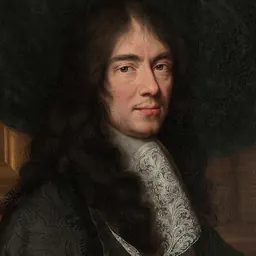
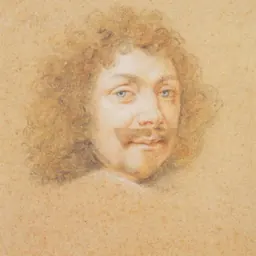



Related people
Same field, nearest in time

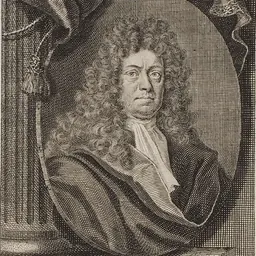

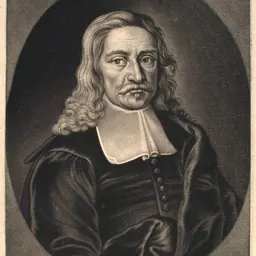
Contemporaries
People whose lives overlapped Jean-Baptiste Denys's






Frequently asked questions
Who was Jean-Baptiste Denys?
French physician
When was Jean-Baptiste Denys born?
Jean-Baptiste Denys was born in 1635 in Paris.
When did Jean-Baptiste Denys die?
Jean-Baptiste Denys died on 3 October 1704 in Paris.
What was Jean-Baptiste Denys's occupation?
Jean-Baptiste Denys was a philosopher, physician and mathematician.
What nationality was Jean-Baptiste Denys?
Jean-Baptiste Denys was French.
Sources & further reading
· Wikipedia: Jean-Baptiste Denys
· DBpedia: Jean-Baptiste Denys
Cite this page
APA: Biography.guide. (2026). Jean-Baptiste Denys. https://biography.guide/jean-baptiste-denys/
MLA: "Jean-Baptiste Denys." Biography.guide, https://biography.guide/jean-baptiste-denys/.
Chicago: "Jean-Baptiste Denys." Biography.guide. https://biography.guide/jean-baptiste-denys/.
Data last updated: 2026-09-20 · Spot an error? Report a correction.
Page generated 2026-09-27 05:31 UTC