
Jean-Baptiste André Godin
French industrialist, writer and political theorist
About Jean-Baptiste André Godin
Lived 1817 – 1888 (aged 70). Jean-Baptiste André Godin was a French politician, economist, businessperson, writer, industrialist and entrepreneur.
Jean-Baptiste André Godin (; 26 January 1817 – 15 January 1888) was a French industrialist, writer and political theorist, and social innovator. A manufacturer of cast-iron stoves and influenced by Charles Fourier, he developed and built an industrial and residential community within Guise called the Familistère de Guise (Social Palace). He ultimately converted it to cooperative ownership and management by workers. fr:Familistère de Guise Early life and education Born on 26 January 1817 at Esquéhéries (Aisne), Godin was the son of an artisan smith and his wife. Starting work at his father's forge, he entered an iron works at age eleven as an apprentice. At age seventeen, he made a tour of France as journeyman with his older cousin, Jean-Nicholas Moret, also an ironsmith.
Marriage and family In 1840, he first married Esther Lemaire, at the age of 23. They had a son M. Émile Godin.
On July 14, 1886, after his first wife had died, Godin married Marie-Adèle Moret (27 April 1840 - 18 April 1908), born in Brie-Comte-Robert (Seine-et- Marne). She was the second daughter of his cousin Jean-Nicholas Moret and his wife Marie-Jean Philippe. Before their marriage, she had worked at Le Familistère for nearly 25 years, where she established numerous services for families with children: the nursery, infant school, and primary school; taught teachers; and set up an insurance program for workers, as well as founding health facilities.
Career
Returning to Esquéhéries with his new wife in 1840, Godin started a small factory for the manufacture of castings for heating-stoves. That year he took out a patent for the stove, which he had invented. His intention was to improve housing for workers, but also "production, trade, supply, education, and recreation", all the facets of life of a modern worker.
The workers and residents did eventually come to own the buildings and the foundry. The foundry operated as a co-op or joint-stock company for decades.
The building housing the nourricerie-pouponnat was destroyed in 1918 during World War I and never rebuilt. The foundry was still owned by the workers in the 1950s, but shortly after that the manufacturer Le Creuset purchased it. In 1968 the cooperative association for the Social Palace was dissolved, and the apartments were sold at moderate prices by Godin S.A. They have been gradually modified through individual owners' decisions. The same year, the cooperative economats were dissolved. In 1991 its building was classified as a Monument Historique, and in 2000 restoration of the building was begun.
In the early 21st century, some of the domestic buildings were restored for private, adaptive use. Restoration of the economats building was completed in 2008, with spaces adapted as a cafe, a bookstore and gift shop, and an exhibition area.
The communal laundry rooms, baths and swimming pool, in a separate building on the opposite bank, where water was heated by the factory, had become derelict but have been restored. The communal laundry has been converted to a meeting room, and the drying room to an exhibition room.
Legacy and honors In 1882 Godin was created a Knight of the Legion of Honor. Working models of the Godin stoves are still to be found in use all over France, and some are for sale on eBay. Some of the domestic buildings at the Familistère have been updated for residents, and special purpose buildings have been restored for contemporary use. The site is open for visitors and tours, and there are plans to establish a museum of industry.
Works Solutions sociales (1871); Les Socialistes et les Droits du travail (1874); Mutualité sociale et association du capital et du travail (1880); and La Republique du travail et la reforme parlementaire (1889).
Don’t just read it —
keep it.
Full-length biographies made to live with: read them, listen on the way to work, watch them tonight.
- E-book
- Audio
- Video
Instant download · yours to keep · every purchase keeps this site free
Important facts
People in Jean-Baptiste André Godin's life
Named in this biography and alive at the same time
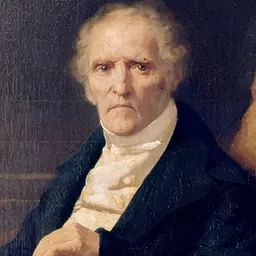
Related people
Same field, nearest in time




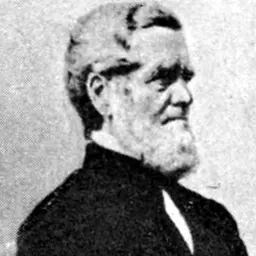

Contemporaries
People whose lives overlapped Jean-Baptiste André Godin's


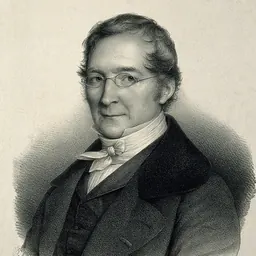

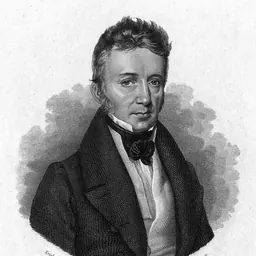
Frequently asked questions
Who was Jean-Baptiste André Godin?
French industrialist, writer and political theorist (1817-1888)
When was Jean-Baptiste André Godin born?
Jean-Baptiste André Godin was born on 26 January 1817 in Esquéhéries.
When did Jean-Baptiste André Godin die?
Jean-Baptiste André Godin died on 15 January 1888 in Guise.
What was Jean-Baptiste André Godin's occupation?
Jean-Baptiste André Godin was a politician, economist, businessperson, writer, industrialist and entrepreneur.
What nationality was Jean-Baptiste André Godin?
Jean-Baptiste André Godin was French.
Sources & further reading
· Wikipedia: Jean-Baptiste André Godin
· DBpedia: Jean-Baptiste André Godin
Cite this page
APA: Biography.guide. (2026). Jean-Baptiste André Godin. https://biography.guide/jean-baptiste-andre-godin/
MLA: "Jean-Baptiste André Godin." Biography.guide, https://biography.guide/jean-baptiste-andre-godin/.
Chicago: "Jean-Baptiste André Godin." Biography.guide. https://biography.guide/jean-baptiste-andre-godin/.
Data last updated: 2026-09-20 · Spot an error? Report a correction.
Page generated 2026-09-27 05:33 UTC