
About Jay Kochi
Lived 1927 – 2008 (aged 80–81). Jay Kochi was an American chemist.
Jay Kazuo Kochi (高知 和夫, Kōchi Kazuo, 1927–2008) was an American physical organometallic chemist who held lectureship at Harvard University, and faculty positions at Case Institute of Technology, 1962–1969, (now Case Western Reserve University), Indiana University, 1969 to 1984, and the University of Houston, 1984 to 2008.
Kochi received his Bachelor of Science degree from the University of California, Los Angeles in 1949 and his Ph.D. at Iowa State University in 1952 with George S. Hammond and Henry Gilman as advisors. He then spent short stints at Harvard University, Cambridge University, Shell Development Co., Case Institute of Technology (now Case Western Reserve University), and Indiana University. For the majority of his faculty career, however, he was located at the University of Houston, where he was Welch Professor.
Research Kochi's research examined the interactions of electron donors and acceptors. One topic of his study was the nitration of benzene to give nitrobenzene. Kochi's work showed that this reaction proceeds via a complex between benzene (the donor) and nitrosonium ion (the acceptor). He also contributed to many aspects of organometallic chemistry, including the discovery of Cu, Fe, and Ag-catalyzed cross-coupling processes (which preceded the discovery of the better known Pd and Ni-catalyzed versions), as well as several metal-catalyzed oxidative processes. At the time, these results were largely ignored by the synthetic organic chemistry community. Many decades later, interest in base metal catalysis sparked significant efforts to further develop cross-coupling reactions catalyzed by metals such as Fe in particular. His research in organometallic chemistry emphasized the importance of electron-transfer processes and radical species as intermediates. Many of these results (and the results of other investigators) are summarized in a monograph.
Awards and honors Kochi received many awards for his research, including election to the U.S. National Academy of Sciences. He developed the Kochi reaction, a variation on the Hunsdiecker reaction.
Personal life Kochi was of Japanese descent and he and his family were forcibly interned at the Gila River War Relocation Center during World War II. He died at his home in Houston, Texas on August 9, 2008, after a brief illness.
Don’t just read it —
keep it.
Full-length biographies made to live with: read them, listen on the way to work, watch them tonight.
- E-book
- Audio
- Video
Instant download · yours to keep · every purchase keeps this site free
Important facts
People in Jay Kochi's life
Named in this biography and alive at the same time


Related people
Same field, nearest in time


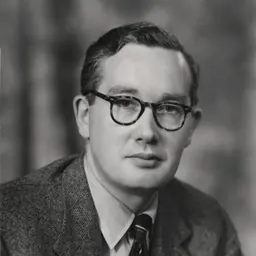

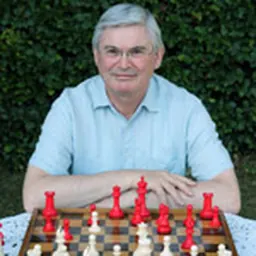
Contemporaries
People whose lives overlapped Jay Kochi's
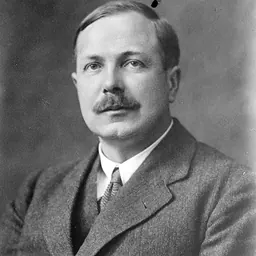

Frequently asked questions
Who was Jay Kochi?
American organic chemist (1927–2008)
When was Jay Kochi born?
Jay Kochi was born on 17 May 1927 in Los Angeles.
When did Jay Kochi die?
Jay Kochi died in 2008 in Houston.
What was Jay Kochi's occupation?
Jay Kochi was a chemist.
What nationality was Jay Kochi?
Jay Kochi was American.
Sources & further reading
Cite this page
APA: Biography.guide. (2026). Jay Kochi. https://biography.guide/jay-kochi/
MLA: "Jay Kochi." Biography.guide, https://biography.guide/jay-kochi/.
Chicago: "Jay Kochi." Biography.guide. https://biography.guide/jay-kochi/.
Data last updated: 2026-09-20 · Spot an error? Report a correction.
Page generated 2026-09-27 05:10 UTC