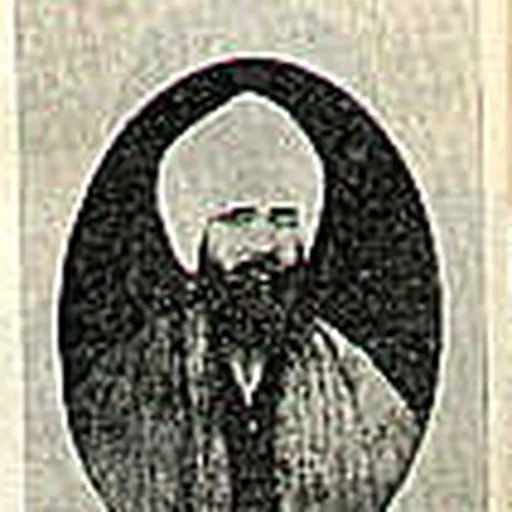
Jawahir Singh Kapur
Sikh reformer, civil servant and author
About Jawahir Singh Kapur
Lived 1858 – 1910 (aged 51–52).
Bhai Jawahir Singh Kapur (1858- 14 May 1910) was a leading figure of the Singh Sabha Movement, specifically the Lahore Singh Sabha. He was a social reformer, a civil worker, a poet, writer and proponent of the Khalsa Diwan (Lahore).
In his youth he was a proponent of the Gulabdasi sect, then the Arya Samaj, and finally he worked to improve the status of his own community, the Sikhs. He was a leading Sikh figure in the late 1800s owing to his contributions to the Sikh community by giving speeches and publications. He was also a moderate when it came to politics and issues during the time and created many controversies relating to his views.
After the excommunication of Prof. Gurmukh Singh in 1887, the unofficial title of leader of the Singh Sabha Movement fell on Bhai Jawahir Singh Kapur, till his death, and afterward on Sundar Singh Majithia.
Early life and family Maharaja Ranjit Singh had made the Kapur family the hereditary Head Granthis of the Golden Temple due their historical relevance in Kirtan in Amritsar and the Golden Temple, specifically his grandfather Bhai Mohar Singh, the Head Granthi of the Golden Temple, Amritsar and his father Bhai Atma Singh Kapur, also a Granthi in the Golden Temple who had a landholding in the Gujranwala District. Jawahir Singh Kapur and was born in Amritsar, in 1858. It is unknown whether he had a wife or children.
Gulabdasi Sect He was a follower of the Gulabdasi sect in his youth which was a materialistic sect that rose to prominence after the fall of the Sikh Empire in 1849.
Arya Samaji career He joined the Arya Samaj along with Bhai Ditt Singh and Bhai Maya Singh. In 1883 he was one of the main promoters of the D.A.V. College and helped found it as well. Soon later at the age of 19 he became the President of Arya Samaj, Lahore. Originally the Arya Samaj and Sikhs were on good terms, though it did not last very long.
He broke all ties with the Arya Samaj on 25 November 1885, when an Arya Samaji preacher named Pandit Guru Dutta spoke derogatorily about Guru Nanak Dev and Guru Gobind Singh on the eleventh annual meeting of the Arya Samaj. The base of the Arya Samaj broke up as all Sikhs who supported it left the Arya Samaj and created the Lahore Singh Sabha to fight against the Hindu and Christian crusade against Sikhism.
Raja Bikram Singh Ahluwalia and Sir Attar Singh of Bhadaur invited him into the Lahore Singh Sabha so that they could use his services, and he could give his services to his own community.
Sikh religious career He left the Arya Samaj very bitter, and his first public appearance was addressing meetings in Amritsar telling his Sikh audiences that the Arya Samaj had its institutions to teach Sanskrit and the Vedas, the Muslims had made provision for the teaching of the Quran at Aligarh, but the Sikhs had no institution for the study of Gurmukhi and the Guru Granth. His biographical details distinctly represent many of the features that I have associated with an Évolué class: the high ritual standing of an upper caste; a bureaucratic job, Anglo-Vernacular education, familiarity and use of 'print culture' and an active promotion of new voluntary associations. Bhagat Lakshman Singh called him 'the most learned Sikh of his time'. His candidature was rejected owing to his earlier religious affiliations and due to his earlier statements against Maharaja Duleep Singh. He first published three books criticising the Arya Samaj and sent them to Maharana Sajjan Singh of Udaipur who was regarded as the head of Arya Samjists. There were multiple threats of lawsuits and violence against Jawahir Singh, but he was still unfazed by it and continued to publish and speak against the Arya Samaj. He stated that the Sikh community should remain aloof from their activities. Most of the supporters were Namdharis who were peasants, artisans and agriculturalists who had nothing to lose, but wished to see Punjab drowned in blood. One Bawa Nihal Singh had published a book called 'Khurshid Khalsa', which emphasised that Duleep Singh would expel the British and receive prime ministership over the Punjab. They were the granddaughters of Maharaja Ranjit Singh, Emperor of the Punjab, Jammu & Kashmir and the North Western Frontier Province. In January 1886 he joined the North-Western Railways and slowly rose through the ranks and became Superintendent North-Western Railways. An Englishman, Dr. S. C. Oman, was appointed the principal.
Gallery
Don’t just read it —
keep it.
Full-length biographies made to live with: read them, listen on the way to work, watch them tonight.
- E-book
- Audio
- Video
Instant download · yours to keep · every purchase keeps this site free
Important facts
People in Jawahir Singh Kapur's life
Named in this biography and alive at the same time



Contemporaries
People whose lives overlapped Jawahir Singh Kapur's



Frequently asked questions
Who was Jawahir Singh Kapur?
Sikh reformer, civil servant and author (1858-1910)
When was Jawahir Singh Kapur born?
Jawahir Singh Kapur was born in 1858.
When did Jawahir Singh Kapur die?
Jawahir Singh Kapur died on 14 May 1910.
Sources & further reading
· Wikipedia: Jawahir Singh Kapur
· DBpedia: Jawahir Singh Kapur
Cite this page
APA: Biography.guide. (2026). Jawahir Singh Kapur. https://biography.guide/jawahir-singh-kapur/
MLA: "Jawahir Singh Kapur." Biography.guide, https://biography.guide/jawahir-singh-kapur/.
Chicago: "Jawahir Singh Kapur." Biography.guide. https://biography.guide/jawahir-singh-kapur/.
Data last updated: 2026-09-22 · Spot an error? Report a correction.
Portrait: Wikimedia Commons · author & licence
Page generated 2026-09-27 05:03 UTC