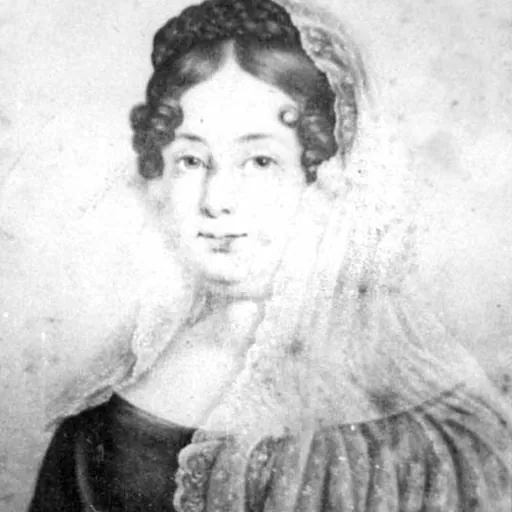
Javiera Carrera y Verdugo
Chilean aristocrat
About Javiera Carrera y Verdugo
Lived 1781 – 1862 (aged 81). Javiera Carrera y Verdugo was a Chilean.
Javiera Carrera in her old age. Anonymous painter, 19th century
Francisca Xaviera Eudoxia Rudecinda Carmen de los Dolores de la Carrera y Verdugo (March 1, 1781 – August 20, 1862), better known as Javiera Carrera, was a Chilean independence activist. Together with her brothers José Miguel, Juan José and Luis, she was one of the leading figures of the early Chilean struggle for independence during the period known as the Patria Vieja ("Old Republic"). She is credited with having sewn the first national flag of Chile and is considered to be the "Mother of Chile".
She was a member of one of the most aristocratic Chilean families, the Carrera family of Basque origin, and she actively participated in the Chilean War of Independence.
Early life She was born in Santiago, the oldest child of Ignacio de la Carrera y Cuevas and Francisca de Paula Verdugo Fernández de Valdivieso y Herrera. Although she received the conventional education given to women of her social class, she stood out from a young age for her intelligence, beauty and strong character.
She married young, on May 2, 1796, to Manuel de la Lastra y de la Sotta, with whom she had two children, Manuel and Dolores. Widowed at nineteen when her husband died in 1798, she remarried in 1800 to the Spanish lawyer and aristocrat Pedro Díaz de Valdés, who had come to Santiago as a councilman and adviser to the Captaincy General of Chile. They had five children: Pedro, Domitila, Pío, Santos and Ignacio, the last of whom, Santos Díaz de Valdés, would go on to have his own public career.
Independence activism During the time of the Patria Vieja ("Old Republic"), Javiera Carrera became the firmest supporter of her family in their struggle to achieve an independent Chile. This struggle for independence affected many Chilean families, leading to politics being introduced into family dynamics. The Carreras were no exception, and she took many actions to support her family's goals. Women often acted as couriers, petitioners, activists, spies, and other roles that supported the movement for Chilean independence. She organized and supported the social organizations that lent their backing to the nascent government, hid soldiers in her home, and was known for receiving, in the dead of night, ox-carts driven by huasos that carried weapons for distribution around the city; her role was so prominent that revolutionaries reportedly used the phrase "viva la Panchita" ("long live little Panchita") as a rallying watchword, and she was credited with lifting spirits during periods of military defeat. which, according to tradition, was first presented and raised on July 4, 1812, at a dinner held with the American consul Joel Roberts Poinsett to mark the anniversary of United States independence. Javiera often wrote letters to her husband during her exile, stating that her separation from her family was meant to protect them because of her family's political entanglements; she also wrote that leaving her family had deeply hurt her, and that she had brought her son Perico along as a consolation for her troubles.
She had difficult times in Buenos Aires, facing health problems and financial ruin, during which she began a romantic relationship with the Argentine-naturalized American captain David Jewett. She directed the so-called "conspiracy of 1817" against O'Higgins, which ultimately led to the execution of her brothers Luis and Juan José in Mendoza in 1818.
When José Miguel returned from the United States and became embroiled in disputes among the caudillos of the United Provinces of Río de la Plata, Javiera was banished to Luján and later to San José de Flores, near Buenos Aires, and was eventually confined to a convent in the capital by forces allied with San Martín and O'Higgins, who were enemies of the Carrera brothers. She had earlier received word of the executions of her brothers Juan José and Luis in 1818.
She refused to return to Chile so long as O'Higgins remained in power, whom she considered responsible for her brothers' deaths, reportedly vowing she would not go back while "that murderer governs my homeland."
Legacy Carrera is seen as a symbol of a Chilean woman standing up to authority, alongside Paula Jaraquemada and Inés Suárez. She is still invoked as a role model by contemporary protesters against mistreatment.
One of the most prestigious girls-only public schools in Santiago, Chile, is named after her: the Liceo A-1 Javiera Carrera (Public High School A-1 Javiera Carrera). One of its most famous students is the former Chilean president Michelle Bachelet.
Javiera Carrera was widely admired during the 19th century. Maria Graham, Miguel Luis Amunátegui, Vicente Grez and Benjamín Vicuña Mackenna wrote works that highlighted her patriotism and the defense of her brothers, portraying her as a strong, determined and educated woman.
Don’t just read it —
keep it.
Full-length biographies made to live with: read them, listen on the way to work, watch them tonight.
- E-book
- Audio
- Video
Instant download · yours to keep · every purchase keeps this site free
Important facts
People in Javiera Carrera y Verdugo's life
Named in this biography and alive at the same time


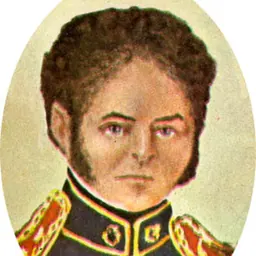


Contemporaries
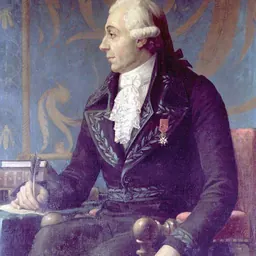
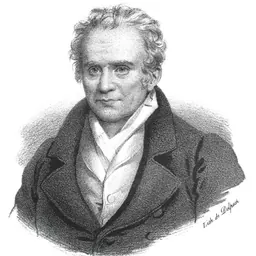
People whose lives overlapped Javiera Carrera y Verdugo's


Frequently asked questions
Who was Javiera Carrera y Verdugo?
Chilean aristocrat (1780-1862)
When was Javiera Carrera y Verdugo born?
Javiera Carrera y Verdugo was born on 1 March 1781 in Santiago.
When did Javiera Carrera y Verdugo die?
Javiera Carrera y Verdugo died on 20 August 1862 in Santiago.
What nationality was Javiera Carrera y Verdugo?
Javiera Carrera y Verdugo was Chilean.
Sources & further reading
· Wikipedia: Javiera Carrera y Verdugo
Cite this page
APA: Biography.guide. (2026). Javiera Carrera y Verdugo. https://biography.guide/javiera-carrera-y-verdugo/
MLA: "Javiera Carrera y Verdugo." Biography.guide, https://biography.guide/javiera-carrera-y-verdugo/.
Chicago: "Javiera Carrera y Verdugo." Biography.guide. https://biography.guide/javiera-carrera-y-verdugo/.
Data last updated: 2026-09-22 · Spot an error? Report a correction.
Portrait: Wikimedia Commons · author & licence
Page generated 2026-09-27 05:02 UTC