
About Janusz Gmitruk
Born 1948. Janusz Gmitruk is a Polish historian.
Janusz Gmitruk (born 17 February 1948 in Świniarów) is a Polish historian, museum curator, academic teacher, and Doctor of Humanities.
He is a specialist in contemporary Polish history and the peasant movement, as well as the martyrology of Polish villages, the Peasant Battalions, and the Polish Underground State during World War II, as well as the peasant resistance movement after the war. He is the author of numerous articles, books, and exhibitions on these topics. He has served as the long-time editor-in-chief of and , as well as the director of the Museum of the Polish Peasant Movement and president of the board of the People's Scientific and Cultural Society.
Biography
Childhood and education Janusz Gmitruk was born on 17 February 1948 in the village of Świniarów in Łosice County into a peasant family of Paweł Gmitriuk and Genowefa, née Oleksiuk. From 1955 to 1962, he attended Primary School No. 2 in Łosice, and later continued his education at Józef Pietruczuk High School, graduating in 1966. After passing the entrance exams, he began studying history at the Faculty of History of the University of Warsaw on 1 October 1966.
As a student, he participated in history competitions. His thesis, titled The Underground Peasant Movement in Siedlce County in 1939–1945, was supervised by Professor Stanisław Herbst, with Szaflik serving as the reviewer. During his university years, in 1970, he joined the United People's Party. He collaborated with notable figures such as General Franciszek Kamiński, the commander-in-chief of the Peasant Battalions, as well as , , , , , Czesław Poniecki, and . During this period, he also co-organized and organized exhibitions with the support of scholars such as Aleksander Łuczak and , as well as the United People's Party politician Jerzy Szymanek.
Gmitruk played a key role in the efforts that led to the establishment of the Museum of the Polish Peasant Movement in Warsaw in 1984. He collaborated on shaping the institution with , the special representative of United People's Party President Roman Malinowski for the organization of the museum, who later became its first director. For the museum's grand opening in 1985, Gmitruk, together with Sałkowski, organized the first exhibition, dedicated to the 90th anniversary of the Polish Peasant Movement, which was displayed at the National Museum of Ethnography. For the opening of the museum's headquarters at Żółta Karczma, he and his team prepared the exhibition Peasant Battalions (1940–1944). On 1 January 1990, the leadership of the new party appointed Gmitruk as director of the Institute of the History of the Peasant Movement. In this role, he secured the institute's collections and prepared them for further access by researchers studying Polish history and the history of the Polish peasant movement. His organizational and political skills, along with the strength of the peasant movement tradition, enabled the institute to withstand personnel changes and political upheavals.
Since 1992, Gmitruk has been the editor-in-chief of Roczniki Dziejów Ruchu Ludowego.
On 3 September 1997, the Minister of Culture and Art, Zdzisław Podkański, appointed Gmitruk as the director of the Museum of the Polish Peasant Movement for a five-year contract, which was later renewed multiple times. The museum became an organizational unit of the Masovian Voivodeship. Gmitruk also assumed the role of editor-in-chief of the journal . As the new director, he rejuvenated the museum's staff, and the institution itself underwent a transformation, opening up to new scientific communities. He was also a long-time member of the Workers' Council in the National Committee of the United People's Party, and, on its behalf, he chaired the Loan and Welfare Fund for 13 years (until the political transformation in 1989). Since 1992, he has been collaborating with the Main Board of the , where he is a member of the executive board, vice-chairman of the Historical Commission, and co-editor of the association's journal Zeszyty Historyczne ZG ZOSP.
Controversies In 2013, the lustration court imposed a five-year ban on Gmitruk holding public office and his eligibility for elections, including to the Sejm, after determining that he had submitted a false lustration declaration in 2007, in which he concealed his collaboration with the Security Service from 1974 to 1980. His file as a covert agent under the pseudonym XX-24 is included in the archival inventory of the Institute of National Remembrance. Gmitruk was accused of collaborating with the Security Service, with one of the key accusers being Andrzej Friszke, who stated that Gmitruk's reports to the Security Service had hindered his academic career.
Private life In his youth, Janusz Gmitruk played football and volleyball. He is passionate about photography (in March 1968, he was beaten by the Motorized Reserves of the Citizens' Militia officers while trying to document events at the university) and skiing in the Polish Tatra Mountains.
Publications Gmitruk is the author of articles published in journals such as Jutro Polski, Mówią Wieki, Polityka, Roczniki Dziejów Ruchu Ludowego, Rocznik Historyczny Muzeum Historii Polskiego Ruchu Ludowego, Strażak, Tygodnik Kulturalny, Wieści, Zielony Sztandar,
Awards and honors For his academic and professional work, he has been awarded, decorated, and distinguished with, among others:
In 1999, by President Aleksander Kwaśniewski, the Knight's Cross of the Order of Polonia Restituta Gold and Silver Cross of Merit
Don’t just read it —
keep it.
Full-length biographies made to live with: read them, listen on the way to work, watch them tonight.
- E-book
- Audio
- Video
Instant download · yours to keep · every purchase keeps this site free
Important facts
People in Janusz Gmitruk's life
Named in this biography and alive at the same time



Related people
Same field, nearest in time
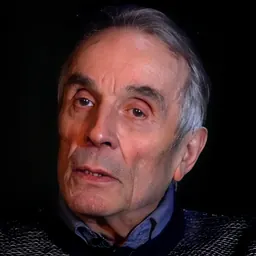
Contemporaries
People whose lives overlapped Janusz Gmitruk's
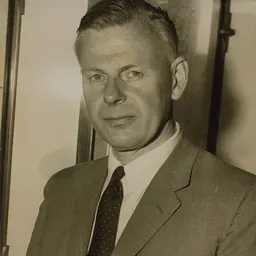
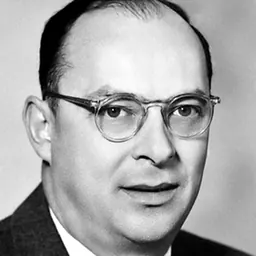
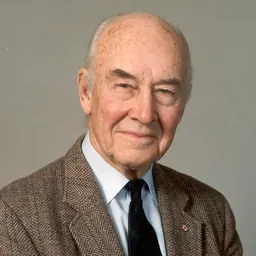
Frequently asked questions
Who is Janusz Gmitruk?
Polish historian
When was Janusz Gmitruk born?
Janusz Gmitruk was born in 1948 in Świniarów.
What is Janusz Gmitruk's occupation?
Janusz Gmitruk is a historian.
What nationality is Janusz Gmitruk?
Janusz Gmitruk is Polish.
Sources & further reading
Cite this page
APA: Biography.guide. (2026). Janusz Gmitruk. https://biography.guide/janusz-gmitruk/
MLA: "Janusz Gmitruk." Biography.guide, https://biography.guide/janusz-gmitruk/.
Chicago: "Janusz Gmitruk." Biography.guide. https://biography.guide/janusz-gmitruk/.
Data last updated: 2026-09-20 · Spot an error? Report a correction.
Page generated 2026-09-27 05:33 UTC