
About Janus Lascaris
Lived 1445 – 1534 (aged 88–89). Janus Lascaris was a Byzantine writer, diplomat and philologist.
Janus Lascaris (, Ianos Láskaris; c. 1445, Constantinople – 7 December 1535, Rome), also called John Rhyndacenus (from Rhyndacus, a country town in Asia Minor), was a noted Greek scholar in the Renaissance.
Biography After the Fall of Constantinople Lascaris was taken to the Peloponnese and to Crete. When still quite young he came to Venice, where Bessarion became his patron, and sent him to learn Latin at the University of Padua.
On the death of Bessarion, Lorenzo de' Medici welcomed him to Florence, where Lascaris gave Greek lectures on Thucydides, Demosthenes, Sophocles, and the Greek Anthology. Lorenzo sent him twice to Greece in quest of manuscripts. When he returned the second time (1492) he brought back about two hundred from Mount Athos.
Meanwhile, Lorenzo had died. Lascaris entered the service of the Kingdom of France and was ambassador of king Louis XII at Venice from 1503 to 1509. Upon the conclusion of the anti-Venetian League of Cambrai in December 1508, Lascaris was recalled from Venice and left the city in January 1509.
During his stay in Venice, he became a member of the New Academy of Aldus Manutius; but if the printer had the benefit of his advice, no Aldine work bears his name. He resided at Rome under Leo X, the first pope of the Medici family, from 1513 to 1518, returned under Clement VII in 1523, and Paul III in 1534.
In the meantime he had assisted Louis XII in forming the library of Blois, and when Francis I had it removed to Fontainebleau, Lascaris and Guillaume Budé had charge of its organization.
Lascaris prepared a number of editiones principes, among them the Anthologia Graeca (1494), four plays of Euripides, Callimachus (about 1495), Apollonius Rhodius, Lucian (1496), printed in Florence in Greek capitals with accents, the D-scholia (Rome 1517), the scholia of Porphyrius (1518) on Homer (Rome 1518), and the scholia vetera on Sophocles (Rome 1518).
Among his pupils were Alessandra Scala, Marco Musuro, Germain de Brie, Dimitrije Ljubavić, and Jacques Dubois.
He was buried in the gothic church of Sant'Agata de' Goti, Rome. On his memorial the following epigram is inscribed, composed by himself:
Don’t just read it —
keep it.
Full-length biographies made to live with: read them, listen on the way to work, watch them tonight.
- E-book
- Audio
- Video
Instant download · yours to keep · every purchase keeps this site free
Important facts
People in Janus Lascaris's life
Named in this biography and alive at the same time
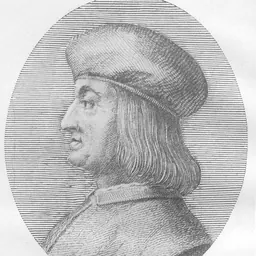




Related people
Same field, nearest in time
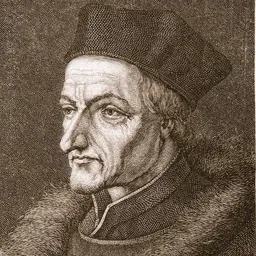
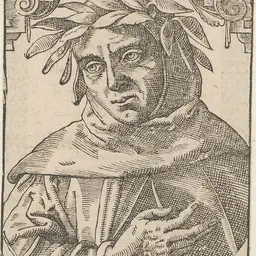
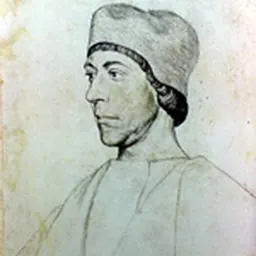

Contemporaries
People whose lives overlapped Janus Lascaris's

Frequently asked questions
Who was Janus Lascaris?
Greek humanist
When was Janus Lascaris born?
Janus Lascaris was born in 1445 in Constantinople.
When did Janus Lascaris die?
Janus Lascaris died on 7 December 1534 in Rome.
What was Janus Lascaris's occupation?
Janus Lascaris was a writer, diplomat and philologist.
What nationality was Janus Lascaris?
Janus Lascaris was Byzantine.
Sources & further reading
Cite this page
APA: Biography.guide. (2026). Janus Lascaris. https://biography.guide/janus-lascaris/
MLA: "Janus Lascaris." Biography.guide, https://biography.guide/janus-lascaris/.
Chicago: "Janus Lascaris." Biography.guide. https://biography.guide/janus-lascaris/.
Data last updated: 2026-09-20 · Spot an error? Report a correction.
Page generated 2026-09-27 05:19 UTC