
About Jangal Santhal
Lived 1925 – 1981 (aged 55–56). Jangal Santhal was an Indian politician and revolutionary.
Jangal Santhal, also known as Jangal Santal (1925 – 4 December 1988) was an Indian political activist.
He was from Hatighisa village, Darjeeling district in north West Bengal, was one of the founders of the Naxalite movement (along with Charu Majumdar and Kanu Sanyal).
Santhal started his political life in 1949 in Nepal. Santhal was a well-known figure among the Adivasi sharecroppers, peasants and tea labourers of the hill and tarai areas of Darjeeling district. He stood unsuccessfully for elections in February 1957 and 1962 as a Communist Party of India candidate and also in 1967 on the Communist Party of India (Marxist) ticket. He was one of the primary mobilizers and organizers of the uprising in Naxalbari and subsequent Naxalite movement that spread throughout India. After his release from prison a second time in 1977, he tried to reignite his vision for the Naxalite movement and India's communist parties, but soon became disillusioned at what they had become, sinking into a depression and turning towards alcoholism. He disappeared from public life at the same time. His legacy and reputation is very divisive, controversial and contentious, as differing factions within the Naxalite movement and Communist groups within India in general seek to propagate their own ideologies and visions.
Early life (1925–1949) Jangal Santhal's father name was Kanna Kisku. The Tebhaga Movement was the first movement Santhal got involved in. In 1952 Santhal had a conflict with jotedar, Serket Sing of Hatighisa, about the tebhaga issue (movement to reduce the landlord share of land to one third). The landholders refused to accept the terms dictated by their tenants and called in police causing many of the tebhaga activists arrested and jailed. The Communist party was also involved and felt that things were getting out of hand and the party's state leadership called off the agitation. In West Bengal on 2 March 1967, a United Front Government was formed by the Communist Party of India (Marxist). The CPI (M) after much deliberation denounced the violence in Naxalbari, from both the peasants and the police, and ordered extensive police action in Naxalbari to stop the revolt. The extensive police operations began on 12 July, and the United Front Government stamped out the rebellion after 72 days.
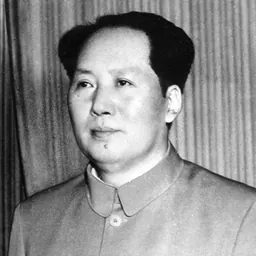
Charu Majumdar Charu Majumdar was a founder and chief theoretician of the Naxalite movement. Charu Mazumdar was inspired by early Naxalite leaders as well as by the success of Mao Zedong of China. Majumdar used Mao's ideas in the context of West Bengla and framed strategies to suit his surroundings to overthrow the ruling elite. He joined Tebhaga movement in 1946 before Santhal.
Communist Party of India (Marxist-Leninist)
Because of the violence and negative attention the Naxalbari Uprising had brought to the Communist Party of India (Marxist), the party leadership dispelled many members who participated or supported the uprising, with more members leaving on their own. Many of these expelled members went on to create the Communist Party of India (Marxist-Leninist) on 22 April 1969, and Jangal Santhal was present for its creation. In January 1970 he was given membership to the Provincial Committee of the Communist Party of India (Marxist-Leninist) at the West Bengal State Conference. On 31 July 1972, while Jangal Santhal was in prison, the Communist Party of India (Marxist-Leninist) was formally dissolved. Santhal was released in 1977, but found himself isolated. He wanted to revive the Naxalabri movement but became frustrated with things not gaining attention like they did before. He died on 4 December 1988.
Reputation and legacy According to peasants and tea garden workers, Santhal was an adored leader. He displayed courage, dedication, unparalleled discipline, and hard work. He was recognized by being given a membership in the Provincial Committee of the CPI (ML).
Although many praise Jangal Santhal for his work and focus on peasant tribal movements as they try to carve out a voice for themselves, this also plays into the reason why he is so often forgotten, as well as his dislike of unnecessary violence. As the Naxalite movement spread and fragmented into a multitude of subgroups with different views on topics such as violence, those groups did their best to wipe the original, non-violent, ideological origins of the movement. Due to that, memorials and the like around India, and Naxalbari specifically, for people like Jangal Santhal and his comrade Kanu Sanyal are non-existent, and their history has been largely forgotten.
Don’t just read it —
keep it.
Full-length biographies made to live with: read them, listen on the way to work, watch them tonight.
- E-book
- Audio
- Video
Instant download · yours to keep · every purchase keeps this site free
Important facts
People in Jangal Santhal's life
Named in this biography and alive at the same time

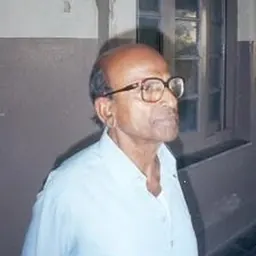
Related people
Same field, nearest in time





Contemporaries
People whose lives overlapped Jangal Santhal's



Frequently asked questions
Who was Jangal Santhal?
Indian politician
When was Jangal Santhal born?
Jangal Santhal was born in 1925 in Darjeeling district, West Bengal, India.
When did Jangal Santhal die?
Jangal Santhal died in 1981 in Darjeeling district, India, West Bengal.
What was Jangal Santhal's occupation?
Jangal Santhal was a politician and revolutionary.
What nationality was Jangal Santhal?
Jangal Santhal was Indian.
Sources & further reading
Cite this page
APA: Biography.guide. (2026). Jangal Santhal. https://biography.guide/jangal-santhal/
MLA: "Jangal Santhal." Biography.guide, https://biography.guide/jangal-santhal/.
Chicago: "Jangal Santhal." Biography.guide. https://biography.guide/jangal-santhal/.
Data last updated: 2026-09-20 · Spot an error? Report a correction.
Page generated 2026-09-27 05:26 UTC