
About Jang Do-young
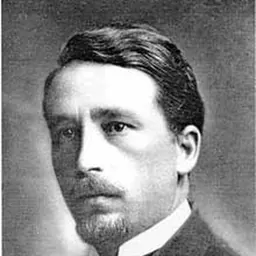
Lived 1923 – 2012 (aged 89). Jang Do-young was a South Korean politician, military officer and university teacher.
Chang Do-yong (; 23 January 1923 – 3 August 2012 ) was a South Korean general, politician and professor who, as the Army Chief of Staff, played a decisive role in the May 16 coup and was the first chairman of the interim Supreme Council for National Reconstruction for a short time until his imprisonment.
Early life and education Chang was born on 23 January 1923, in Ryūsen-gun, Heianhoku-dō, Korea, Empire of Japan. Chang attended Sinuiju High School(middle school). He graduated from the history department of Toyo University in 1944, planning to become a teacher, but instead attended and graduated from the Military Language School, the predecessor to the current Korea Military Academy.
Career World War Two and The Korean War Chang initially served in the Imperial Japanese Army during the Japanese occupation of Korea, and retired from the Japanese army after liberation with the rank of lieutenant. He was then commissioned into the army as a South Korean military officer. After serving as the commander of the 5th and 9th regiments, and as the head of the Army Counter Intelligence Corps, he commanded the 6th Infantry Division's forces, and during the initial stages of the Korean war his forces were defeated by Chinese forces at the battles of Sachang-ni, Hwacheon-gun, and Gangwon Province during the initial stages of the Chinese spring offensive. However, his forces quickly recovered and subsequently defeated the Chinese forces at the battle of Yongmunsan, making up for the defeat of the previous month. This indecisiveness has been seen as giving legitimacy to the coup. In addition, Chang later convinced then-prime minister Chang Myon, that a security report containing leaked details of the coup (when it was scheduled to occur on 12 May) was unreliable. This allowed the planners to postpone it to 16 May.
Rise and decline After the coup, Chang was appointed as a figurehead leader while Park held the real power. Soon afterwards, however, he formed a small faction of moderates, causing conflict with other more militarist officers, including Park. At his peak, Chang occupied four positions: chairman of the Supreme Council, prime minister, defense minister, and army chief of staff. Through May 1961, he attempted to gain recognition of the new government from the United States, meeting with John F. Kennedy on 24 May and promising a transfer to civilian control by 15 August (a priority for the US and president in name only Yun Posun, who Chang wanted to remain in office ) on 31 May. These moves quickly made him unpopular with the rest of the military leaders, who saw him as a threat to their power and the goals of the coup. In June, after winning the acceptance of the US, Park and his followers turned the tide against Chang by implementing laws to restrict his influence. On 3 July 1961, Chang, the ten MPs posted around him for security, and 44 other officers were arrested on charges of conspiring to execute a countercoup. There, Chang completed his doctorate in political science at the University of Michigan. Later, while teaching in the United States, he explained to an interviewer why he had been betrayed. In order to prevent Park's lust for power, he insisted on the transfer of power and explained that this was the case. The February 23, 1982 article from Korea JoongAng Daily, "Supreme Council for National Reconstruction, Issue 6" recalled, "Mr. Chang Do-yong recently recalled that he 'tried to set the period of military administration at six months,'" he recalled. "I thought our troops were well trained and would be able to restore order in 6 months. 'Let's hold elections in 6 months and create a new civilian government to raise the country. Leave this matter to me, without saying a word,'" he insisted to the Supreme Council. His subordinates did not listen to him.
The fact that Chang called for an early transfer of power is supported by various testimonies. But such claims are not the only cause of his disappearance. Chang claimed that he had visited South Korea in 1968 and met with Park as well as troops who participated in the Vietnam War. He joined Western Michigan University as an associate professor in 1971 and retired in 1993. By 2011, it was reported that he was suffering from dementia. He died on August 3, 2012, from complications of Parkinson's and Alzheimer's.
Works Yearning for Home , autobiography, 2001,
Honors Taegeuk Class Order of Military Merit Silver Star Medal
Don’t just read it —
keep it.
Full-length biographies made to live with: read them, listen on the way to work, watch them tonight.
- E-book
- Audio
- Video
Instant download · yours to keep · every purchase keeps this site free
Important facts
People in Jang Do-young's life
Named in this biography and alive at the same time


Related people
Same field, nearest in time





Contemporaries
People whose lives overlapped Jang Do-young's
Frequently asked questions
Who was Jang Do-young?
South Korean politician (1923-2012)
When was Jang Do-young born?
Jang Do-young was born on 23 January 1923 in Ryongchon County.
When did Jang Do-young die?
Jang Do-young died on 3 August 2012 in Orlando.
What was Jang Do-young's occupation?
Jang Do-young was a politician, military officer and university teacher.
What nationality was Jang Do-young?
Jang Do-young was South Korean.
Sources & further reading
Cite this page
APA: Biography.guide. (2026). Jang Do-young. https://biography.guide/jang-do-young/
MLA: "Jang Do-young." Biography.guide, https://biography.guide/jang-do-young/.
Chicago: "Jang Do-young." Biography.guide. https://biography.guide/jang-do-young/.
Data last updated: 2026-09-26 · Spot an error? Report a correction.
Page generated 2026-09-27 05:16 UTC