
Jane Fawcett
Code-breaker, singer, and preservationist
About Jane Fawcett
Lived 1921 – 2016 (aged 95). Jane Fawcett was a British preservationist, cryptographer, computer scientist, opera singer, cryptanalysis and historic preservation, known for Royal Navy.
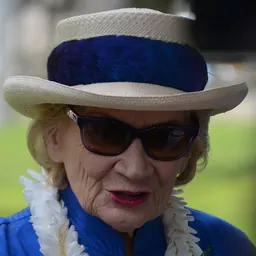
Jane Fawcett MBE (née Hughes; 4 March 1921 – 21 May 2016) was a British codebreaker, singer, and heritage preservationist. She recently became known for her role in decoding a message, which led to the sinking of the German battleship Bismarck. From 1963 to 1976 she served as the secretary of the Victorian Society. She wrote and edited works including The Future of the Past; Seven Victorian Architects; The Village in History and Save the City.
Early life Janet Carolin (or Caroline) Hughes was born on 4 March 1921 the daughter of George Hughes, the clerk of the Goldsmiths' livery company, and his wife, Margaret (nee Graham). Her paternal grandparents were Thomas McKenny Hughes, the 8th Woodwardian Professor of Geology at Cambridge University and Mary Caroline Hughes.
Jane was raised in London, attended Miss Ironside's School for Girls in Kensington, trained as a ballet dancer, and was admitted to the Royal Ballet School. She found that lifestyle boring, "a complete waste of time" She joined a group of women known as the "Debs of Bletchley Park", so called because they were women recruited from upper classes, debutantes, to work in secret as part of the Enigma project. After the war ended, she married Edward Fawcett, took his surname, and trained at the Royal Academy of Music. From the end of the war to the early 1960s, she had a 15-year career as an opera singer.
She was dubbed "the furious Mrs Fawcett" for her role in fighting with British Rail to preserve historic railway stations, and was instrumental in the 1967 preservation of St Pancras station in London
In 1976 Jane Fawcett was appointed MBE and stepped down from active leadership.
Publications
The future of the past: Attitudes to conservation, 1174-1974 (1976). Edited by Jane Fawcett. Thames and Hudson
Save the City: a conservation study of the City of London (1979). David Lloyd, Jennifer Freeman, Jane Fawcett.
The Village in History (1988). Jane Fawcett, Nigel Nicolson, Graham Nicholson. Weidenfeld & Nicolson Ltd
Seven Victorian Architects (1990). Jane Fawcett. Pennsylvania State University Press
Historic Floors: Their History and Conservation (1998). Jane Fawcett. Butterworth-Heinemann
Awards and recognition MBE (Member of the Order of the British Empire) in 1976 Honorary fellow of the Royal Institute of British Architects, 1976
Don’t just read it —
keep it.
Full-length biographies made to live with: read them, listen on the way to work, watch them tonight.
- E-book
- Audio
- Video
Instant download · yours to keep · every purchase keeps this site free
Important facts
People in Jane Fawcett's life
Named in this biography and alive at the same time





Related people
Same field, nearest in time





Contemporaries
People whose lives overlapped Jane Fawcett's





Frequently asked questions
Who was Jane Fawcett?
code-breaker, singer, and preservationist (1921-2016)
When was Jane Fawcett born?
Jane Fawcett was born on 4 March 1921 in Cambridge.
When did Jane Fawcett die?
Jane Fawcett died on 21 May 2016 in Oxford.
What was Jane Fawcett's occupation?
Jane Fawcett was a preservationist, cryptographer, computer scientist, opera singer, cryptanalysis and historic preservation.
What was Jane Fawcett known for?
Jane Fawcett was known for Royal Navy.
What nationality was Jane Fawcett?
Jane Fawcett was British.
Sources & further reading
Cite this page
APA: Biography.guide. (2026). Jane Fawcett. https://biography.guide/jane-fawcett/
MLA: "Jane Fawcett." Biography.guide, https://biography.guide/jane-fawcett/.
Chicago: "Jane Fawcett." Biography.guide. https://biography.guide/jane-fawcett/.
Data last updated: 2026-09-20 · Spot an error? Report a correction.
Page generated 2026-09-27 05:25 UTC