
About Jane Douglass White
Lived 1919 – 2008 (aged 89). Jane Douglass White was a singer-songwriter and composer.
Jane Douglass White (April 14, 1919 – April 26, 2008), born Ruby Jane Douglass (sometimes spelled Douglas), was an American Women's Army Corps officer, music educator and songwriter. A University of Oklahoma graduate, she wrote several songs during World War II to promote the corps; Captain Douglass was selected in 1944 to command the first all-woman Special Service company.
Before the war, Douglass taught vocal music in the Bristow, Oklahoma public schools. One of her songs, originally entitled "The WAAC is in Back of You", was adapted after the war into the official "Song of the Women's Army Corps". She was awarded a master's degree at Columbia University, while she studied piano with Anton Bilotti. After marriage, she changed her name to Jane Douglass White, becoming a prolific songwriter and music director for stage and television. A song she co-wrote with Sidney Shaw, "Love is a Gamble" was recorded by such artists as Eartha Kitt and Johnny Mathis.
She was an assistant producer with Harry Salter for the 1950s edition of television's Name That Tune and afterwards became a well-known Christian music entertainer. Douglass served as a musical director for Charles Colson's Prison Fellowship program.
Early life
Born in Coffeyville, Kansas, Ruby Jane Douglass grew up in a musical family with an older brother who could play anything "by ear." By the age of five, Ruby Jane was taking music lessons and singing with her family at the Presbyterian church. Before college, she had acquired training and experience in voice, piano, and electric organ. As a part of the "Debs in Swing Trio" she and two fellow Thetas entertained fellow Sooners at university alumni events. She was hired by the Bristow Public Schools after graduation and became supervisor of the district's vocal music department. By January 1941, she had copyrighted her first musical composition, "I Wished on a Star".
Military career After the attack on Pearl Harbor, Douglass volunteered for the new Women's Army Auxiliary Corps (WAAC) and was commissioned third officer. During basic training, Douglass taught her fellow WAACs the song, and soon it became a company favorite. Douglass several times was sent to New York City, involved in writing "There'll be a New Style Bonnet at the Easter Parade" and "Something New Has Been Added to the Army," two new songs for a soldier's show, a musical review for WAC performances, entitled P.F.C. Mary Brown, a WAC musical revue.
On September 22, 1943, Douglass was promoted to captain.
Before the move of the Daytona training facility to Fort Oglethorpe in January 1944, Douglass wrote "Farewell Daytona Beach". In summer 1944 Douglass was one of a group of Special Services WACs ordered to duty in Italy and France, directly entertaining troops and teaching those troops the songs, dances and patter of "blueprint specials." On a visit to Saint-Cloud, Douglass and her WACs were themselves honored with music, played by the French on instruments previously hidden from the Nazis during the occupation:
We stood at attention while the French flag was raised and the band played La Marseillaise. Then they raised Old Glory, and the band played probably the worst version of The Star-Spangled Banner that I have ever heard. They had no music and played it by ear. But they made a noble effort and as the tears streamed down my cheeks, I knew that I had never been more proud to be an American.|Jane Douglass White, 2002| After getting final approval from Lieutenant Colonel Anna W. Wilson, Douglass began the process of selecting the five officers and 109 soldiers who would compose the unit.
Songwriting career After returning to Oklahoma to visit family, Douglass moved to New York City where she wrote songs and studied for her master's degree at Columbia University. She discovered that her musicianship and wartime experiences gave her confidence to perform in New York City venues; she was quickly hired as the dining room pianist at the Park Sheraton Hotel.
Bilotti's brother-in-law, recently discharged army master sergeant Gail White met and befriended the ex-captain Douglass. In spring of 1948, the two army veterans co-wrote and published a song together, entitled "Do We?"; White and Douglass said "I do" to each other weeks later, getting married at New York City's Fifth Avenue Presbyterian Church. Working by mail with fellow WAC veteran Camilla Mays Frank to adjust lyrics, the song was adopted by the army as the official "Song of the Women's Army Corps" in 1951. In 1953, popular Hollywood movie star Francis the Talking Mule was utilizing White's and Frank's official corps march in the opening credits of the newest release Francis Joins the WACS.
Several of the songs she co-wrote with Sydney Shaw were published in 1958 by actor Burt Lancaster, producer Harold Hecht, and publisher Loring Buzzell via their music publishing companies Hecht-Lancaster & Buzzell Music and Calyork Music. Two of these, "Whispering Campaign" and "I Don't Want to Do a Thing but Love You" were recorded by The Temples for a single released Date Records in July 1958. "You're the Prettiest Thing" was recorded by Merv Griffin and The Spellbinders for a single released by Decca Records.
Theater career In 1969 White was operating the Grist Mill Playhouse, an Actor's Equity theater company, in Andover, New Jersey.
Janet and Jane In 1972, White partnered with mezzo soprano Janet Baird Weisiger to form the duo "Janet and Jane." The two toured the United States playing and singing Christian music; they recorded three albums together and in 1976 were averaging ten concert performances a month. By 1980, White was managing Messiah Music, a small Christian music publisher.
In 1991 White was still active in Prison Fellowship, Charles Colson's prison ministries program. White was providing seminar programs for the incarcerated and their families.
Gail and Jane White would remain married for 58 years until his death in 2006.
Selected works Compositions "The WAAC is in Back of You" as Ruby Jane Douglass (1943) "Empty Words" as Jane Douglass with Jimmy Gayle (1951) "It's the Fashion" with Thomas Henry O'Malley (1953) "French Poodle" recorded by Sam Butera and the Witnesses "Blue Jean Blues" with Richard Kleiner (1957) recorded by Sharon Strauss "Joanie" (1957) "The Garden" with Ruth Eby (1958) "(You're the) Purtiest Thing" recorded by Merv Griffin, recorded by Sharon Strauss "Lover's Quarrel" with Sharon Strauss (1961) "Julius" (1963) Songs of Joy and Praise As Sung By Janet and Jane with Janet Weisiger (1973), ten songs, Messiah Music "I Surrender" (1981) "The Shepherd Evangelist Pastoral Counselor Blues : (The Pastor's Song)" (1991)
Musicals Guardian Angel, a musical comedy in two acts and 12 scenes, music by Jane Douglass White, book and lyrics by Burton Crane (1955) Anyone for Love? a musical comedy in two acts, music by Jane Douglass White, book and lyrics by Burton Crane (1956) The Easter Yegg with Thomas Henry O'Malley (1997) The Christmas Caper : Where is the Love? a mini musical with Thomas Henry O'Malley (1997)
Don’t just read it —
keep it.
Full-length biographies made to live with: read them, listen on the way to work, watch them tonight.
- E-book
- Audio
- Video
Instant download · yours to keep · every purchase keeps this site free
Important facts
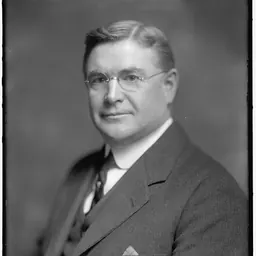
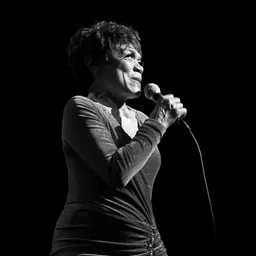
People in Jane Douglass White's life
Named in this biography and alive at the same time




Related people
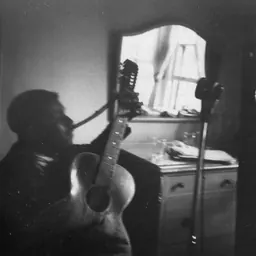
Same field, nearest in time




Contemporaries
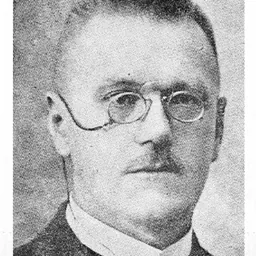
People whose lives overlapped Jane Douglass White's


Frequently asked questions
Who was Jane Douglass White?
American musician and army officer
When was Jane Douglass White born?
Jane Douglass White was born on 19 April 1919 in Coffeyville, Kansas.
When did Jane Douglass White die?
Jane Douglass White died on 26 April 2008.
What was Jane Douglass White's occupation?
Jane Douglass White was a singer-songwriter and composer.
Sources & further reading
· Wikipedia: Jane Douglass White
· DBpedia: Jane Douglass White
Cite this page
APA: Biography.guide. (2026). Jane Douglass White. https://biography.guide/jane-douglass-white/
MLA: "Jane Douglass White." Biography.guide, https://biography.guide/jane-douglass-white/.
Chicago: "Jane Douglass White." Biography.guide. https://biography.guide/jane-douglass-white/.
Data last updated: 2026-09-22 · Spot an error? Report a correction.
Page generated 2026-09-27 04:58 UTC