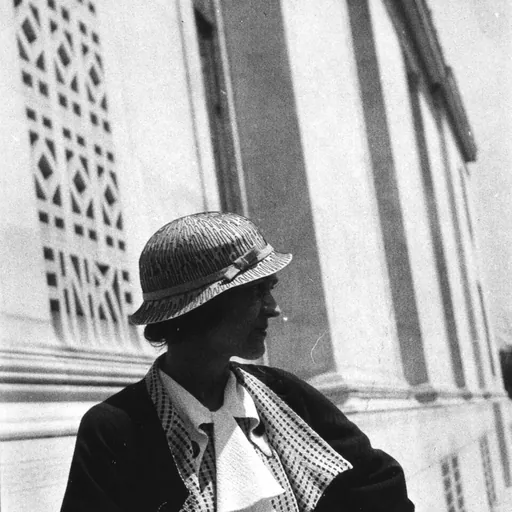
About Jane Dewey
Lived 1900 – 1976 (aged 76). Jane Dewey was an American physicist and university teacher.
Jane Mary Dewey (July 11, 1900 – September 19, 1976) was an American physicist.
Early life and education Jane Mary Dewey was born in Chicago, the daughter (and sixth child) of philosopher John Dewey and educator Alice Chipman Dewey. Her parents named her in honor of Jane Addams, an activist, sociologist, and reformer; and Mary Rozet Smith, a philanthropist who was Addams's longtime companion. She then moved to Princeton University, where she worked with Karl Taylor Compton with support from a National Research Council fellowship. In 1929, she became a faculty member at the University of Rochester, nominally under the geology department but in fact at the university's Institute of Applied Optics. Between her time at MIT and her time at Rochester, Dewey was a prolific author, publishing 8 articles in major science journals, the first being "Intensities in the Stark Effect of Helium," published in Physical Review in 1926. and she soon took on the position of department chair. However, her marriage — to fellow physicist J. Alston Clark — broke apart, and her health worsened, forcing her to take medical leave. During her absence, Bryn Mawr replaced her as chair with a male physics professor (Walter C. Michels), and Dewey was unemployed until 1940, when she found a part-time instructor position at Hunter College. Her health suddenly restored, she moved to industry, taking a wartime job at the United States Rubber Company and then, in 1947, a staff position at the Army's Ballistic Research Laboratory (BRL) at Aberdeen Proving Ground, where she headed the Terminal Ballistics Laboratory. In 1950, J. K. Mackenzie presented a similar derivation for a solid containing spherical holes. They both made the assumption that the distribution of the inclusions is diffuse enough that neighboring inclusions do not affect one another. This has led to similar derivations using this assumption being called "Dewey-Mackenzie estimates." Mackenzie's solution may be considered a special case of the more general and difficult problem that Dewey set herself and succeeded in solving exactly. As of 2021, her paper has been cited over 130 times in scientific journals. In fact, the approach in her original paper is now so well known that it is often referred to only indirectly, as a "Dewey-Mackenzie estimate," without citation.
Slade-Dewey equation While at BRL, one of her contributions to ballistic science has come to be known as the Slade-Dewey equation, which empirically relates the critical impact velocity Vt for initiating detonation of a solid secondary explosive or propellant to the diameter d of an impacting projectile, , where A and B are empirical constants that depend on the explosive.
Selected publications
Don’t just read it —
keep it.
Full-length biographies made to live with: read them, listen on the way to work, watch them tonight.
- E-book
- Audio
- Video
Instant download · yours to keep · every purchase keeps this site free
Important facts
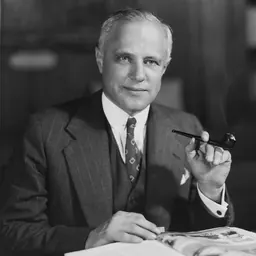
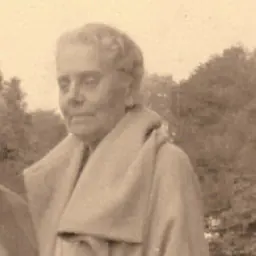
People in Jane Dewey's life
Named in this biography and alive at the same time




Related people
Same field, nearest in time
Contemporaries
People whose lives overlapped Jane Dewey's



Frequently asked questions
Who was Jane Dewey?
American physicist (1900–1976)
When was Jane Dewey born?
Jane Dewey was born on 11 July 1900 in Chicago.
When did Jane Dewey die?
Jane Dewey died on 19 September 1976.
What was Jane Dewey's occupation?
Jane Dewey was a physicist and university teacher.
What nationality was Jane Dewey?
Jane Dewey was American.
Sources & further reading
Cite this page
APA: Biography.guide. (2026). Jane Dewey. https://biography.guide/jane-dewey/
MLA: "Jane Dewey." Biography.guide, https://biography.guide/jane-dewey/.
Chicago: "Jane Dewey." Biography.guide. https://biography.guide/jane-dewey/.
Data last updated: 2026-09-23 · Spot an error? Report a correction.
Portrait: Wikimedia Commons · author & licence
Page generated 2026-09-27 05:07 UTC