
About Jan Szczepanik
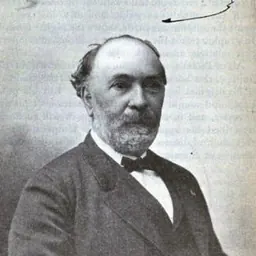
Lived 1872 – 1926 (aged 53). Jan Szczepanik was a Polish and Austrian inventor, chemist, teacher and technician.
Jan Szczepanik (June 13, 1872 – April 18, 1926) was a Polish inventor, with several hundred patents and over 50 discoveries to his name, many of which are still applied today, especially in the motion picture industry, as well as in photography and television. Some of his concepts developed the future evolution of TV broadcasting, such as the telectroscope (an apparatus for distant reproduction of images and sound using electricity) or the wireless telegraph, which greatly affected the development of telecommunications. He died in Tarnów in the Second Polish Republic.
Biography
Szczepanik was born in the Austrian Partition, in the village of Rudniki near Mościska (now Mostyska, Ukraine) but relocated as infant with his mother to Zręcin in the industrial region of Krosno, where he grew up. His birthplace was controlled by Austria-Hungary between 1772–1918 after the partitions of Poland. Szczepanik graduated from a teachers' college and spent a lot of time reading scientific literature and journals. He moved to Vienna after his attempt to advance the Jacquard loom from France (invented in 1801) was rejected by some local weavers for fear of losing business. His knowledge of fabric however, enabled him to create the first ballistic vest using silk. Spanish king Alfonso XIII (who used it in 1901) awarded him an order for its invention. The Emperor gave him a pair of pistols for that as a souvenir.
Before World War I, Szczepanik carried out experiments with photography and image projection, as well as with small format color film. He holds patents for a new weaving method, a system of obtaining tri-color photography rasters, and equipment for sound recording and playback.
Following the discoverer's idea, Agfa corporation produced its Agfacolor reversible paper; color films were also made for the first time, projecting 24 frames per second. Szczepanik's more significant discoveries also include the colorimeter (a color control tool), an electric rifle, and a color image weaving method, together with the automation of their production.
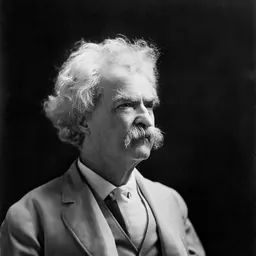
Szczepanik also worked on a moving wing aircraft, a duplex rotor helicopter, a dirigible, and a submarine. Mark Twain met Szczepanik and described him in two of his articles: "The Austrian Edison keeping school again" (1898) and "From The Times of 1904" (1898).
Don’t just read it —
keep it.
Full-length biographies made to live with: read them, listen on the way to work, watch them tonight.
- E-book
- Audio
- Video
Instant download · yours to keep · every purchase keeps this site free
Important facts
People in Jan Szczepanik's life
Named in this biography and alive at the same time
Related people
Same field, nearest in time

Contemporaries
People whose lives overlapped Jan Szczepanik's


Frequently asked questions
Who was Jan Szczepanik?
Polish inventor (1872-1926)
When was Jan Szczepanik born?
Jan Szczepanik was born on 13 June 1872 in Mostyska.
When did Jan Szczepanik die?
Jan Szczepanik died on 18 April 1926 in Tarnów.
What was Jan Szczepanik's occupation?
Jan Szczepanik was an inventor, chemist, teacher and technician.
What nationality was Jan Szczepanik?
Jan Szczepanik was Polish and Austrian.
Sources & further reading
Cite this page
APA: Biography.guide. (2026). Jan Szczepanik. https://biography.guide/jan-szczepanik/
MLA: "Jan Szczepanik." Biography.guide, https://biography.guide/jan-szczepanik/.
Chicago: "Jan Szczepanik." Biography.guide. https://biography.guide/jan-szczepanik/.
Data last updated: 2026-09-22 · Spot an error? Report a correction.
Page generated 2026-09-27 05:28 UTC