
About Jan Piotr Sapieha
Lived 1569 – 1611 (aged 41–42). Jan Piotr Sapieha was a Polish military personnel, military commander, politician, diplomat and governor.
Jan Piotr Sapieha (; ; 1569–1611) was a Polish–Lithuanian nobleman (szlachcic), general, politician, diplomat, governor of Uświat county, member of the Parliament and a skilled commander of the Polish troops stationing in the Moscow Kremlin.
Sapieha was a participant in the Polish–Swedish War of 1600–1611; he brought a private regiment of 100 Cossacks and commanded the right wing of the Polish–Lithuanian army during the famous Battle of Kircholm in 1605, consisting of 400 winged hussars and 700 mounted Cossacks. He also participated in the Polish–Russian War of 1609–1618, where he commanded the failed siege of Troitse-Sergiyeva Lavra in 1608 and later fought anti-Polish Muscovite forces near Moscow, led by Prokopy Lyapunov. He died suddenly on 15 October, during the siege of the Moscow Kremlin.
Known for his ruthlessness towards the Russian peoples, he was nicknamed Pan Hetman, literally meaning Mr General. he offered his services to False Dimitri. Under Dimitri he captured the city of Wiaźma and successfully crushed the Vasili IV Shuysky troops on 2 October 1608. In 1609, he commanded the unresolved battle near Kalyazin on the Volga river. After the start of king Sigismund's Moscow expedition in 1605 (known as the Dimitriads), initially Sapieha preferred to live in peace and not support the monarch at this occasion, however, under the heavy pressure of the Polish nobility and the army, he was not able to refuse and decided to aid the king in the battles on Russian territory. On 25 June 1610, the gathered troops chose Jan Piotr Sapieha as their Hetman, who would replace the previously deceased General Różyński. In July, he sent Sapieha to Moscow where, on 27 August he signed an agreement with the Boyar Duma that deposed False Dimitri and instead give the tsarist crown to Prince Władysław (future king Władysław IV).
After the death of Dmitri, in December 1610, Sapieha unsuccessfully tried to capture the village of Kaluga, however, he was more successful in capturing the town of Peremyszl later on. From January to March 1611 he led the negotiations with the boyars and hoped to either weaken the position of the king's troops favoured, supported and personally commanded by the great Hetman Stanisław Żółkiewski, or place himself on the Russian throne. On 27 March 1611 the king, worried about his "popularity" among the military commanders in the East, promised Sapieha payment and salaries in order to receive more troops. Eventually the monarch gained the trust of the Hetman. Jan Piotr joined him on 8 May, and on 18 June they arrived in Moscow; however, he was displeased and somewhat refused to fight that besieged the Moscow Kremlin. Demoralized by the lack of paid salaries and of poor hygienic conditions in the camps, the Polish soldiers fell into mental apathy and immediately stopped fighting. On 15 September Sapieha became seriously ill and was transferred to the central Kremlin palace, where he died on 15 October 1611.
Marriage and issue Jan Piotr married Zofia Weiher h. Weiher and had nine children. Among others:
Andrzej Stanisław Sapieha, castellan of Trakai and Vilnius, married Anna Heidenstein Paweł Jan Sapieha, Hetman, married firstly Zofia Zienowicz and secondly Barbara Kopeć Krystyna Sapieha, married firstly Voivode of Rawa and Łęczyca Stanisław Radziejowski h. Junosza and secondly Voivode of Inowrocław Krzysztof Gembicki h. Nałęcz
Legacy Jan Piotr Sapieha is one of the personas on the famous painting by Jan Matejko: Kazanie Skargi (The Sermon of Piotr Skarga).
Polish actor Michał Żebrowski portrayed Hetman Kybowsky (character loosely based on Jan Piotr Sapieha) in the 2007 Russian historical film 1612.
Works Dzieje Marsa krwawego i sprawy odważne, rycerskie przez Wielmożnego Pana Jego Mości Pana Jana Piotra Sapiehę starostę uświadzkiego w monarchii moskiewskiej od roku 1608 do roku 1612 sławnie odprawowane. (diary)
Ancestors
Don’t just read it —
keep it.
Full-length biographies made to live with: read them, listen on the way to work, watch them tonight.
- E-book
- Audio
- Video
Instant download · yours to keep · every purchase keeps this site free
Important facts
Family & relationships
People in Jan Piotr Sapieha's life
Named in this biography and alive at the same time

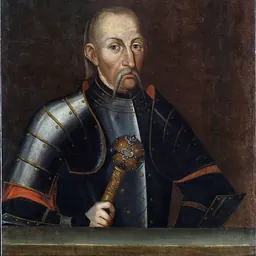
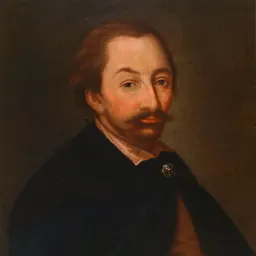

Related people
Same field, nearest in time
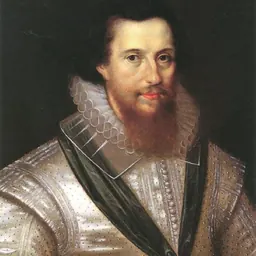
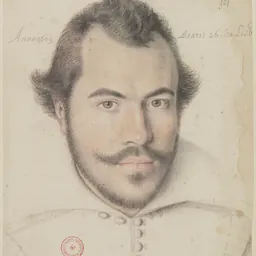


Contemporaries
People whose lives overlapped Jan Piotr Sapieha's


Frequently asked questions
Who was Jan Piotr Sapieha?
Polish noble
When was Jan Piotr Sapieha born?
Jan Piotr Sapieha was born in 1569 in Bychaŭ.
When did Jan Piotr Sapieha die?
Jan Piotr Sapieha died on 15 October 1611 in Moscow.
What was Jan Piotr Sapieha's occupation?
Jan Piotr Sapieha was a military personnel, military commander, politician, diplomat and governor.
What nationality was Jan Piotr Sapieha?
Jan Piotr Sapieha was Polish.
Sources & further reading
· Wikipedia: Jan Piotr Sapieha
Cite this page
APA: Biography.guide. (2026). Jan Piotr Sapieha. https://biography.guide/jan-piotr-sapieha/
MLA: "Jan Piotr Sapieha." Biography.guide, https://biography.guide/jan-piotr-sapieha/.
Chicago: "Jan Piotr Sapieha." Biography.guide. https://biography.guide/jan-piotr-sapieha/.
Data last updated: 2026-09-20 · Spot an error? Report a correction.
Page generated 2026-09-27 05:27 UTC