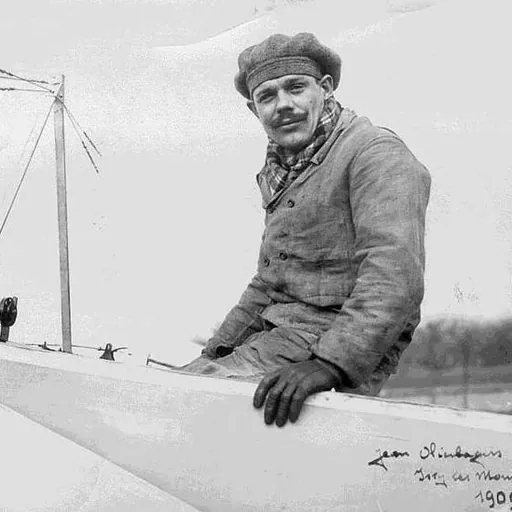
About Jan Olieslagers
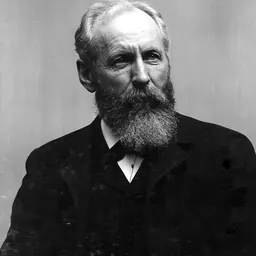
Lived 1883 – 1942 (aged 58). Jan Olieslagers was a Belgian sport cyclist, motorcycle racer, aircraft pilot, military personnel and fighter pilot.
Lieutenant Jan Olieslagers was a Belgian motorcycle and aviation pioneer who set world records with both types of machinery. He became a flying ace during World War I despite his indifference in claiming victories; he was credited with six confirmed victories, seventeen unconfirmed, and an unknown number unclaimed. He later was instrumental in developing Antwerp's airport.
Minor planet 9684 is named after him.
Pre-World War I activities Lieutenant Jan Olieslagers turned in his bicycle to become an early motorcycle speed record holder; he was the first to go per hour, and was 1902 World Champion. In 1909, he purchased a Blériot monoplane, receiving Pilot's Brevet No. 5 in October. In 1910, he won the Meeting d'Aviation de Rheims. By 1913, he had set seven world aviation records. In June 1914, he proved himself as good an aerobaticist as Roland Garros.
World War I At the beginning of World War I, when the Germans invaded his native Belgium, the German government tried to enlist Olieslagers in aerial observation duties. He volunteered himself and his Blériot XI airplane to his nation's military, as did his two brothers, Jules and Max. Jan Olieslagers was promoted to Sergeant, then commissioned before the end of 1914.
He then had a string of four unconfirmed claims before he traded his Nieuport 10 for a Nieuport 11. He scored his second confirmed victory on 17 June 1916, destroying a Fokker D.II over Pijpegale, Belgium. Seven more unconfirmed claims for aerial victories while flying the Nieuport 11 closed out 1917.
Olieslagers seems to have begun 1917 with a newer Nieuport, but with two more unconfirmed victories in his newly acquired Hanriot HD.1. Then, on 14 June, he destroyed a German reconnaissance plane over Schore. The following day, he scored for the fourth time, setting a Fokker D. II afire over Keiem. Two more unconfirmed wins followed. Then, on 4 November 1917, he fainted while flying and crashed onto Les Moeres aerodrome. He was taken to hospital in a coma, but aroused a few days later. Belgium was once again occupied by the Germans. Although the Nazis had banned both the playing of the Belgian national anthem and the display of the Belgian flag, as a mark of his nation's regard, Olieslagers' casket was defiantly draped with the flag he had served so well, while the Belgian National Hymn was played in his honor.
Don’t just read it —
keep it.
Full-length biographies made to live with: read them, listen on the way to work, watch them tonight.
- E-book
- Audio
- Video
Instant download · yours to keep · every purchase keeps this site free
Important facts
People in Jan Olieslagers's life
Named in this biography and alive at the same time
Related people
Same field, nearest in time



Contemporaries
People whose lives overlapped Jan Olieslagers's



Frequently asked questions
Who was Jan Olieslagers?
Belgian flying ace (1883-1942)
When was Jan Olieslagers born?
Jan Olieslagers was born on 4 May 1883 in Antwerp.
When did Jan Olieslagers die?
Jan Olieslagers died on 23 March 1942 in Berchem.
What was Jan Olieslagers's occupation?
Jan Olieslagers was a sport cyclist, motorcycle racer, aircraft pilot, military personnel and fighter pilot.
What nationality was Jan Olieslagers?
Jan Olieslagers was Belgian.
Sources & further reading
Cite this page
APA: Biography.guide. (2026). Jan Olieslagers. https://biography.guide/jan-olieslagers/
MLA: "Jan Olieslagers." Biography.guide, https://biography.guide/jan-olieslagers/.
Chicago: "Jan Olieslagers." Biography.guide. https://biography.guide/jan-olieslagers/.
Data last updated: 2026-09-22 · Spot an error? Report a correction.
Portrait: Wikimedia Commons · author & licence
Page generated 2026-09-27 05:04 UTC