
About Jan Długosz
Lived 1415 – 1480 (aged 64). Jan Długosz was a diplomat, military personnel, historian, catholic priest, geographer and heraldist.
Jan Długosz (; 1 December 1415 – 19 May 1480), also known in Latin as Johannes Longinus, was a Polish priest, chronicler, diplomat, soldier, and secretary to Bishop Zbigniew Oleśnicki of Kraków. He is considered Poland's first historian.
Life
Długosz was born in 1415 in Brzeźnica in the Sieradz Land, into a family of noble origin. His father was Jan of Niedzielsko of the Wieniawa coat of arms, and his mother was Beta, the daughter of Marcin of Borowno. Długosz grew up in the legend of the Battle of Grunwald, in which his father had fought and for which he received the starostwo of Brzeźnica, and later also an office in Nowe Miasto Korczyn. It was there that Długosz attended the parish school. In 1436 he received priestly ordination and became a canon of Kraków.
In 1434, Długosz's uncle, the first pastor at Kłobuck, appointed him to take over his position as canon of St. Martin church there. The town was in the Opole territory of Silesia, but had recently been conquered by Władysław II Jagiełło. Długosz stayed until 1452 and while there, founded the canonical monastery.
In 1450, Długosz was sent by Queen Sophia of Halshany and King Casimir to conduct peace negotiations between John Hunyadi and the Bohemian noble Jan Jiskra of Brandýs, and after six days' of talks convinced them to sign a truce.
In 1455 in Kraków, a fire spread which destroyed much of the city and the castle, but which spared Długosz's House.
In 1461 a Polish delegation which included Długosz met with emissaries of George of Podebrady in Bytom, Silesia. After six days of talks, they concluded an alliance between the two factions. In 1466 Długosz was sent to the legate of Wrocław, in order to attempt to obtain assurance that the legate was not biased in favor of the Teutonic Knights. He was successful, and was in 1467 entrusted with tutoring the king's son.
Długosz declined the offer of the Archbishopric of Prague, but shortly before his death was nominated Archbishop of Lwów. This nomination was only confirmed by Pope Sixtus IV on 2 June 1480, two weeks after his death.
His work Banderia Prutenorum of 1448 is his description of the 1410 Battle of Grunwald, which took place between villages of Grunwald and Stębark.
At some point in his life Długosz loosely translated Wigand of Marburg's Chronica nova Prutenica from Middle High German into Latin, however with many mistakes and mixup of names and places.
Works Jan Długosz is best known for his (Annales seu cronici incliti regni Poloniae) in 12 volumes and originally written in Latin, covering events throughout southeastern and western Europe, from 965 to 1480, the year he died. Długosz combined features of Medieval chronicles with elements of humanistic historiography. For writing the history of the Kingdom of Poland, Długosz also used Ruthenian chronicles including those that did not survive to our times (among which there could have been used the Kyiv collection of chronicles of the 11th century in the Przemysl's edition around 1100 and the Przemysl episcopal collections of 1225–40).
His work was first printed in 1701–1703. It was originally printed at the Jan Szeliga printing house in Dobromyl financed by Jan Szczęsny Herburt. Liber beneficiorum dioecesis Cracoviensis Annales seu cronicae incliti Regni Poloniae (Annals or Chronicles of the Famous Kingdom of Poland) Roczniki, czyli kroniki sławnego Królestwa Polskiego (new Polish translation of the Annals, 1961–2006) The Annals of Jan Dlugosz (English translation of key sections of the work, )
Historiae Polonicae libri xii (Polish Histories, in Twelve Books; written 1455–80; first published 1711–12, in 2 volumes) Banderia Prutenorum, flag book, completed in or shortly after 1448, when painted the illuminations.
Don’t just read it —
keep it.
Full-length biographies made to live with: read them, listen on the way to work, watch them tonight.
- E-book
- Audio
- Video
Instant download · yours to keep · every purchase keeps this site free
Important facts
People in Jan Długosz's life
Named in this biography and alive at the same time
Related people
Same field, nearest in time




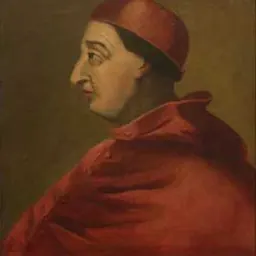
Contemporaries
People whose lives overlapped Jan Długosz's
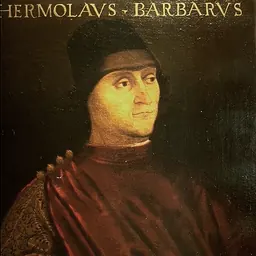



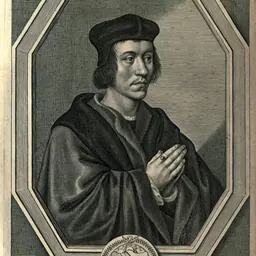
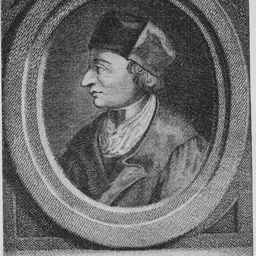
Frequently asked questions
Who was Jan Długosz?
Polish archbishop and historian
When was Jan Długosz born?
Jan Długosz was born on 1 December 1415 in Nowa Brzeźnica.
When did Jan Długosz die?
Jan Długosz died on 19 May 1480 in Kraków.
What was Jan Długosz's occupation?
Jan Długosz was a diplomat, military personnel, historian, catholic priest, geographer and heraldist.
What nationality was Jan Długosz?
Jan Długosz's recorded nationality: Crown of the Kingdom of Poland.
Sources & further reading
Cite this page
APA: Biography.guide. (2026). Jan Długosz. https://biography.guide/jan-dlugosz/
MLA: "Jan Długosz." Biography.guide, https://biography.guide/jan-dlugosz/.
Chicago: "Jan Długosz." Biography.guide. https://biography.guide/jan-dlugosz/.
Data last updated: 2026-09-20 · Spot an error? Report a correction.
Page generated 2026-09-27 05:31 UTC