
John of Capistrano
Franciscan friar and Catholic saint
About John of Capistrano
Lived 1386 – 1456 (aged 70). John of Capistrano was an Italian diplomat, inquisitor, catholic priest, preacher, missionary and jurist.
John of Capistrano, OFM (; 24 June 1386 – 23 October 1456) was an Italian Franciscan friar and Catholic priest from the town of Capestrano, Abruzzo. Famous as a preacher, theologian, and inquisitor, he earned himself the nickname "the Soldier Saint" when in 1456 at age 70 he led a Crusade against the invading Ottoman Empire at the siege of Belgrade with the Hungarian military commander John Hunyadi.
Elevated to sainthood, he is the patron saint of jurists and military chaplains, as well as the namesake of two Franciscan missions, one in Southern California and the other in San Antonio, Texas.
Early life As was the custom of this time, John is denoted by the village of Capestrano, in the Diocese of Sulmona, in the Abruzzi region, Kingdom of Naples. His father had come to Italy with the Angevin court of Louis I of Anjou, titular King of Naples. He studied law at the University of Perugia.
In 1412, King Ladislaus of Naples appointed him Governor of Perugia, a tumultuous and resentful papal fief held by Ladislas as the pope's champion, in order to effectively establish public order. When war broke out between Perugia and the House of Malatesta in 1416, John was sent as ambassador to broker a peace, but the Malatestas threw him in prison. It was during this imprisonment that he began to study theology. When he was released, he decided to become a Franciscan friar, citing a dream where Saint Francis of Assisi ordered him to enter the Order. He had married before the war, but asserted that the marriage was never consummated and received permission to take holy orders.
Friar and preacher Together with James of the Marches, John entered the Order of Friars Minor at Perugia on 4 October 1416. Along with James, he studied theology at Fiesole, near Florence, following the example set by Bernardine. From 1420 onwards, he preached with great effect in numerous cities and eventually became well known. He was ordained in 1425.
Unlike most Italian preachers of repentance in the 15th century, John was effective in northern and central Europe– in German states of Holy Roman Empire, Bohemia, Moravia, Austria, Hungary, Croatia, and the Kingdom of Poland. Even the largest churches could not hold the crowds that gathered to hear him, so he preached in the public squares; at Brescia in Italy, he preached to a crowd of 126,000. Like Bernardine, he strongly emphasized devotion to the Holy Name of Jesus, and, together with Bernardine, was accused of heresy on this account. In 1429, these Observant friars were called to Rome to answer charges of heresy, and John was chosen by his companions to speak for them. They were both acquitted by the Commission of Cardinals appointed to judge the accusations.
He was frequently deployed to embassies by Popes Eugene IV and Nicholas V: in 1439, he was sent as legate to Milan and Burgundy, to oppose the claims of the Antipope Felix V; in 1446, he was on a mission to the King of France; in 1451 he went at the request of the emperor as Apostolic Nuncio to Austria. During the period of his nunciature, John visited all parts of the Empire. As legate, or inquisitor, he persecuted the last Fraticelli of Ferrara, the Jesuati of Venice, the Crypto-Jews of Sicily, Moldavia and Poland, and, above all, the Hussites of Germany, Hungary, and Bohemia; his aim in the last case was to make talks impossible between the representatives of Rome and Bohemian "Hussite king" George of Podiebrad, for every attempt at conciliation seemed to him to be conniving at heresy.
Actions towards the Jewish community John's legacy is perceived as controversial by some scholars, who allege he contributed to antisemitism in Europe. Known as the "Scourge of the Jews", he - like most of his contemporaries - saw it as an act of love to preach against Judaism because it did not accept Jesus as the Messiah. In 1450, John of Capistrano arranged a disputation at Rome with a certain Gamaliel called "Synagogæ Romanæ magister". Between 1451 and 1453, his fiery sermons persuaded many southern German regions to expel their entire Jewish populations. However, “hat in dealing with heretics and Jews he transgressed established bounds and thereby failed against Christian charity is a thought practically unknown to contemporaries. He was at times censured as impractical, but never as uncharitable or inhuman. Even Heinrich Doering, one of his severest critics, finds nothing to blame in Capistrano’s behavior toward the Jews.”
When the man who was called by his contemporaries the "scourge of the Jews" was in Breslau, there was an accusation that some Jewish residents had desecrated the communion bread, a common antisemitic trope. Capistrano personally supervised the torture of Jewish prisoners until they confessed to this and other crimes. As a result, forty Jews were burned alive, a rabbi hanged himself, and the rest of the Jewish population was expelled. The children of the murdered Jews were taken and baptized into the Catholic faith. The Soldier Priest The saint's coat of arms, with a sword piercing a crescent moon, on the Papal Ombrellino at Mission Basilica San Juan Capistrano.
After the fall of Constantinople in 1453, the Ottoman Empire, under Sultan Mehmed II, threatened Christian Europe. That following year Pope Callixtus III sent John, who was already aged 70, to preach a Crusade against the invading Ottomans at the Imperial Diet of Frankfurt. Gaining little response in Bavaria and Austria, he decided to concentrate his efforts in Hungary. By July 1456, Capistrano managed to raise a large, albeit poorly trained force made up of peasants and local countryside landlords, with which he advanced towards Belgrade which was under siege by Turkish forces. Though poorly equipped they were highly motivated. Capistrano and John Hunyadi traveled together, though commanding the army separately. Between them, they had gathered around 40,000–50,000 troops altogether.
Hunyadi managed to break the naval blockade on the Danube, and breach the siege, bringing reinforcements and supplies to the city. By some accounts, the peasant soldiers started a spontaneous action, and forced Capistrano and Hunyadi to take advantage of it. Despite Hunyadi's orders to the defenders not to try to loot the Ottoman positions, some of the units crept out from demolished ramparts, took up positions across from the Ottoman line, and began harassing enemy soldiers. Ottoman Sipahis tried without success to disperse the harassing force. As more defenders joined those outside the wall, what began as an isolated incident quickly escalated into a full-scale battle.
John of Capistrano at first tried to order his men back inside the walls, but soon found himself surrounded by about 2,000 peasant levymen. He then began leading them toward the Ottoman rear across the Sava river. At the same time, Hunyadi started a desperate charge out of the fort to take the cannon positions in the Ottoman encampment. In the aftermath of a fierce battle, the Ottomans withdrew and retreated under cover of darkness; the siege was lifted. His involvement led to Capistrano being called "the Soldier Priest". Although he survived the battle, John fell victim to the bubonic plague, which flourished in the unsanitary conditions prevailing among armies of the day. He died on 23 October 1456
In 1890, his feast day was included for the first time in the General Roman Calendar and assigned to 28 March. In 1969, Pope Paul VI moved his feast day to 23 October, the day of his death. Where Mass and the Office are said according to the 1962 Roman Missal and its concomitant calendar, his feast day remains on March 28.
Eponym of missions As a Franciscan reformer preaching simplicity, John became the eponym of two Spanish missions founded by the Franciscan friars in the north of the then-Spanish Americas: Mission San Juan Capistrano in present-day San Juan Capistrano, California,
Patron saint He is the patron saint of military chaplains and jurists.
Don’t just read it —
keep it.
Full-length biographies made to live with: read them, listen on the way to work, watch them tonight.
- E-book
- Audio
- Video
Instant download · yours to keep · every purchase keeps this site free
Important facts
more
Saint Giovanni, Giovanni da Capistrano, Kapistran, Saint Ivan, Kapisztrán János, Johannes, Saint Capistranus, da Capistrano, Saint Gioanne, of Capistrano, Saint Joannes, Saint Johannes, Saint Ioannes, CapistranusPeople in John of Capistrano's life
Named in this biography and alive at the same time


Related people
Same field, nearest in time


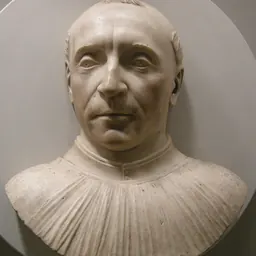
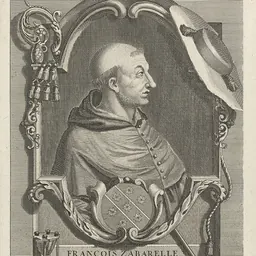
Contemporaries
People whose lives overlapped John of Capistrano's



Frequently asked questions
Who was John of Capistrano?
Franciscan friar and Catholic saint (1386–1456)
When was John of Capistrano born?
John of Capistrano was born on 24 June 1386 in Capestrano.
When did John of Capistrano die?
John of Capistrano died on 23 October 1456 in Ilok.
What was John of Capistrano's occupation?
John of Capistrano was a diplomat, inquisitor, catholic priest, preacher, missionary and jurist.
What nationality was John of Capistrano?
John of Capistrano was Italian.
Sources & further reading
· Wikipedia: John of Capistrano
Cite this page
APA: Biography.guide. (2026). John of Capistrano. https://biography.guide/john-of-capistrano/
MLA: "John of Capistrano." Biography.guide, https://biography.guide/john-of-capistrano/.
Chicago: "John of Capistrano." Biography.guide. https://biography.guide/john-of-capistrano/.
Data last updated: 2026-09-20 · Spot an error? Report a correction.
Page generated 2026-09-27 05:32 UTC