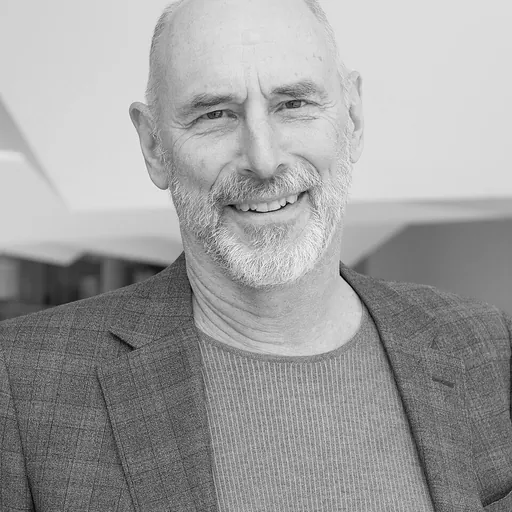
About James Wuest
Born 1948. James Wuest is a Canadian chemist and researcher.
James D. Wuest is a Canadian chemist, materials scientist and academic. He is a professor of Chemistry at the Université de Montréal, where he teaches and leads a research group.
Wuest is most known for his contributions to the development of modular construction, using it as a method for creating molecular materials with predictable structures and properties. His research has contributed to information on molecular organization in materials and ways to control it. He is the recipient of the 1988 Merck Sharp & Dohme Award and the 2001 Alfred Bader Award in Organic Chemistry from the Canadian Society for Chemistry, the 1992 Rutherford Memorial Medal from the Royal Society of Canada, the American Chemical Society's Arthur C. Cope Scholar Award in 2005, the Prix Urgel-Archambault from the Association francophone pour le savoir in 2008, the 2013 Prix Marie-Victorin from the Government of Québec, and the 2021 Canadian Light Source T. K. Sham Award in Materials Chemistry. Additionally, he was awarded a Killam Research Fellowship in 1992 and a Guggenheim Fellowship in 1999.
Wuest is a Fellow and Life Member of the Royal Society of Canada. He was an Editor of the Canadian Journal of Chemistry from 1992 to 1997 and has been on the advisory board of Materials Chemistry Frontiers since 2019.
Education Wuest earned a bachelor's degree in Chemistry and Mathematics from Cornell University in 1969 and received his PhD in chemistry in 1973 from Harvard University, where he was a National Science Foundation Fellow and a student of Robert B. Woodward.
Career Wuest began his academic career as an assistant professor of chemistry at Harvard University from 1973 to 1979, and he became a Fellow at the Harvard Medical School in 1980. He joined the Université de Montréal as an associate professor in 1981 and has served as a professor of Chemistry since 1986. He has been a member of the Institut Courtois and its Scientific Advisory Board since 2023.
Research Wuest's research focuses on molecular materials but spans different areas of science, including organic chemistry, inorganic chemistry, physical chemistry, surface science, and computation. The work places an emphasis on molecular design, synthesis, structural analysis, and the construction of new materials by controlled molecular association.
Surface science Wuest's research has shown how modular construction can be used in 2D to help control adsorption on surfaces. His studies have demonstrated the special value of a dual approach in which 3D molecular organization (determined by X-ray diffraction) is compared systematically with 2D organization on surfaces (revealed by scanning probe microscopy). This approach has provided insights related to molecular organization, such as how crystallization can be inhibited.
Molecular crystallization Wuest and his research group study aspects of molecular crystallization, such as ways to inhibit crystallization and make amorphous solids, the relationship between crystallization and gelation, and the origins of polymorphism, which is the ability of compounds to have multiple crystalline forms. He has developed new ways to diversify solid forms and optimize products. Furthermore, he and his group have investigated the factors contributing to high levels of polymorphism and their work in this area has led to multiple papers and patents.
In this work, Wuest and his research group have used an approach that combines database mining, computational analysis, and experimentation as a way to understand the rules of crystallization, expand the range of known molecular behavior, and find new crystalline materials. and assessed the organization of components like fullerenes in optoelectronically active materials. The group has also examined the performance of organic materials in photovoltaic devices and light-emitting diodes, emphasizing sustainability and green-chemistry principles, such as choosing benign solvents for thin-layer deposition and finding ways to recycle key materials. In addition, the group has explored the use of novel redox-active organic materials in batteries, with an emphasis on compounds with unique structures and properties that can be easily synthesized from abundant renewable resources like biomass.
Awards and honors 1988 – Merck Sharp & Dohme Award, Canadian Society for Chemistry 1992 – Killam Research Fellowship, National Research Council Canada 1992 – Rutherford Memorial Medal, Royal Society of Canada 1996 – Elected Fellow, Royal Society of Canada 1999 – Guggenheim Fellowship, John Simon Guggenheim Memorial Foundation 2001 – Alfred Bader Award in Organic Chemistry, Canadian Society for Chemistry 2005 – Arthur C. Cope Scholar Award, American Chemical Society 2008 – Prix Urgel-Archambault, Association francophone pour le savoir 2013 – Prix Marie-Victorin, Government of Québec 2021 – Canadian Light Source T. K. Sham Award in Materials Chemistry, Chemical Institute of Canada
Selected articles Simard, M., Su, D., & Wuest, J. D. (1991). Use of hydrogen bonds to control molecular aggregation. Self-assembly of three-dimensional networks with large chambers. Journal of the American Chemical Society, 113(12), 4696–4698. Brunet, P., Simard, M., & Wuest, J. D. (1997). Molecular tectonics. Porous hydrogen-bonded networks with unprecedented structural integrity. Journal of the American Chemical Society, 119(11), 2737–2738. Beaudoin, D., Maris, T., & Wuest, J. D. (2013). Constructing monocrystalline covalent organic networks by polymerization. Nature Chemistry, 5(10), 830–834. Dang, M. T., Hirsch, L., Wantz, G., & Wuest, J. D. (2013). Controlling the morphology and performance of bulk heterojunctions in solar cells. Lessons learned from the benchmark poly (3-hexylthiophene):[6, 6]-phenyl-C61-butyric acid methyl ester system. Chemical Reviews, 113(5), 3734–3765. Lévesque, A., Maris, T., & Wuest, J. D. (2020) ROY Reclaims Its Crown: New Ways to Increase Polymorphic Diversity. Journal of the American Chemical Society, 142(27), 11873−11883.
Don’t just read it —
keep it.
Full-length biographies made to live with: read them, listen on the way to work, watch them tonight.
- E-book
- Audio
- Video
Instant download · yours to keep · every purchase keeps this site free
Important facts
People in James Wuest's life
Named in this biography and alive at the same time

Related people
Same field, nearest in time





Contemporaries
People whose lives overlapped James Wuest's



Frequently asked questions
Who is James Wuest?
Canadian chemist
When was James Wuest born?
James Wuest was born on 24 October 1948 in Cincinnati.
What is James Wuest's occupation?
James Wuest is a chemist and researcher.
What nationality is James Wuest?
James Wuest is Canadian.
Sources & further reading
Cite this page
APA: Biography.guide. (2026). James Wuest. https://biography.guide/james-wuest/
MLA: "James Wuest." Biography.guide, https://biography.guide/james-wuest/.
Chicago: "James Wuest." Biography.guide. https://biography.guide/james-wuest/.
Data last updated: 2026-09-20 · Spot an error? Report a correction.
Portrait: Wikimedia Commons · author & licence
Page generated 2026-09-27 04:58 UTC