
About James Wallace Black
Lived 1825 – 1896 (aged 70). James Wallace Black was an American photographer.
James Wallace Black (February 10, 1825 – January 5, 1896), known professionally as J.W. Black, was an early American photographer whose career was marked by experimentation and innovation.
Biography He was born on February 10, 1825, in Francestown, New Hampshire.
After trying his luck as a painter in Boston, he turned to photography, beginning as a daguerreotype plate polisher. He soon partnered with John Adams Whipple, a prolific Boston photographer and inventor. Black's photograph of abolitionist John Brown in 1859, the year of his insurrection at Harpers Ferry, is now in the National Portrait Gallery, Smithsonian Institution.
In March 1860, Black took a photograph of poet Walt Whitman when Whitman was in Boston to oversee the typesetting of his 1860 edition of Leaves of Grass. Black's studio at 173 Washington Street was less than a block from the publishing firm of Thayer and Eldridge, who apparently commissioned the photograph to promote the 1860 edition.
On October 13, 1860, two years after the French photographer Nadar conducted his earliest experiments in balloon flight, Black made the first successful aerial photographs in the United States in collaboration with the balloon navigator Samuel Archer King on King's hot-air balloon, the Queen of the Air. He photographed Boston from a hot-air balloon at , taking 8 plates of glass negative measuring . One good print resulted, which the photographer entitled Boston, as the Eagle and the Wild Goose See It. This was the first clear aerial image of a city.
Almost immediately, aerial reconnaissance would be put to use by the Union and Confederate Armies during the American Civil War, though there is no credible evidence that aerial photography was successful.
Black later became the authority on the use of the magic lantern, a candlelight-powered projector that was a predecessor of today's slide projectors. By the late 1870s Black's business largely consisted of lantern slide production, including his famous images of the Great Boston Fire of 1872, published a photographic album titled Ruins of the Great Fire in Boston, November 1872.
He died on January 5, 1896, and was buried in Mount Auburn Cemetery in Cambridge, Massachusetts.
Collections of his work Boston Athenaeum Boston Public Library George Eastman House Historic New England Massachusetts Historical Society Metropolitan Museum of Art, New York City
Don’t just read it —
keep it.
Full-length biographies made to live with: read them, listen on the way to work, watch them tonight.
- E-book
- Audio
- Video
Instant download · yours to keep · every purchase keeps this site free
Important facts
People in James Wallace Black's life
Named in this biography and alive at the same time

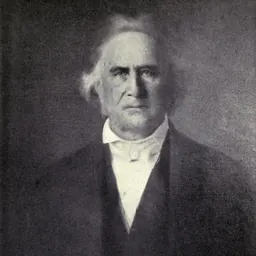
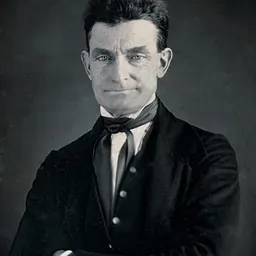

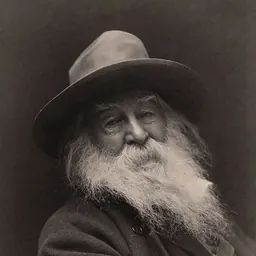

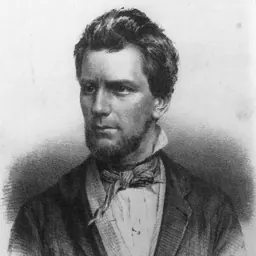

Related people
Same field, nearest in time

Contemporaries
People whose lives overlapped James Wallace Black's




Frequently asked questions
Who was James Wallace Black?
American photographer (1825–1896)
When was James Wallace Black born?
James Wallace Black was born on 10 February 1825 in Francestown.
When did James Wallace Black die?
James Wallace Black died on 5 January 1896 in Cambridge.
What was James Wallace Black's occupation?
James Wallace Black was a photographer.
What nationality was James Wallace Black?
James Wallace Black was American.
Sources & further reading
· Wikipedia: James Wallace Black
· DBpedia: James Wallace Black
Cite this page
APA: Biography.guide. (2026). James Wallace Black. https://biography.guide/james-wallace-black/
MLA: "James Wallace Black." Biography.guide, https://biography.guide/james-wallace-black/.
Chicago: "James Wallace Black." Biography.guide. https://biography.guide/james-wallace-black/.
Data last updated: 2026-09-20 · Spot an error? Report a correction.
Page generated 2026-09-27 05:33 UTC