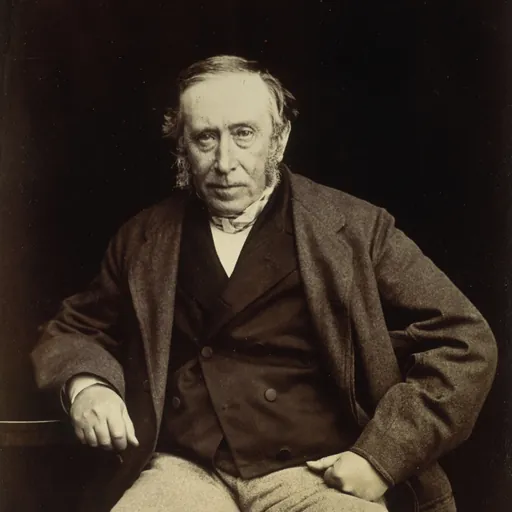
About James Syme
Lived 1799 – 1870 (aged 70). James Syme was a British surgeon, university teacher, pathologist and chemist.
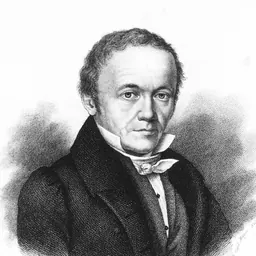
James Syme (7 November 1799 – 26 June 1870) was a Scottish pioneering surgeon.
Early life James Syme was born on 7 November 1799 at 56 Princes Street in Edinburgh. His father was John Syme WS of Cartmore and Lochore, estates in Fife and Kinross. His father lost most of his fortune in attempting to develop the mineral resources of his property. His father had a legal practice at 23 North Hanover Street, not far from Princes Street in Edinburgh.
James was educated at the Royal High School at the age of nine, and remained until he was fifteen, when he entered the University of Edinburgh. For two years he frequented the arts classes (including botany), and in 1817 began the medical curriculum, devoting himself with particular keenness to chemistry. His chemical experiments led him to the discovery that a valuable substance is obtainable from coal tar which has the property of dissolving india-rubber, and could be used for waterproofing silk and other textile fabrics; an idea which was patented a few months afterwards by Charles Macintosh, of Glasgow, who invented the Mackintosh raincoat.
In the dissecting room In the session 1818–1819 Syme became assistant and demonstrator of the dissecting room of Robert Liston, who had started as an extramural teacher of anatomy in competition with Liston's old master, John Barclay; in those years he held also resident appointments in the infirmary and the fever hospital, and spent some time in Paris practising dissection and operative surgery. In 1823 Liston handed over to him the whole charge of his anatomy classes, retaining his interest in the school as a pecuniary venture; the arrangement did not work smoothly, and a feud with Liston arose, which did not terminate until twenty years later, when Liston was settled in London.
He worked there from May 1829 to September 1833, with great success as a surgical charity and school of clinical instruction. It was here that he first put into practice his method of clinical teaching, which consisted in having the patients to be operated or prelected upon brought from the ward into a lecture-room or theatre where the students were seated conveniently for seeing and taking notes.
University College, London In 1847, Syme was accepted the chair of clinical surgery at University College, London left vacant after Liston's death. He began practice in London in February 1848; but early in May the same year difficulties with two of his colleagues at Gower Street and a desire to escape from animosity and contention led him to give up his appointment. He returned to Edinburgh in July, and was reinstated in his old chair, to which the crown authority had meanwhile found a difficulty in appointing. The judgment of his friends was that he was always right in the matter, but often wrong in the manner, of his quarrels. He was elected President of the Royal College of Surgeons of Edinburgh in 1849.
Medical reform In 1849, he broached the subject of medical reform in a letter to the lord advocate; in 1854 and 1857 he addressed open letters on the same subject to Lord Palmerston; and in 1858 a Medical Act was passed which largely followed the lines laid down by himself. As a member of the general medical council called into existence by the act, he made considerable stir in 1868 by an uncompromising statement of doctrines on medical education, which were thought by many to be reactionary; they were, however, merely an attempt to recommend the methods that had been characteristic of Edinburgh teaching since William Cullen's time—namely, a constant reference of facts to principles, the subordination (but not the sacrifice) of technical details to generalities, and the preference of large professional classes and the magnetism of numbers to the tutorial system, which he identified with cramming.
Death In April 1869, he had a paralytic seizure, and at once resigned his chair; he never recovered his powers, and died near Edinburgh in June 1870.
Syme is buried on the upper north-east terrace of St John's Episcopal Churchyard at the east end of Princes Street, Edinburgh.
Syme's character is not inaptly summed up in the dedication to him by his old pupil, John Brown, of the series of essays Locke and Sydenham: Verax, capax, perspicax, sagax, efficax, tenax. the sister of his former colleague, Robert Willis. She died in 1840, while giving birth to their ninth child. Only two of their nine children, daughters Agnes and Lucy, survived into adulthood.
In 1856, Syme's daughter Agnes married Joseph Lister, who in 1854 had been appointed first assistant surgeon to Syme at the University of Edinburgh. Having grown up as the eldest surviving child of a surgeon, Agnes Syme Lister often assisted her husband's medical research, including taking dictation and case notes. They maintained a home laboratory, where Joseph Lister conducted experiments that would lead to the development of antiseptic sprays for surgical theatres.
Don’t just read it —
keep it.
Full-length biographies made to live with: read them, listen on the way to work, watch them tonight.
- E-book
- Audio
- Video
Instant download · yours to keep · every purchase keeps this site free
Important facts
People in James Syme's life
Named in this biography and alive at the same time

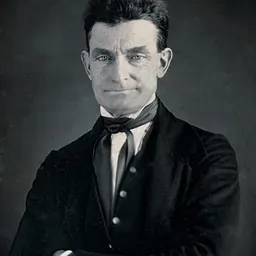


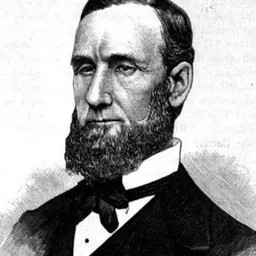
Related people
Same field, nearest in time
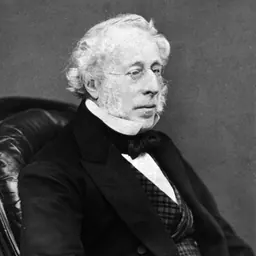

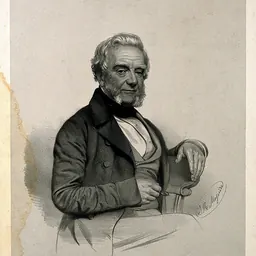
Contemporaries
People whose lives overlapped James Syme's






Frequently asked questions
Who was James Syme?
Scottish surgeon (1799–1870)
When was James Syme born?
James Syme was born on 7 November 1799 in Edinburgh.
When did James Syme die?
James Syme died on 26 June 1870 in Edinburgh.
What was James Syme's occupation?
James Syme was a surgeon, university teacher, pathologist and chemist.
What nationality was James Syme?
James Syme was British.
Sources & further reading
Cite this page
APA: Biography.guide. (2026). James Syme. https://biography.guide/james-syme/
MLA: "James Syme." Biography.guide, https://biography.guide/james-syme/.
Chicago: "James Syme." Biography.guide. https://biography.guide/james-syme/.
Data last updated: 2026-09-22 · Spot an error? Report a correction.
Portrait: Wikimedia Commons · author & licence
Page generated 2026-09-27 05:01 UTC