
About James Savage
Lived 1779 – 1852 (aged 73). James Savage was a British architect.
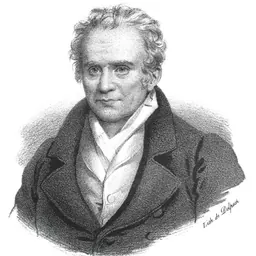
James Savage (10 April 1779 – 7 May 1852) was a British architect, based in London. His works included the Richmond Bridge (now the O'Donovan Rossa Bridge) in Dublin, and St Luke's Church, Chelsea, a pioneering work of the Gothic Revival. He was architect to the Honourable Society of the Middle Temple, and carried out restoration work at Lincoln Cathedral and St Mary-le-Bow. In 1836 he published a pamphlet in which he attacked the slavish imitation of historical styles.
Life
Savage was born in Hoxton, London, on 10 April 1779. He was educated at a private school in Stockwell and then articled to Daniel Asher Alexander, architect of the London Docks, for whom he worked for several years as clerk of the works. He became a student at the Royal Academy in 1796. In 1815 Savage won a competition to design a river-crossing at Tempsford in Bedfordshire with another three arched bridge. Savage originally intended the tower to have an open spire, like that of Wren's St Dunstan-in-the-East, but this was forbidden by the Board of Trade.
In 1836, having unsuccessfully entered the competition to design the new Houses of Parliament, he published a pamphlet entitled Observations on Style in Architecture, with suggestions on the best mode of procuring Designs for Public Buildings and promoting the improvement of Architecture, in which he criticised the stipulation of a particular style for competition entries, and more generally attacked the slavish imitation of historical styles: The architect and his patron are not aware that this piecemeal copying of details is quite compatible with an entire ignorance and neglect of all the more essential qualities for which the antique examples have been admired. They owe their effect to their singleness of intention, simplicity of means, beauty of proportion, and the all-pervading harmony of the totality, to which the details are most profoundly subordinate; for the perfection of the work is, when the parts are nothing and the totality everything. The end is felt, not the means.
Much of Savage's practice involved arbitration cases and the investigation of architectural and engineering questions in court. Among these was the protracted Custom House case of the Crown v. Peto, in which the defendant Henry Peto attributed his success mainly to Savage's evidence. Tempsford Bridge, Bedfordshire (1815). St Luke's Church, Chelsea (1820–24). Clock tower and Plowden-buildings, Middle Temple. St James's Church, Bermondsey (1827–29). Trinity Church, Sloane Street (1828–30). Demolished. Holy Trinity Church, Tottenham Green (1828–29). St Mary's Church, Ilford, Essex (1829–31). St. Mary's Church, Speenhamland, near Newbury, Berkshire (1829–31). Demolished. Bull and Mouth Inn, also known as the Queen's Hotel, St Martin's Le Grand, London (1831). Demolished. Chapel for the Baptist College, Stepney (1831). Only remnants of an archway remain St. Michael's Church, Burleigh Street, Strand, London (1832–33). Demolished. St. Thomas the Martyr Church, Brentwood, Essex (1835). Demolished and replaced. Rectory of St Mary-at-Hill, City of London (1834). St. Paul's Church, Addlestone, Chertsey, Surrey. All Saints' Church, Beulah Hill (1837). Tenterden Union Workhouse, Kent (1843). Demolished. Bromley Union Workhouse, Locks Bottom, Kent (1844). Designed in collaboration with SO Foden. Demolished. Two bridges at Reading, Berkshire.
Writings An Essay on Bridge Building in the Transactions of the London Architectural Society. Observations on the Varieties of Architecture, used in the structure of Parish Churches 1812). Prospectus of a Plan for the Surrey Quay (1825). Observations on the Proposed New London Bridge (1828). Observations on Style in Architecture, with suggestions on the best mode of procuring Designs for Public Buildings and promoting the improvement of Architecture; especially in reference to a recommendation in the Report of the Commissioners on the Designs for the New Houses of Parliament (1836).
Don’t just read it —
keep it.
Full-length biographies made to live with: read them, listen on the way to work, watch them tonight.
- E-book
- Audio
- Video
Instant download · yours to keep · every purchase keeps this site free
Important facts
People in James Savage's life
Named in this biography and alive at the same time

Related people
Same field, nearest in time



Contemporaries
People whose lives overlapped James Savage's



Frequently asked questions
Who was James Savage?
architect
When was James Savage born?
James Savage was born on 10 April 1779 in London.
When did James Savage die?
James Savage died on 7 May 1852.
What was James Savage's occupation?
James Savage was an architect.
What nationality was James Savage?
James Savage was British.
Sources & further reading
· DBpedia: James Savage (architect)
Cite this page
APA: Biography.guide. (2026). James Savage. https://biography.guide/james-savage-architect/
MLA: "James Savage." Biography.guide, https://biography.guide/james-savage-architect/.
Chicago: "James Savage." Biography.guide. https://biography.guide/james-savage-architect/.
Data last updated: 2026-09-20 · Spot an error? Report a correction.
Page generated 2026-09-27 05:20 UTC