
About James Ramsay-Gibson-Maitland
Lived 1848 – 1897 (aged 49). James Ramsay-Gibson-Maitland was a scientist.
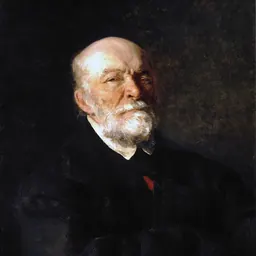
Sir James Ramsay-Gibson-Maitland, 4th Baronet (29 March 1848 – 9 November 1897) was a Scottish aquaculturist who dedicated his life to experimenting on the practices of husbandry in fish. He gained recognition for his work by being awarded several diplomas. and his mother was Thomasina, née Hunt, and he also had two brothers, William and Keith. The Maitland baronets of Clifton were descendants of the Earls of Lauderdale, and in 1866 the 3rd Baronet had assumed the surname of Ramsay before that of Gibson-Maitland when he succeeded to the estates of Ramsay of Barnton.
James was educated at St Andrews University before leaving to attend the Royal Military College at Sandhurst; however, after joining the army and becoming a Captain in the Highland Borderers, he left after one year.
Maitland believed that fish could be raised in a similar way as farm animals, in that animal husbandry could also be successful when applied to a fishery. There are even pictures with measurements of the instruments Maitland was inventing to make rearing fish easier.
Maitland also experimented on the diet of the trout and salmon at the fishery; he worked out that horse spleen when ingested by trout caused blindness and nutritional cataracts. He worked on several options before concluding that the best option for feeding trout and salmon was horsemeat, shellfish and eggs.
One of his most important experiments was finding ways to transport large quantities of live ova, at the time live ova were sent in crammed packages and when they arrived most did not survive, Maitland took three attempts to work out how to insulate the cargo to stop fluctuations in temperature. Successful shipments were then sent to Wellington, Dunedin and Otago in the specially designed shipment boxes that Maitland had designed himself.
Awards The work of Maitland at Howietoun fishery meant that he was awarded several diplomas in fish culture and two gold medals in 1883 and 1885, at the International Fisheries Exhibitions, Edinburgh.
Death and legacy Maitland died on 9 November 1897, his daughter Mary Steel-Maitland and her husband Arthur Steel-Maitland took over the running of Howietoun. Howietoun Fishery was then amalgamated into the Northern Fisheries Company in 1914 before the Maitland family sold it in 1969. It became a part of the University of Stirling Aquaculture Institute in 1979.
The majority of brown trout re-stocking in Scotland is achieved through the stock of Howietoun Fishery.
Don’t just read it —
keep it.
Full-length biographies made to live with: read them, listen on the way to work, watch them tonight.
- E-book
- Audio
- Video
Instant download · yours to keep · every purchase keeps this site free
Important facts
Related people
Same field, nearest in time



Contemporaries
People whose lives overlapped James Ramsay-Gibson-Maitland's




Frequently asked questions
Who was James Ramsay-Gibson-Maitland?
Scottish aquaculturist
When was James Ramsay-Gibson-Maitland born?
James Ramsay-Gibson-Maitland was born on 29 March 1848.
When did James Ramsay-Gibson-Maitland die?
James Ramsay-Gibson-Maitland died on 9 November 1897.
What was James Ramsay-Gibson-Maitland's occupation?
James Ramsay-Gibson-Maitland was a scientist.
Sources & further reading
· Wikipedia: James Ramsay-Gibson-Maitland
· DBpedia: James Ramsay-Gibson-Maitland
Cite this page
APA: Biography.guide. (2026). James Ramsay-Gibson-Maitland. https://biography.guide/james-ramsay-gibson-maitland/
MLA: "James Ramsay-Gibson-Maitland." Biography.guide, https://biography.guide/james-ramsay-gibson-maitland/.
Chicago: "James Ramsay-Gibson-Maitland." Biography.guide. https://biography.guide/james-ramsay-gibson-maitland/.
Data last updated: 2026-09-20 · Spot an error? Report a correction.
Page generated 2026-09-27 05:27 UTC