
About James Pilling
Lived 1846 – 1895 (aged 48). James Pilling was an American ethnologist and philologist.
James Constantine Pilling (November 16, 1846, in Washington, D.C. – July 26, 1895) was an American Congressional stenographer-transcriptionist and a pioneering ethnologist chiefly known for compiling a series of extensive bibliographies of the cultures, mythologies and languages of the North and Central American aboriginal peoples. Beginning in 1875, when he joined the survey of the American West led by Maj. John Wesley Powell, and continuing through 1881, Pilling did extensive fieldwork and proofread Powell's Report on the lands of the arid region of the United States.
Education and early work Pilling attended Gonzaga College, at the time chartered by Congress to offer university degrees but today a Jesuit high school. Having taught himself Pitman shorthand while still in grade school, he became highly proficient as a stenographer, later working for several government agencies.
Ethnology career In 1875, John Wesley Powell hired him to help administer the United States Geological Survey (USGS) of the Rocky Mountain regions. In 1879, when Powell founded the Bureau of Ethnology (known from 1897 to 1965 as the Bureau of American Ethnology or BAE), Pilling became the bureau's chief clerk. When Powell took over as director of the USGS and of the BAE from Clarence King (1881), Pilling became the USGS chief clerk as well, while continuing his work with the BAE. In his unpaid hours over the next 15 years Pilling compiled an extensive bibliography of books and manuscripts on North American languages. He was also responsible for the initial development of the BAE library and for maintaining its archives system. By 1891, a debilitating illness he had contracted during his years of ethnological fieldwork forced him to resign from such administrative duties, but he continued his ethnology work until his death in 1895.
In 1885, the BAE published his labour of love as the 1,200-page Proof-sheets of a Bibliography of North American Indian Languages; only 100 copies were printed. Scholars of American Indian languages, however, gave the work an enthusiastic reception, and their cooperation enabled Pilling subsequently to revise this monumental work and publish a series of bibliographies, each dealing with a particular family of Amerindian languages. Now known as the Uto-Aztecan languages, their kinship was conclusively established by Edward Sapir in the 1920s, but Powell had opposed such a classification scheme. Pilling's Shoshonean languages are now known as Northern Uto-Aztecan, while his Sonoran and Aztec groupings are now both considered among the Southern Uto-Aztecan languages.
Pilling died of locomotor ataxia, now called Tabes dorsalis, a disease associated with untreated syphilis, in 1895.
Don’t just read it —
keep it.
Full-length biographies made to live with: read them, listen on the way to work, watch them tonight.
- E-book
- Audio
- Video
Instant download · yours to keep · every purchase keeps this site free
Important facts
People in James Pilling's life
Named in this biography and alive at the same time

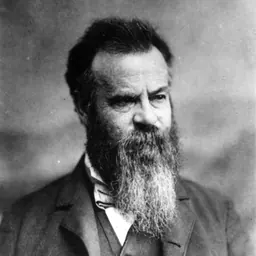
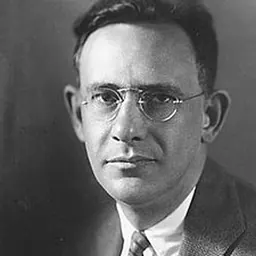

Related people
Same field, nearest in time

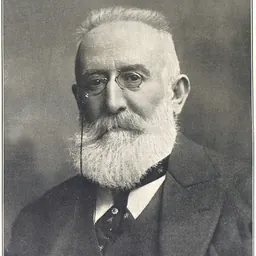
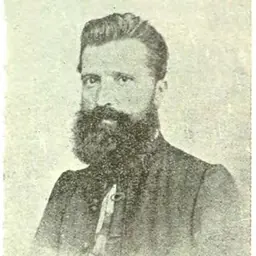


Contemporaries
People whose lives overlapped James Pilling's


Frequently asked questions
Who was James Pilling?
American ethnologist (1846–1895)
When was James Pilling born?
James Pilling was born on 16 November 1846 in Washington, D.C..
When did James Pilling die?
James Pilling died on 26 July 1895.
What was James Pilling's occupation?
James Pilling was an ethnologist and philologist.
What nationality was James Pilling?
James Pilling was American.
Sources & further reading
Cite this page
APA: Biography.guide. (2026). James Pilling. https://biography.guide/james-pilling/
MLA: "James Pilling." Biography.guide, https://biography.guide/james-pilling/.
Chicago: "James Pilling." Biography.guide. https://biography.guide/james-pilling/.
Data last updated: 2026-09-20 · Spot an error? Report a correction.
Page generated 2026-09-27 05:27 UTC