
James Parkinson
English writer and schoolmaster
About James Parkinson
Lived 1653 – 1722 (aged 68–69).
James Parkinson (1653–1722) was an English clergyman, college fellow, schoolmaster, and polemical writer.
Early life The son of James Parkinson, he was born at Witney, Oxfordshire, on 3 March 1653, and matriculated at Oxford on 2 April 1669 as a servitor of Brasenose College. He was admitted scholar of Corpus Christi College on 31 January 1671, but was expelled for abusing its President Robert Newlyn, in Lent 1674. Moving to Gloucester Hall, where he proceeded B.A. on 6 April 1674, and then to Hart Hall, he made a reputation by a speech at the Encænia, and was nominated fellow of Lincoln College by William Fuller the bishop of Lincoln, its visitor, in November 1674. He was admitted M.A. in November 1675, and took holy orders about the same time, though never holding any living.
Expulsion from Oxford Parkinson was a successful college tutor, by his own account, but his Whig views made him unpopular with colleagues: Thomas Hearne wrote that he was "a rank stinking whigg, who us'd to defend ye Murther of King Charles 1st, and recommend Milton and such other Republican Rascalls to his Pupills". After Convocation, by decree of 21 July 1683, had condemned the tenets professed by the exclusion party, the fellows of Lincoln drew up a set of twelve articles against Parkinson, accusing him of advocating anti-monarchical and anti-Anglican principles, both in his private conversation, and from the pulpit of St. Michael's. The Fire's continued at Oxford; or, The Decree of the Convocation for Burning the "Naked Gospel" (by Arthur Bury) considered, In a letter to a Person of Honour (anon.), dated 30 August 1690. An Examination of Dr. Sherlock's Book, entituled "The Case of the Allegiance due to Sovereign Powers Stated and Resolved", London, 1691. A Dialogue between a Divine of the Church of England and a Captain of Horse, concerning Dr. Sherlock's late Pamphlet, intituled "The Case of Allegiance" 1691 [?].` A Loyal Oration composed by James Parkinson, Chief Master of the Free School of Birmingham, 1717
Family Parkinson left a widow, who died in 1742. His only son, James, was baptised at Birmingham on 4 September 1700, and educated in his father's school. He matriculated at Oxford from Wadham College on 6 June 1717, proceeded B.A. on 20 February 1721, was admitted M.A. on 11 May 1724, was elected sub-dean, and died on 28 December 1724, being buried near his father.
Don’t just read it —
keep it.
Full-length biographies made to live with: read them, listen on the way to work, watch them tonight.
- E-book
- Audio
- Video
Instant download · yours to keep · every purchase keeps this site free
Important facts
People in James Parkinson's life
Named in this biography and alive at the same time
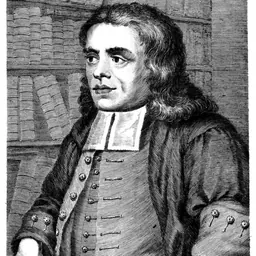
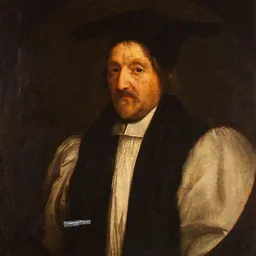


Contemporaries
People whose lives overlapped James Parkinson's





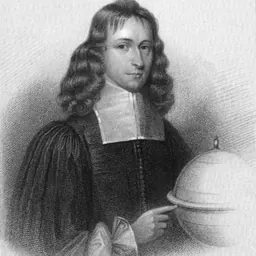
Frequently asked questions
Who was James Parkinson?
English writer and schoolmaster
When was James Parkinson born?
James Parkinson was born in 1653.
When did James Parkinson die?
James Parkinson died in 1722.
Sources & further reading
· DBpedia: James Parkinson (controversialist)
Cite this page
APA: Biography.guide. (2026). James Parkinson. https://biography.guide/james-parkinson-1653/
MLA: "James Parkinson." Biography.guide, https://biography.guide/james-parkinson-1653/.
Chicago: "James Parkinson." Biography.guide. https://biography.guide/james-parkinson-1653/.
Data last updated: 2026-09-20 · Spot an error? Report a correction.
Page generated 2026-09-27 05:13 UTC