
About James Parkes
Lived 1896 – 1981 (aged 84). James Parkes was a historian, priest and judaic scholar.
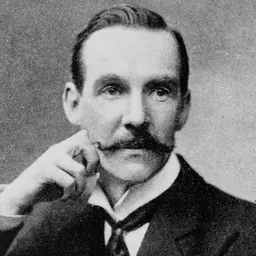
James William Parkes (22 December 1896 – 10 August 1981) was an Anglican clergyman, soldier, historian, and social activist. With the publication of The Jew and His Neighbour in 1929, he created the foundations of a Christian re-evaluation of Judaism. He also published under the pseudonym John Hadham.
Early life Parkes was born in Guernsey on the Channel Islands in 1896. He was the son of an English-born tomato grower, and had two siblings, David and Molly. Parkes was educated at Elizabeth College. Parkes lost his mother at the age of 14, and lost both of his siblings during the First World War. While at school, he won an Open Scholarship to Hertford College, Oxford, but joined up to fight in the war. He enlisted as a Private in the Artists Rifles and went out to France, but was immediately hospitalised for three months with a serious illness contracted from drinking contaminated water. Afterwards he was commissioned into the Queen's (Royal West Surrey Regiment) as a Second lieutenant and posted to the 3rd (Reserve) Battalion, Queen's at Sittingbourne. From there he was sent in the winter of 1916–17 to join the 10th (Service) Battalion, Queen's (Battersea) in the Ypres Salient. As well as commanding a platoon, he became the battalion's unofficial war artist. He participated in the Battle of Messines on 7 June 1917. On the opening day of the Third Battle of Ypres, 1 August, the battalion's pre-dawn approach march was disrupted by heavy shelling and a guide who got lost. Of A Company, only Parkes and about 50 men reached their first objective, 'Battle Wood', where they held on for the rest of the day. The enemy shelled the wood with Mustard gas and Parkes had to be evacuated a few days later with temporary blindness. Although his sight returned he was never fit enough to return to the Front, and spent the rest of the war in reserve battalions and running an anti-gas school.
Higher education and activism After returning from the war, he went back to Oxford to complete his degree in theology, and did so, despite catching measles in the middle of his final exams. After graduating, Parkes became a leading member of the Student Christian Movement before joining the International Student Service in Geneva. He then went on to study for ordination in the Anglican Church, and spent the next 12 years on the continent as an activist in organizations that promoted international cooperation. It was there that he grew aware of the brutality of antisemitism and very early on spoke out about Nazism, surviving an assassination attempt in 1935.
Upon his return to England, he carved out a career as an independent scholar. Parkes contributed to several British publications, including The Observer, The Jewish Chronicle, Punch and Peace News.
He was known as one of the few clerical voices against the missionizing of Jews and was considered to be the driving force in the founding of the Council of Christians and Jews.
The Parkes Library After a period of ill-health, Parkes was eager to pass his library and Judaica collection on so it could be used by future generations. In 1964, Parkes was approached by David Gwilym James, the University of Southampton's second Vice-Chancellor, who asked Parkes to consider donating his library to the collection at the university. Parkes accepted the offer and the Parkes Library at the university was officially opened on 23 June 1965. By the time the Library was transferred to Southampton University Library in 1964 it amounted to over 4,000 books, 2,000 pamphlets and 140 journals. It has continued to grow, and is now one of the largest Jewish documentation centres in Europe, with over 30,000 books and journals, published from the 15th century to the present day.
The Parkes Institute for the Study of Jewish/non-Jewish Relations at the University of Southampton was formed in the memory of Parkes, and created in line with Parkes’ desire to create an international research centre to home his collections and archive. The exhibition was digitised by the Parkes Institute in 2021 as part of the 40th anniversary commemorations of Parkes' death.
Partial publications list
Republished as 1st American ed. (New York: Oxford University Press, 1946)
Republished as
Don’t just read it —
keep it.
Full-length biographies made to live with: read them, listen on the way to work, watch them tonight.
- E-book
- Audio
- Video
Instant download · yours to keep · every purchase keeps this site free
Important facts
People in James Parkes's life
Named in this biography and alive at the same time



Related people
Same field, nearest in time
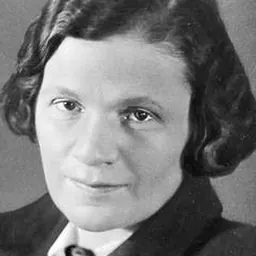

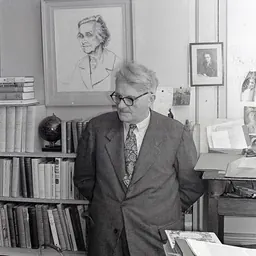
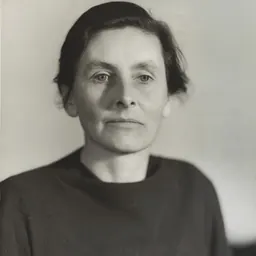
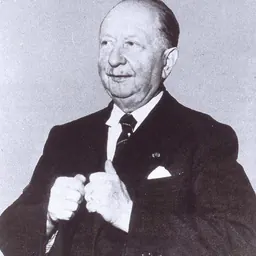
Contemporaries
People whose lives overlapped James Parkes's



Frequently asked questions
Who was James Parkes?
theologian from Guernsey, 1896–1981
When was James Parkes born?
James Parkes was born on 22 December 1896 in Guernsey.
When did James Parkes die?
James Parkes died on 10 August 1981.
What was James Parkes's occupation?
James Parkes was a historian, priest and judaic scholar.
Sources & further reading
· DBpedia: James Parkes (priest)
Cite this page
APA: Biography.guide. (2026). James Parkes. https://biography.guide/james-parkes-historian/
MLA: "James Parkes." Biography.guide, https://biography.guide/james-parkes-historian/.
Chicago: "James Parkes." Biography.guide. https://biography.guide/james-parkes-historian/.
Data last updated: 2026-09-20 · Spot an error? Report a correction.
Page generated 2026-09-27 05:15 UTC