
About James P. Goodrich
Lived 1864 – 1940 (aged 76). James P. Goodrich was an American politician, governor, jurist and lawyer.
James Putnam Goodrich (February 18, 1864 – August 15, 1940) was an American politician and member of the Republican Party who served as the 29th governor of Indiana from 1917 to 1921. His term focused on reforming the operations of the state government and overseeing the state's contributions to World War I. He nearly died twice during his term, and spent a considerable time bedridden. Following his term as governor, he became increasingly wealthy from his business interests and owned a controlling share in many companies.
Early life Family and background
James Putnam Goodrich was born on February 18, 1864, in Winchester, Indiana, the son of John Baldwin and Elizabeth Edger Goodrich. His father was an attorney who suffered from tuberculosis; he died in 1872. Goodrich attended public schools and intended to enter the U.S. Naval Academy. He earned an appointment to the school, but a severe hip injury incurred after falling from a tree ended his prospect for a military career, and he had to decline the offer.
Goodrich taught in Randolph County public schools for two years to save money for college. He then enrolled in DePauw University, where he was a member of Phi Kappa Psi fraternity. In college he became friends with Albert J. Beveridge who influenced him to be involved in politics. After attending college for two years, he was forced to quit due to a lack of funds. He then began to study law with Enos Watson, the father of his classmate James E. Watson.
Party leader
Admitted to the bar in 1887, Goodrich practiced law in Winchester and quickly gained prominence in Republican politics. He was involved in a variety of organizations including the Knights of Labor, The Grange, Knights of Pythias, and the Republican Party. In 1897 he became chairman of the Randolph County Republican Party and was later elevated to serve as state chairman from 1901 to 1910 and a national committeeman from 1912 to 1916. His time in party leadership was difficult for him as the party was wracked by a growing internal division over various progressive agenda items. Charles W. Fairbanks was trying to lead the party to the right, while Albert J. Beveridge was trying to pull the party to the left. Despite Goodrich's attempts to heal the division, the conflict between the two men split the party in 1912, as the progressive wing left to form a new party.
In 1910, he moved his law practice to Indianapolis. His investments in farms, grain elevators, coal mines and banks made him wealthy. For the next five years he spent his time working in his law practice and overseeing his business interests. He returned to active politics again in 1915 when he announced he would run for governor. Indiana had just begun implementing its new primary method of electing candidates, and removing candidate selection by convention. He defeated Warren T. McCray and Quincy Alden Myers by more than 50,000 votes to win the nomination.
Opponents of the tax lobbied the Indiana General Assembly to kill the excise tax bills. The General Assembly approved the constitutional convention but the opponents took the measure to court. The Indiana Supreme Court ruled that the legislature had no constitutional authority to call a convention, and that a convention could only be called if approved by popular vote. Earlier court decisions had stated the legislature also had no power to amend the constitution, effectively creating a narrow and difficult path for amendment. The decision ended the attempted imposition of new taxes but started a movement that succeeded in later years.
Governor James P. Goodrich signs the Indiana prohibition act, 1917.
In August 1917, Goodrich contracted typhoid after touring a prison in northern Indiana. The sickness left him bedridden for two months, and bordering on death. He was nursed back to health at Indianapolis Methodist Hospital. However, he did not return to the statehouse until November. As a result, he had to deal with several major issues, including coal shortages, working from home. Goodrich also created a commission led by Will Hays to assist him in organizing and directing the state's resources.
Later life
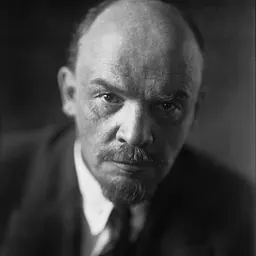
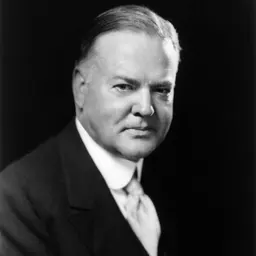
In 1920, Goodrich was Indiana's favorite son candidate for the Republican nomination for president, losing to Senator Warren G. Harding. As president, Harding appointed Goodrich to the Russian Relief Commission. Goodrich made four trips to Russia, then governed by the Bolshevik regime of Vladimir Lenin, and gained a reputation as one of America's best-informed observers of conditions there. Goodrich also served in Herbert Hoover's American Relief Administration and on the St. Lawrence Waterway Commission. He remained active in Republican Party politics and made large donations from his personal fortune to Wabash College in Crawfordsville, Indiana, where he served on the board of trustees.
He became increasingly wealthy in his later life from his business investments. He successfully founded a business empire that lasted nearly a century. By the time of his death he owned a major stake in Central Newspapers, and held controlling interests in the Indiana Telephone Company, Goodrich Brothers' Company, City Securities and a host of smaller businesses.
He died on August 15, 1940, at the Randolph County Hospital in Winchester, Indiana, after suffering a cerebral hemorrhage. He is buried in Fountain Park Cemetery in Winchester. Goodrich Hall at Wabash College was named in his honor.
Electoral history
Don’t just read it —
keep it.
Full-length biographies made to live with: read them, listen on the way to work, watch them tonight.
- E-book
- Audio
- Video
Instant download · yours to keep · every purchase keeps this site free
Important facts
People in James P. Goodrich's life
Named in this biography and alive at the same time



Related people
Same field, nearest in time




Contemporaries
People whose lives overlapped James P. Goodrich's






Frequently asked questions
Who was James P. Goodrich?
American politician (1864–1940)
When was James P. Goodrich born?
James P. Goodrich was born on 18 February 1864 in Winchester.
When did James P. Goodrich die?
James P. Goodrich died on 15 August 1940 in Winchester.
What was James P. Goodrich's occupation?
James P. Goodrich was a politician, governor, jurist and lawyer.
What nationality was James P. Goodrich?
James P. Goodrich was American.
Sources & further reading
· Wikipedia: James P. Goodrich
Cite this page
APA: Biography.guide. (2026). James P. Goodrich. https://biography.guide/james-p-goodrich/
MLA: "James P. Goodrich." Biography.guide, https://biography.guide/james-p-goodrich/.
Chicago: "James P. Goodrich." Biography.guide. https://biography.guide/james-p-goodrich/.
Data last updated: 2026-09-20 · Spot an error? Report a correction.
Page generated 2026-09-27 05:30 UTC