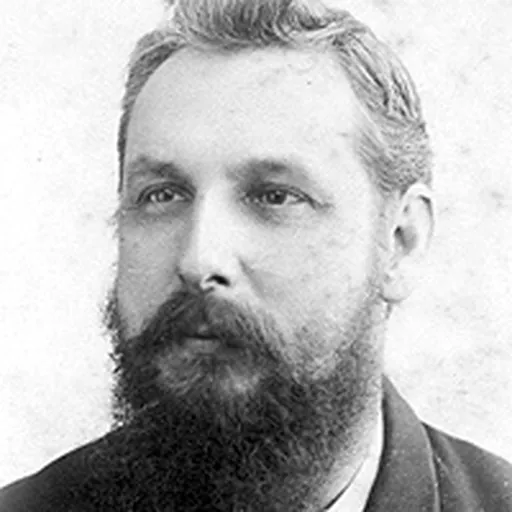
About James Newton
Lived 1850 – 1913 (aged 62–63). James Newton was a politician.
James Newton (1850 – 14 September 1913) was an English-born Australian politician who was one of two parliamentary members for the New South Wales electorate of Balranald from July 1891 to July 1894. Newton operated a saddlery business at Hay and was prominent in local affairs, serving as an alderman and mayor.
Biography
Early years
James Newton was born on 1 January 1850 at Ashton in county Lancashire, the son of Jonathon Newton and Martha (née Batty). His father was a bricklayer.
In 1857 the Newton family emigrated to Australia and settled in Geelong, and later at Castlemaine, where his father worked as a contractor. Young James was apprenticed to a saddle- and harness-making establishment in Castlemaine and learned the trade of a harness-maker.
After completing his apprenticeship Newton worked as a harness-maker and saddler in various Victorian towns. By 1870 he was working in New South Wales and by about the early to mid-1870s he had settled at Hay in the Riverina district on the Murrumbidgee River.
In July 1875 the partnership of Newton and Tate established a new saddlery in Lachlan Street at Hay. At first the business was carried out by waggon, travelling to district pastoral stations and settlements. Afterwards a saddlery shop was established in Lachlan Street at Hay. Both Newton and Tate were described as "industrious, competent tradesmen". In later years, after the partnership was dissolved, Tate took over the hawking waggons and Newton retained the business of the saddlery shop at Hay. After Hay township was brought under the operation of the Fire Brigades' Act, in 1885 Newton was appointed chairman of the local board.
James Newton was elected mayor in January 1887. In February 1888, at a special meeting of the Hay Municipal Council, Newton declined to be re-elected mayor for the ensuing year, saying that "he would not stand unless no other gentleman came forward". Alderman John Jacka was elected mayor in his place.
Newton chaired a meeting in September 1887 at which the Hay Carriers' Union was formed, an organisation of district drivers of waggons drawn by bullock or horse teams. He was appointed treasurer at the meeting. In 1888 the labour organisation changed its name to the Riverine Carriers' Union. In March 1889 Newton was appointed secretary of the Riverine Carriers' Union. During his association with the union Newton introduced a system of 'rotation loading', or "loading in turn", to give all carriers "an equal chance of work".
Member for Balranald
Newton decided to contest the New South Wales elections of 1891 for the Balranald electorate, which at that time returned two members. Four candidates were nominated: A. L. P. Cameron, Allen Lakeman (a sitting member) and Newton (each of them supporters of protectionism), as well as the other sitting member Robert Wilkinson, a Free Trader. Newton and Lakeman were both residents of Hay and there were early attempts to persuade both men to run together to take advantage of the strong support for protectionism in the electorate. However Lakeman decided to run on his own, fearing that Newton's "connection with the Carriers' Union would lead to the estrangement of landholders' votes in the Booligal, Mossgiel, New South Wales, and Hillston districts".
Newton's successful 1891 campaign was strongly supported by the working classes in the electorate, bolstered by his association with the Carriers' Union. The newly-formed Labor Party had run candidates in the 1891 election but Newton always maintained that he had not been a recognised candidate of the Labor Electoral League of New South Wales (as it was then known). Labor Party candidates were required to sign a pledge to support all caucus decisions in parliament, which Newton had not done. He claimed that it was only after the election that the Labor authorities tried to associate their organisation with his successful campaign.
Later years
In 1893 the Parliamentary Electorates and Elections Act was passed which reduced future representation in the New South Wales Legislative Assembly to 125 single-member electorates. The two-member electorate of Balranald was divided into the single-member electorates of Hay, The Lachlan and Wentworth. Wilkinson decided to retire from politics and Newton became a candidate for the Hay electorate along with four others. Three of the candidates represented serious opposition to Newton, Lakeman a fellow protectionist and two free trade advocates, George Mair and James Ashton. Ashton was a newspaperman living at Narrandera, who had previously been part-owner of The Riverine Grazier at Hay. The election held in July 1894 was "very keenly contested" and was won by Ashton with 37.8 percent of the vote. Newton fell short by 92 votes, attracting 30.5 percent of the vote.
After the election Newton resumed his saddlery and harness-making business (which had been operated by his employees during his parliamentary term).
Ashton did not stand for the Hay electorate at the election held in July 1898, having decided to contest the seat of Goulburn instead. The candidates for Hay were Newton and Allen Lakeman, standing as protectionists and federalists, and Francis Byrne standing as a free-trade candidate. Newton was selected as the candidate for the National Federal Party (the renamed Protectionist Party). At the election the free-trade candidate, Frank Byrne, was successful with 53 percent of the vote. The remaining votes were split between Newton and Lakeman, with Newton receiving 25.4 percent.
James Newton died on 14 September 1913 at his residence in Alma Street, Hay, aged 63 years. The cause of his death was cerebral sclerosis.
Don’t just read it —
keep it.
Full-length biographies made to live with: read them, listen on the way to work, watch them tonight.
- E-book
- Audio
- Video
Instant download · yours to keep · every purchase keeps this site free
Important facts
People in James Newton's life
Named in this biography and alive at the same time





Related people
Same field, nearest in time




Contemporaries
People whose lives overlapped James Newton's

Frequently asked questions
Who was James Newton?
New South Wales politician
When was James Newton born?
James Newton was born in 1850.
When did James Newton die?
James Newton died on 14 September 1913.
What was James Newton's occupation?
James Newton was a politician.
Sources & further reading
· DBpedia: James Newton (New South Wales politician)
Cite this page
APA: Biography.guide. (2026). James Newton. https://biography.guide/james-newton-politician-1850/
MLA: "James Newton." Biography.guide, https://biography.guide/james-newton-politician-1850/.
Chicago: "James Newton." Biography.guide. https://biography.guide/james-newton-politician-1850/.
Data last updated: 2026-09-21 · Spot an error? Report a correction.
Portrait: Wikimedia Commons · author & licence
Page generated 2026-09-27 04:59 UTC