
About James Moran
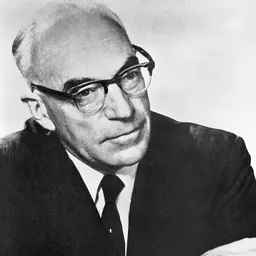
Born 1943. James Moran is an American astrophysicist, university teacher and astronomer, known for Radio astronomy and Radio telescope.
James Moran is an American radio astronomer living in Massachusetts, USA. He was a professor of Astronomy at Harvard University from 1989 through 2016, a senior radio astronomer at the Smithsonian Astrophysical Observatory from 1981 through 2020 and the director of the Submillimeter Array during its construction and early operational phases from 1995 through 2005. In 1998 he was elected to the National Academy of Sciences, in 2010 to the American Academy of Arts and Sciences, and in 2020 to the American Philosophical Society. He is currently the Donald H. Menzel Professor of Astrophysics, Emeritus, at Harvard University.
Dr. Moran is perhaps best known for his VLBI studies of 22 GHz water maser emission from the nucleus of the galaxy NGC 4258 (M106). These observations provided compelling evidence of a supermassive black hole in the center of that galaxy, and a precise value for the black hole's mass. Monitoring of the proper motion of the individual maser spots in the black hole's accretion disk allowed a direct measurement of the distance to NGC 4258, which provided an important calibrator for the use of Cepheid variable stars as distance indicators.
Dr. Moran wrote, along with Richard Thompson and George Swenson, a comprehensive graduate-level textbook on radio interferometry: Interferometry and Synthesis in Radio Astronomy, the third edition of which was published in 2017. It is an open-access book, available for free online.
Dr. Moran was the thesis advisor for 13 Ph.D. students during his time as a Harvard professor.
Awards Rumford Prize (1971) (shared), American Academy of Arts and Sciences
Outstanding Publication Award (1975) (shared), Naval Research Laboratory
Newton Lacy Pierce Prize (1978), American Astronomical Society
Outstanding Publication Award (1979) (shared), Naval Research Laboratory
Senior Humboldt Award (1992), Alexander von Humboldt Stiftung
Jansky Lectureship (1996), National Radio Astronomy Observatory
Grote Reber Gold Medal (2013), Grote Reber Foundation
Diamond Achievement Award (2019) (shared with EHT team), National Science Foundation
Breakthrough Prize in Fundamental Physics (2019) (shared with EHT team), Fundamental Physics Prize Foundation
Bruno Rossi Prize (2020) (shared with EHT team), American Astronomical Society
Oort Professorship (2020), Leiden University
Group Achievement Award (2021) (shared with EHT team), Royal Astronomical Society
Don’t just read it —
keep it.
Full-length biographies made to live with: read them, listen on the way to work, watch them tonight.
- E-book
- Audio
- Video
Instant download · yours to keep · every purchase keeps this site free
Important facts
People in James Moran's life
Named in this biography and alive at the same time

Related people
Same field, nearest in time





Contemporaries
People whose lives overlapped James Moran's


Frequently asked questions
Who is James Moran?
American astrophysicist
When was James Moran born?
James Moran was born on 3 January 1943 in Plainfield.
What is James Moran's occupation?
James Moran is an astrophysicist, university teacher and astronomer.
What is James Moran known for?
James Moran is known for Radio astronomy and Radio telescope.
What nationality is James Moran?
James Moran is American.
Sources & further reading
· DBpedia: James Michael Moran
Cite this page
APA: Biography.guide. (2026). James Moran. https://biography.guide/james-moran/
MLA: "James Moran." Biography.guide, https://biography.guide/james-moran/.
Chicago: "James Moran." Biography.guide. https://biography.guide/james-moran/.
Data last updated: 2026-09-20 · Spot an error? Report a correction.
Page generated 2026-09-27 05:24 UTC