
James McHenry Jones
American educator, school administrator, businessperson, and minister
About James McHenry Jones
Lived 1859 – 1909 (aged 50). James McHenry Jones was an academic, businessperson, novelist and head teacher.
James McHenry Jones (August 28, 1859 – September 22, 1909) was an American educator, school administrator, businessperson, and minister. Jones was the third principal of the West Virginia Colored Institute (present-day West Virginia State University) from 1898 until 1909 and is considered by West Virginia State as the institution's third president.
Jones was born in 1859 in Gallipolis, Ohio, and raised in Burlington and New Richmond, before his family settled in Pomeroy along the Ohio River. There, he attended Kerr's Run Colored School and the all-white Pomeroy High School, where he graduated with honors in 1882. At 17, he joined the Free Will Baptist church, and was ordained a minister to churches in Pomeroy and Middleport, Ohio. While ministering to his two churches, Jones began his career in education as a schoolteacher outside Pomeroy. In 1882, he was elected principal of the Lincoln School in Wheeling, West Virginia. Lincoln School was the first African-American public school in the United States, established in 1866 following the American Civil War. During his 16-year tenure as principal there, he raised the school to high school standards, and it became one of West Virginia's top African-American public schools. Jones doubled the size of the faculty and the student body, expanded the school's curriculum, and rebuilt the school after a fire in 1893.
Jones was elected principal of the West Virginia Colored Institute in Institute, West Virginia, in 1898. He increased federal and state funding to the institute, and expanded the campus through the construction of classroom, dormitory, and industrial mechanics buildings. He also broadened the institute's curriculum to include teacher and military training programs. While serving as principal, Jones was an incorporator and director of the Wilgera Oil and Gas Company, which was likely one of the first African American-owned fossil fuel companies in the United States. He also served as the Grand Master of the Grand United Order of Odd Fellows in America. Jones died in 1909, and Byrd Prillerman succeeded him as principal of the institute. Jones Hall, which houses West Virginia State's University Printing Services and the National Center for Human Relations, was named by the university in his honor.
Early life and education
Jones was born on August 28, 1859, in Gallipolis, Ohio, the son of Joseph Jones and Temperance Reed Jones. He was the sixth of ten children, nine of whom were boys. West Virginia state auditor J. S. Darst cited Jones as a person who rose to prominence, despite his early unfavorable environment—the "tough", "bloody First" Ward of Pomeroy. Darst was a childhood playmate of both Jones and educational administrator James Edwin Campbell. He competed successfully for this position against six other applicants. Jones began his term as principal in June 1882. The new building was completed and opened in April 1894.
During his 16-year tenure as principal at Lincoln, the school became one of the top African-American public schools in West Virginia. to fill the vacancy left by the resignation of John H. Hill. When Jones was elected principal in 1898, East Hall became his residence, and became known as the "President's House".
During Jones's tenure at the institute, he increased federal and state funding, and expanded the campus with the construction of classroom, dormitory, and industrial mechanics buildings. It had a total enrollment of 185 students—its largest enrollment since its establishment.
Political and social activities Jones became an influential figure in West Virginia through his participation in African-American religious and fraternal institutions. Jones was active in the movement for African-American advancement, and became a frequently invited speaker throughout West Virginia,
At 18, Jones became a member of the Grand United Order of Odd Fellows in America, an African-American fraternal order. During his speech to the British Odd Fellows in 1897, Jones remarked that, "African-Americans could decrease the force of racism and acquire acceptance in the social order ... through the associations of class and especially middle-class values and morals". and in 1908, the league selected him to speak at its Quadrennial Convention in Seattle, Washington.
Jones also became influential through his political contacts. In his speech, Jones seconded Atkinson's nomination as the Republican candidate for Governor of West Virginia in 1896. In it Jones details a community of African-American leaders combating racism and systemic injustice in the post-American Civil War era, and highlights their dedication to education, journalism, and fraternal organizations for African-Americans abandoned by the white political system. Literary scholar John G. Mencke stated the novel's character, Regenia Underwood, represents a movement in African-American literature where the heroine devotes herself to the profession of teaching in the American South, rather than pursue a more comfortable life elsewhere. Hugh Gloster assessed that Hearts of Gold "presents decorous characters and probes the consequences of interbreeding in the Reconstruction period". He concluded that Hearts of Gold was noteworthy because it was the first American novel with a leading character who was the offspring of a lawful marriage between a white woman and an African-American man. By 2010, only eight known copies of Hearts of Gold had survived until the West Virginia University Press republished the novel in February of that year. The company's other incorporators were George A. Weaver, Wilbur F. Jones, and journalist Ralph Waldo Tyler. This company was likely one of the first African American-owned fossil fuel companies in the United States. He had experienced poor health in the final year of his life and was diagnosed with Bright's disease in August 1909. In 1911, the Lincoln School Alumni Association unveiled a white marble memorial plaque at the school in Jones's memory.
The university named West Virginia State's Jones Hall in his honor. Jones Hall was built in 1924 and originally served as the institute's elementary training school and laboratory for observation and directed teaching of elementary-level grades.
Personal life Marriage and family On December 27, 1888, Jones married Carrie M. Harrison of Harmar, Marietta, Ohio. They were married until Harrison's death in 1893; the couple had no children together. Jones then married Elizabeth Moore of Cincinnati. They remained married until his death in 1909, and had no children. Both of Jones's wives had been teachers hired by him at the schools he headed.
Don’t just read it —
keep it.
Full-length biographies made to live with: read them, listen on the way to work, watch them tonight.
- E-book
- Audio
- Video
Instant download · yours to keep · every purchase keeps this site free
Important facts
People in James McHenry Jones's life
Named in this biography and alive at the same time




Related people
Same field, nearest in time



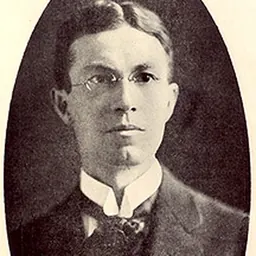
Contemporaries
People whose lives overlapped James McHenry Jones's
Frequently asked questions
Who was James McHenry Jones?
American educator, school administrator, businessperson, and minister
When was James McHenry Jones born?
James McHenry Jones was born on 28 August 1859 in Gallipolis.
When did James McHenry Jones die?
James McHenry Jones died on 22 September 1909 in Institute, West Virginia.
What was James McHenry Jones's occupation?
James McHenry Jones was an academic, businessperson, novelist and head teacher.
Sources & further reading
· Wikipedia: James McHenry Jones
· DBpedia: James McHenry Jones
Cite this page
APA: Biography.guide. (2026). James McHenry Jones. https://biography.guide/james-mchenry-jones/
MLA: "James McHenry Jones." Biography.guide, https://biography.guide/james-mchenry-jones/.
Chicago: "James McHenry Jones." Biography.guide. https://biography.guide/james-mchenry-jones/.
Data last updated: 2026-09-20 · Spot an error? Report a correction.
Page generated 2026-09-27 05:26 UTC