
James MacLaine
British highwayman
About James MacLaine
Lived 1724 – 1750 (aged 25–26). James MacLaine was an Irish highwayman and grocer.
"Captain" James Maclaine (occasionally "Maclean", "MacLean", or "Maclane") (1724 – 3 October 1750) was an Irish man of a respectable presbyterian family who had a brief but notorious career as a mounted highwayman in London with his accomplice William Plunkett. He was known as "The Gentleman Highwayman" as a result of his courteous behaviour during his robberies, and obtained a certain kind of celebrity. Notoriously, he held up and robbed Horace Walpole at gunpoint: eventually he was hanged at Tyburn.
The film Plunkett & Macleane was based loosely on his exploits.
Young life Maclaine was the younger of two sons of a Scots-Irish presbyterian minister, the Revd. Thomas (?or Lauchlin) Maclaine of 1st Monaghan Presbyterian Church in Ireland. His mother, Elizabeth (née Milling) died when he was five or six years old, and his father when he was sixteen or seventeen. He came of a family of many ministers, his grandfather (a Gaelic-speaking clergyman in the Church of Scotland) having received a calling to Ireland from Argyllshire in 1698. His elder brother Archibald Maclaine (1722–1804) was educated in Glasgow and followed his own vocation as presbyterian minister, scholar and royal preceptor in the Netherlands between 1746 and 1796, famous as the first translator (1765) of Johann Lorenz von Mosheim's Ecclesiastical History (of 1726).
Educated to become a merchant, James Maclaine frittered away his inheritance in Dublin on fine clothes, gambling and prostitutes. Such inheritance as James received had mostly been dissipated by the time he was 20, and his mother's relations soon quarreled with him and refused to give him any assistance. He attached himself to the domestic service of a Mr Howard in order to travel to England, and stayed with him for a while, but got into low company and, leaving without testimonials, returned to Ireland. His mother's kin still refusing to help, his brother sent him subsidies and letters of good advice from The Hague: these proving insufficient, he considered joining the Irish Brigade in the French army, but was told that he would make little progress with them unless he became a Roman Catholic, which he was unwilling to do. His friends in London raised a small subscription to enable him to ship for Jamaica, but he took the money to the Masquerades (i.e. the public gardens) and squandered it at the gaming tables. At length he found himself a wife, the daughter of an innkeeper or horse-dealer in Oxford Road, London, whom he married in about 1746.
With the dowry of five hundred pounds Maclaine set himself up as a grocer in Welbeck Street, Cavendish Square. This was no great success, however, as he did not apply himself very much, though his neighbours could not afterwards point to any real misdemeanour in his behaviour at that time. Two daughters were born to them, one of whom survived, but his wife died within three years.
Highwayman Maclean and Plunket depicted by H. J. Ford, The Strange Story Book,1913 By his own account, Maclaine embarked on his career of crime about six months after his wife's death. At his interrogation he was encouraged to lay evidence against his accomplices, and at his trial he sought to lay a good deal of the blame for his course of life upon Plunkett (who was never caught or tried), so his narrative may not be entirely accurate. He claimed that Plunkett, a fellow-Irishman, had led him to believe he had travelled abroad, and persuaded Maclaine to employ him in his household and to lend him £100, part of which was paid back sporadically. Maclaine explained his melancholy to Plunkett as his money was running out, and Plunkett replied,"Honey, I thought, Maclean, thou hadst Spirit and Resolution, with some Knowledge of the World. A brave Man cannot want; he has a Right to live, and need not want the Conveniencies of Life, while the dull, plodding, busy Knaves carry Cash in their Pockets. We must draw upon them to supply our Wants, there need only Impudence, and getting the better of a few silly Scruples; there is scarce Courage necessary, all we have to deal with are such mere Poltroons."
Afterwards, to prove himself, Maclaine alone held up a gentleman on horseback in Hyde Park and relieved him of his money and his watch. Walpole wrote,"One night, in the beginning of November 1749, as I was returning from Holland House by moonlight, about ten o'clock, I was attacked by two highwaymen in Hyde Park, and the pistol of one of them going off accidentally, raised the skin under my eye, left some marks of shot in my face, and stunned me. The ball went through the top of the chariot, and if I had sat an inch nearer to the left side, must have gone through my head." They took his watch and purse, his sword, and some money from the footman. Soon afterwards, Maclaine sent Walpole a letter (as from "A.B. and C.D.") offering him first refusal to buy back his stolen possessions, indicating that he should send a servant with the money to a rendezvous at Tyburn, and threatening fatal consequences to Walpole if he betrayed them. He suggested he sent the footman, as he wanted to give the man his money back.
The thieves were often restrained and courteous, earning Maclaine the sobriquet "The Gentleman Highwayman". Living in St James's Street (next door to White's), he was now passing himself off as an Irish gentleman worth £700 a year, and he and Plunkett (who had lodgings in Jermyn Street) were said to be well-known figures about St James's. Maclaine had recently obtained a certificate attesting to his descent from the nobility.
Arrest and examinations On 26 June 1750, Plunkett and Maclaine held up the coach of the Earl of Eglinton on Hounslow Heath. Plunkett went forward of the carriage and took hold of the postilion, so that Lord Eglinton, who was carrying his famous blunderbuss, could not fire at him without killing his own servant. Maclaine, who was behind, commanded his Lordship to throw his blunderbuss out of the chaise, or he would "blow his brains through his face". They took the blunderbuss, together with a portmanteau and 50 guineas.
Between one and two o'clock in the morning of the same day, they held up the flying coach at Chiswick, between Turnham Green and Brentford, which was carrying six passengers on its way to Salisbury going westward out of London. Wearing masks and carrying pistols, they demanded money from the passengers. When one, Josiah Higden, gave them a few shillings, he was told this was not enough. They ordered him out of the carriage, took more money out of his pockets, and threatened to blow his brains out for concealing it. They then obliged the coachman to help them to take two clothes trunks out of the coach boot, and rode off with them. One belonged to Mr Higden, and was later found empty in Kensington Gravel Pits. and in 1763 was elected Master of the Society of Apothecaries of London. )
After this robbery, information on the stolen items was circulated and led to Maclaine's arrest. He stripped the lace from a waistcoat taken in the robbery and attempted to sell it to a pawnbroker in Monmouth Street, who by chance took it to the same man who had just sold the lace and recognised it. Rather than returning home to fetch the money to pay for the lace, the man alerted a constable and Maclaine was arrested. When the premises were searched many of the other things the men had stolen, including Lord Eglington's blunderbuss and coat, were uncovered. They also found a frock coat with a pair of loaded pistols in the pockets.
Josiah Higden, "whose word and honour are too well known to doubt the truth", decided to press charges, saying he went through with it "in duty to my country". At his arrest (which was on 27 July 1750 The indictment was that Maclean had made an assault on Higden on the King's Highway, putting him in corporal fear and danger of his life. (This was the capital offence.) It enumerated the goods taken, including a cloth coat, a pair of cloth breeches, a periwig, a pair of pumps, five holland shirts, three linen stocks, two pairs of stockings, one silk and one worsted, a pair of gloves, a pair of silver spurs and a pair of silver shoe-buckles, a pair of knee buckles, half a pound of tea and other necessaries, including two guineas which Mr Higden had about his person.
Trial and execution
At Maclaine's trial at the Old Bailey, on 12 September 1750, The jury did not believe him.
The trial became a fashionable society occasion. A contemporary broadside includes an illustration: a Lady (perhaps Lady Caroline Petersham) is shown appearing as a character witness. One of the justices is saying, "What has your Ladyship to say in favour of the Prisoner at the Bar?", and she replies, "My Lord, I have had the Pleasure to know him well, he has often been about my House and I never lost anything." Lord Eglinton declined to testify against him, and Walpole, reporting Maclaine's condemnation in a letter dated 20 September, added, "I am honourably mentioned in a Grub Street ballad for not having contributed to his sentence."
His romantic circumstances touched many hearts: a print entitled "Newgates Lamentation, or the Ladys Last Farewell of Macleane" illustrates visitors to his cell. He reputedly received nearly 3,000 guests while imprisoned at the Newgate, including a visitation en masse from White's, and his room became so hot that he fainted more than once. While under sentence his portrait was drawn from the life and afterwards engraved by Louis Peter Boitard.
His brother Archibald, the minister and translator, though he was revolted and heartbroken by his brother's crimes and had often warned him of the consequences of his dissolute behaviour, wrote a letter from Utrecht to intercede with the court for mercy for his brother, and also wrote to James himself and to Dr Allen, the minister who attended him. Archibald expressed deep conflict between his compassion for the sinful man, his duty to uphold the path of righteousness, and his uncertainty of the true nature of his brother's repentance. The letter written by Archibald Maclaine to his "Unhappy Brother" on 22 September 1750 was a call to absolute repentance before God in knowledge of the coming Judgement. Dr Allen recorded his eventual narrative of confession.
He was convicted: the jury brought him in Guilty without going out of court. No remission was forthcoming, despite various signs of penitence shown by the prisoner. When the judge asked him why he should not be sentenced, Maclaine, who had prepared a short speech expressing his contrition and pleading for mercy, was unable to say more than one or two words, "My lord, I cannot speak," and stood in silence. The poet Thomas Gray, in his poem "A Long Story", referred to this when he wrote,"A sudden fit of ague shook him,He stood as mute as poor McLean."
He was hanged at Tyburn on 3 October 1750. Dr Allen reported that a young fellow-prisoner who had kept him company sat up with Maclaine through his last night in prayer and devotion, and as Maclaine got into the cart to take him to Tyburn he was heard to say, "Oh my God! I have forsaken thee! But I will trust in thee!" A great crowd attended the execution, before whom he maintained a steady composure, and his last words to them were, "O God, forgive my enemies, bless my friends and receive my soul!" A later publication tells that, as the cart was about to be drawn from under him, a witness heard him say, "I must never more behold this beauteous sun! Do thou, O sun of righteousness, shine on my departing soul."
In popular culture
Maclaine could not have been the model for Captain Macheath, antihero of John Gay's The Beggar's Opera (reinvented by Berthold Brecht as "Mack the Knife"), because The Beggar's Opera was written in 1728, when Maclaine was only four. (The preferred claimant for that distinction is Jack Sheppard.) Rather, Maclaine's romantic image owed something to the popular example of Macheath, the chivalrous highwayman, reinforced by the fact that Macheath's character in some measure satirized Sir Robert Walpole (1st Earl of Orford, died 1745), Horace Walpole's father.
Horace Walpole alluded to this when he wrote, in 1750, that Lady Caroline Petersham and Miss Ashe were the chief personages visiting and weeping over Maclaine, and referred to them as "Polly" and "Lucy" (meaning Polly Peachum and Lucy Lockit, characters in the drama). He asked them if Maclaine did not sing "Thus I stand like the Turk with his doxies around", which was one of Macheath's songs. William Hogarth included a representation of Maclaine's skeleton in the final plate of his series The Four Stages of Cruelty. Maclaine's execution was the subject of a Cheap Repository Tract of 1795, which went through several editions.
A modern fictionalised portrayal of Maclaine's life appears in the 1999 film Plunkett & Macleane, in which he was played by Jonny Lee Miller.
Don’t just read it —
keep it.
Full-length biographies made to live with: read them, listen on the way to work, watch them tonight.
- E-book
- Audio
- Video
Instant download · yours to keep · every purchase keeps this site free
Important facts
People in James MacLaine's life
Named in this biography and alive at the same time
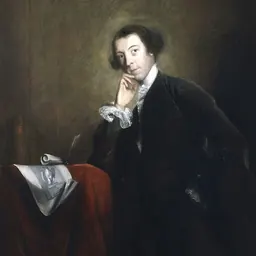



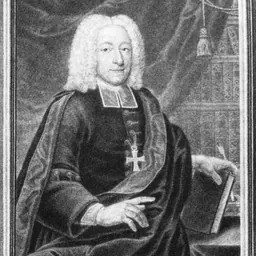

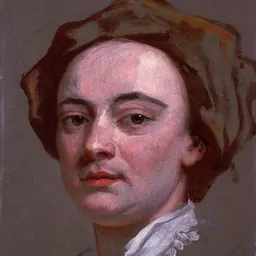
Related people
Same field, nearest in time




Contemporaries
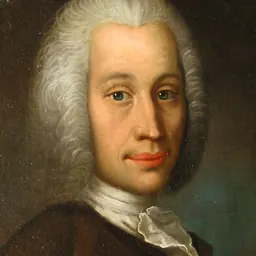
People whose lives overlapped James MacLaine's



Frequently asked questions
Who was James MacLaine?
British highwayman
When was James MacLaine born?
James MacLaine was born in 1724 in County Monaghan.
When did James MacLaine die?
James MacLaine died on 3 October 1750 in Tyburn.
What was James MacLaine's occupation?
James MacLaine was a highwayman and grocer.
What nationality was James MacLaine?
James MacLaine was Irish.
Sources & further reading
Cite this page
APA: Biography.guide. (2026). James MacLaine. https://biography.guide/james-maclaine/
MLA: "James MacLaine." Biography.guide, https://biography.guide/james-maclaine/.
Chicago: "James MacLaine." Biography.guide. https://biography.guide/james-maclaine/.
Data last updated: 2026-09-22 · Spot an error? Report a correction.
Page generated 2026-09-27 05:19 UTC