
About James L. Kraft
Lived 1874 – 1953 (aged 78). James L. Kraft was a Canadian entrepreneur, known for Kraft Foods Inc.
James Lewis Kraft (; December 11, 1874 – February 16, 1953) was a Canadian-American entrepreneur and inventor. Kraft emigrated to the United States from Canada in 1902 and established a wholesale cheese distribution business, J.L. Kraft & Bros. Company, in 1903. The business eventually became Kraft Foods Inc., the former multinational confectionery, food and beverage conglomerate (now succeeded by Mondelez International ). He also developed a patented pasteurization process for cheese that did not require refrigeration, allowing it to be shipped long distances, and putting him among the first to patent a processed cheese. was born on December 11, 1874, near Stevensville, Ontario, Canada, located just north of Fort Erie, to Mennonite parents Minerva Alice née Tripp (1848–1933) and George Franklin Krafft (1842–1914), a farmer of German descent. He was the second of eleven children. Kraft was educated in the Stevensville area (S.S. No. 9) and worked nearby at Ferguson's General store in Fort Erie from 1901 to 1902.
According to Ruth Kraft Anderson, daughter of Kraft's brother Will, the name was originally spelled with two fs, but Kraft decided to remove one f when he began the company.
Kraft immigrated to Buffalo, New York (directly across the Niagara River from Fort Erie), in 1902, taking a position as secretary and treasurer of the Shefford Cheese Company. He became a partner in the company the following year, but his partners abruptly dissolved the agreement while he was on a business trip to Chicago—either to inspect the local branch of the company or to supervise it. Stranded, Kraft used his remaining $65 in capital to rent a horse and wagon and established a business that bought cheese wholesale and sold it to local grocers. A year later, he would write to a friend: "I haven't got a comparatively large business now, but I know what I can do and in less than five years I am honest in saying I expect to have one of the best wholesale cheese businesses in this City."
Kraft was an amateur jewelry maker and would look for unpolished jade on the road, which he would shape, polish, and set into rings. The rings were then given as awards to outstanding employees, and they often became family heirlooms. Kraft even wrote a book on jewelry called Adventure in Jade and owned jade mines in Alaska and California. He was "deeply involved" in the North Shore Baptist Church in Chicago
In the mid-1920s, Kraft began a venture to create a fashionable golf and tennis resort community in Lake Wales, Florida, along with Carl and Bertha Hinshaw. The Florida land bust and the stock market crash in October 1929 spelled the end of the Kraft connection. The Chalet Suzanne opened in 1931, the worst year of the Great Depression, and has been run by successive generations of the Hinshaw family ever since. Even though Kraft bowed out of the development, a 1920s-era Spanish Revival house on the property continues to be called the Kraft House.
Kraftwood In 1926, Kraft Foods opened a manufacturing plant in Antigo, Wisconsin. At the time there was a train route running from the north woods to Chicago which facilitated both industrial shipping and personal transport for the area. It reminded Kraft so much of his childhood home that he decided to purchase some land there. This decision would lead to building a sprawling estate, and spending his summers there with his wife Pauline, his family and friends. Kraftwood was built along the edge of Lake Mashkinosiew, just 20 miles north of downtown Antigo.
Kraft was a close friend of the president and founder of the Orange Crush company, C. J. Howel. Howel, his wife and daughter Annie Jo spent every summer at Kraftwood from 1927 to at least 1934.
Personal life
J. L. Kraft and his wife Pauline had one daughter, Edith (c. 1916–2012). The Krafts' home, built in 1930 by architect Abraham Epstein, stands at 17 Canterbury Court in Wilmette, Illinois. Kraft has living family members in Illinois and in Fort Erie, Ontario. He is interred in the Memorial Park Cemetery in Skokie, Illinois.
Legacy Kraft was born in the house at 3347 Bowen Road in Fort Erie. Known as the Kraft House, it was built on land farmed by Francis Kraft, who sold the land to Kraft's father, George Krafft. The site was designated under the Ontario Heritage Act in 2003 by the town of Fort Erie in recognition of Kraft's achievements in founding and building one of North America's largest companies.
Don’t just read it —
keep it.
Full-length biographies made to live with: read them, listen on the way to work, watch them tonight.
- E-book
- Audio
- Video
Instant download · yours to keep · every purchase keeps this site free
Important facts
People in James L. Kraft's life
Named in this biography and alive at the same time
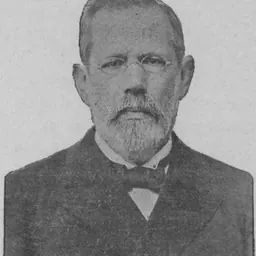

Related people
Same field, nearest in time
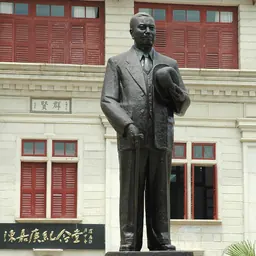
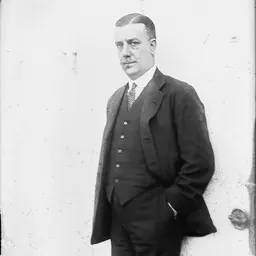




Contemporaries
People whose lives overlapped James L. Kraft's
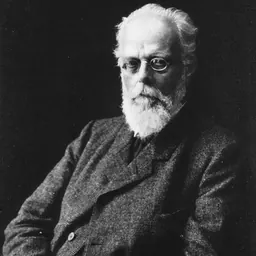
Frequently asked questions
Who was James L. Kraft?
Canadian-American businessman
When was James L. Kraft born?
James L. Kraft was born on 11 December 1874 in Stevensville.
When did James L. Kraft die?
James L. Kraft died on 16 February 1953 in Chicago.
What was James L. Kraft's occupation?
James L. Kraft was an entrepreneur.
What was James L. Kraft known for?
James L. Kraft was known for Kraft Foods Inc.
What nationality was James L. Kraft?
James L. Kraft was Canadian.
Sources & further reading
Cite this page
APA: Biography.guide. (2026). James L. Kraft. https://biography.guide/james-l-kraft/
MLA: "James L. Kraft." Biography.guide, https://biography.guide/james-l-kraft/.
Chicago: "James L. Kraft." Biography.guide. https://biography.guide/james-l-kraft/.
Data last updated: 2026-09-25 · Spot an error? Report a correction.
Page generated 2026-09-27 05:11 UTC