
About James Irwin
Lived 1930 – 1991 (aged 61). James Irwin was an American military officer, astronaut, aircraft pilot, military flight engineer, preacher and musician.
James Benson Irwin (March 17, 1930 – August 8, 1991) was an American astronaut, aeronautical engineer, test pilot, and a United States Air Force pilot. He served as Lunar Module pilot for Apollo 15, the fourth human lunar landing. He was the 8th person to walk on the Moon.
Early life and education James Benson Irwin was born March 17, 1930, in Pittsburgh, Pennsylvania, to James William Irwin, a U.S. Army veteran of World War I, and Elsa Mathilda Irwin . Irwin's paternal grandparents emigrated to the U.S. from Altmore Parish in Pomeroy, County Tyrone, Ireland (now Northern Ireland) around 1859.
In 1941, Irwin lived at 6006 Grand Boulevard in New Port Richey, Florida, and attended Pierce Elementary School (today the site of the New Port Richey Public Library and City Hall). While he was in the sixth grade, Irwin was also enrolled in seventh grade classes at Gulf High School due to his advanced aptitude. He is listed as a seventh grader in the 1942 Gulf High School yearbook. Throughout his life, Irwin frequently returned to New Port Richey, where he was a member of and attended the First Baptist Church.
At about the age of 12, he informed his mother about his desire to go to the Moon, letting her know that he might be the first person to do so (he ended up being the eighth). He graduated from East High School in Salt Lake City, Utah, in 1947. He received a Bachelor of Science degree in naval science from the United States Naval Academy in 1951, and Master of Science degrees in aeronautical engineering and instrumentation engineering from the University of Michigan in 1957.
He received initial flight training at Hondo Air Base and follow-up training at Reese Air Force Base, near Hondo and Lubbock, Texas, respectively. He graduated from the Air Force Experimental Flight Test Pilot School (Class 60C) in 1961, and the Aerospace Research Pilot School in 1963 (Class IV). Prior to joining NASA, he was chief of the Advanced Requirements Branch at Headquarters Air Defense Command. During his time in the United States Air Force, he received the Air Force Distinguished Service Medal and two Air Force Commendation Medals. He also received an Air Force Outstanding Unit Award while with the 4750th Training Wing.
In 1961, a student pilot that Irwin was training crashed the plane they were flying on a training mission. They both survived, but Irwin suffered compound fractures, amnesia, and nearly lost a leg. John Forrest, a U.S. Air Force orthopedic surgeon, was instrumental in preventing the amputation of Irwin's leg.
During his military service, he accumulated more than 7,015 hours flying time, of which 5,300 hours were in jet aircraft.
NASA career
Irwin was one of the 19 astronauts selected by NASA in April 1966. He was chosen as commander, with John S. Bull as lunar module pilot, for LTA-8, an environmental qualification test of the Apollo Lunar Module in a vacuum chamber at the Houston Space Environment Simulation Laboratory. He then served as a member of the astronaut support crew for Apollo 10, the first mission to carry the full Apollo stack to the Moon and the dry run for the first crewed Moon landing. Following that assignment, Irwin served as backup lunar module pilot for the second Moon landing mission, Apollo 12. Irwin and Scott's mission was more science-based than previous missions, which meant that they received intensive geological training to meet the demanding nature of the J-Mission profile. The astronauts' vital signs were being monitored back on Earth, and the flight surgeons noticed some irregularities in Irwin's heart rhythms. Charles Berry stated to Chris Kraft, deputy director of the Manned Spacecraft Center (MSC) at the time: "It's serious, f he were on Earth. I'd have him in ICU being treated for a heart attack." The flight surgeons continued to monitor his EKG until splashdown, but his heart rhythm was normal.
Post-NASA career
After the return of Apollo 15 to Earth, it was discovered that without authority the crew had taken 398 commemorative first day covers to the Moon of which a hundred were then sold to a German stamp dealer. The profits of the sale were intended to be used to establish trust funds for the children of Apollo 15's crew. NASA had turned a blind eye to similar activities on earlier flights, but on this occasion the administration reprimanded the astronauts, and they never received any funds from the sales. Irwin had announced his intent to retire from the Air Force and resign from NASA prior to the reprimand. During a subsequent investigations by NASA, the Attorney General, and Congress, the astronauts surrendered the covers still in their possession; they were returned in 1983. Slate magazine opined that the action effectively exonerated the astronauts.
By his own admission, Irwin was not a committed Christian during his years at NASA. After his retirement as a colonel in 1972, Irwin founded the High Flight Foundation. He said that his experiences in space had made God more real to him than before.
Beginning in 1973, Irwin led several expeditions to Mount Ararat, Turkey, in search of the remains of Noah's Ark. In More Than Earthlings, Irwin wrote expressing his view that the Genesis creation narrative was real, literal history.
Death
Irwin suffered three major heart attacks. One occurred less than two years after Apollo 15, when Irwin was 43, while he was playing handball; he underwent an emergency triple bypass operation. Two months later he suffered a subsequent heart attack while skiing in Colorado. Irwin suffered another heart attack on June 6, 1986, when he collapsed during a run and was found pulseless on a curb. Doctors from NASA doubted the incidents were related to space travel, and noted that pre-flight testing indicated him having a tendency for cardiac arrhythmias during strenuous exercise.
Of the 12 men who have walked on the Moon, Irwin was the first to die. The James Irwin Charter Schools were founded in Colorado in his honor.
A patch cut by Irwin from a backpack abandoned on the Moon during the Apollo 15 mission was auctioned at Christie's in 2001 for $310,500 in a consignment of material from Irwin's estate that garnered "a combined $500,000".
Organizations Irwin was a member of the Air Force Association and the Society of Experimental Test Pilots.
Irwin was a member of Civitan International, a nonprofit organization promoting community service, scientific research, and service to people with intellectual and developmental disabilities.
Awards and honors Command Pilot Astronaut Wings and posthumously into the U.S. Astronaut Hall of Fame, on October 4, 1997.
In 1973, When Irwin visited the city of Minden, Louisiana, to address a gathering at the First Baptist Church, Mayor Tom Colten declared "James Irwin Day" and made Irwin an "honorary citizen of Minden."
In media The character of Spike Tiggler in the 1989 novel A History of the World in 10½ Chapters by Julian Barnes is based on Irwin.
In the 1998 HBO miniseries From the Earth to the Moon Irwin was played by Gareth Williams.
Don’t just read it —
keep it.
Full-length biographies made to live with: read them, listen on the way to work, watch them tonight.
- E-book
- Audio
- Video
Instant download · yours to keep · every purchase keeps this site free
Important facts
People in James Irwin's life
Named in this biography and alive at the same time


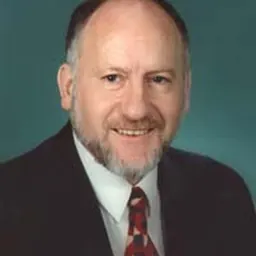



Related people
Same field, nearest in time

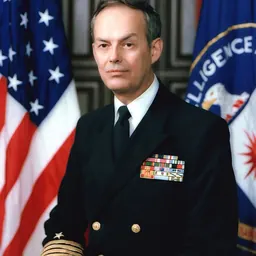

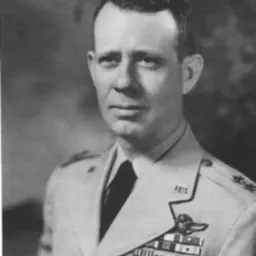
Contemporaries
People whose lives overlapped James Irwin's
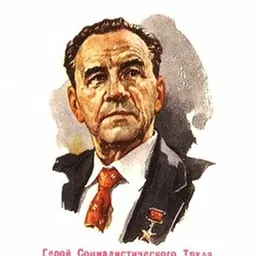
Frequently asked questions
Who was James Irwin?
American astronaut (1930-1991)
When was James Irwin born?
James Irwin was born on 17 March 1930 in Pittsburgh.
When did James Irwin die?
James Irwin died on 8 August 1991 in Glenwood Springs.
What was James Irwin's occupation?
James Irwin was a military officer, astronaut, aircraft pilot, military flight engineer, preacher and musician.
What nationality was James Irwin?
James Irwin was American.
Sources & further reading
Cite this page
APA: Biography.guide. (2026). James Irwin. https://biography.guide/james-irwin/
MLA: "James Irwin." Biography.guide, https://biography.guide/james-irwin/.
Chicago: "James Irwin." Biography.guide. https://biography.guide/james-irwin/.
Data last updated: 2026-09-20 · Spot an error? Report a correction.
Page generated 2026-09-27 05:22 UTC