
About James Hogarth Pringle
Lived 1863 – 1941 (aged 78). James Hogarth Pringle was an Australian surgeon.
James Hogarth Pringle (born 26 January 1863 in Parramatta, Australia – died 24 April 1941 in Killearn, Scotland) was an Australian-born British surgeon in Glasgow, who made a number of important contributions to surgical practice. He is most famous for the development of the Pringle manoeuvre, a technique still used in surgery today.
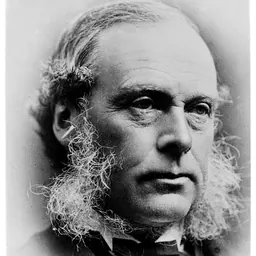
Early life He was the only son of George Hogarth Pringle (1830–1871) a well known surgeon in Parramatta, New South Wales, Australia. Before emigrating to Australia George Hogarth Pringle had worked in Edinburgh with Joseph Lister and had been responsible for the introduction of antiseptic surgical practice into Australia. After his father died in 1872, James returned to Britain to school at Sedbergh School in Cumbria and from there entered the University of Edinburgh Medical School to study medicine, graduating in 1885.
After graduation he was able travel to Europe to study surgical practice at Hamburg, Berlin and Vienna. This visit to European centres was to prove important because he maintained links particularly with German, Austrian and Swiss surgeons, keeping up to date with their literature. He had training in ophthalmology at Moorfields Eye Hospital in London before becoming house surgeon under Professor Thomas Annandale (1838–1907) in Edinburgh Royal Infirmary, and then house surgeon under Sir William Macewen (1848–1924) in Glasgow Royal Infirmary. In 1892, he became a fellow of the Royal College of Surgeons of England (FRCSEng) and was appointed Surgeon to Glasgow Royal Infirmary in 1896. He became a Fellow of the Faculty of Physicians and Surgeons of Glasgow in 1899.
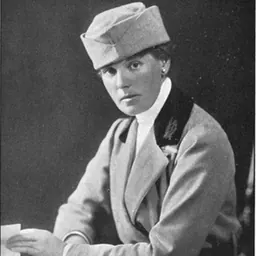
Supporter of women in medicine Pringle and Sir William Macewen were among the few senior figures in medicine at that time who were sympathetic to women in medicine, readily accepting women students into their clinics. Some of these were to become well known figures in later life including Louise McIlroy (1874–1968), Elsie Inglis (1864–1917), and Helen Wingate (1895–1985). In 1899, Pringle was appointed Lecturer in Surgery and Demonstrator in Anatomy to Queen Margaret College which had been established for women students and opened in 1868 and began to teach women medical students in 1890–91. This allowed James Hogarth Pringle an early, perhaps unique experience in fracture diagnosis and management using x-rays, and formed the basis for his book on fractures and their treatment. He had the added advantage of working in the hospital where Joseph Lister had first introduced antisepsis and would surely have been aware of his own father's work on antisepsis in introducing Listerian antisepsis into Australia. He was, like Sir William Macewen, an early exponent of aseptic technique in surgery. Both of these factors undoubtedly contributed to his expertise and success with fracture management. In 1910, he published Fractures and their Treatment, a textbook which became a standard and authoritative work on fracture treatment for more than a generation.
Hindquarter amputation He was also a pioneer of hindquarter amputation, a radical operation involving division of the pubic symphysis and the sacroiliac joint, performing the first successful such amputation in Britain in 1900 for tuberculosis of the hip which had spread to the pelvis. He was the first in the world to perform the one stage procedure for sarcoma of the thigh. The size and relative success of Pringle's series may be judged by comparison with the subsequent experience of Sir Gordon Gordon-Taylor, widely regarded as a pioneer of the technique, who was generous in his praise of Pringle's technique and results.
Head injury Pringle developed expertise in head injury, working as assistant to Macewen, a pioneer of neurosurgery. Pringle's casebooks demonstrate the standard skull charts he devised for the recording of head injuries and the precise site and extent of skull fractures. In these casebooks he recorded the levels of consciousness, meticulous neurological examinations and fundoscopy which he had performed in such cases. These casebooks, neatly written and with meticulous coloured illustrations, offer an insight into the mind of a surgeon who was both painstaking and methodical. Some thirty years later he was able to publish a follow-up reporting two of these cases alive and well, 30 and 38 years on. His description of en-block excision is much as is practised today and appears to be the first description of what was to become an accepted surgical treatment.
The Pringle manoeuvre It is for the Pringle manoeuvre that his name remains known throughout the surgical world. The technique of occluding the portal triad to control haemorrhage in liver trauma which he described in the Annals of Surgery in 1908 is still widely used in modern hepatic surgery to minimise blood loss. Pringle's paper attests to the originality and logic of his thinking, often flying in the face of mainstream opinion. In describing his experience in dealing with liver injury he observed that portal triad occlusion controlled the bleeding from the liver sufficient to allow suturing or packing. "An assistant," he wrote, "held the portal vein and the hepatic artery between a finger and thumb and completely arrested all bleeding.”
Don’t just read it —
keep it.
Full-length biographies made to live with: read them, listen on the way to work, watch them tonight.
- E-book
- Audio
- Video
Instant download · yours to keep · every purchase keeps this site free
Important facts
People in James Hogarth Pringle's life
Named in this biography and alive at the same time




Related people
Same field, nearest in time


Contemporaries
People whose lives overlapped James Hogarth Pringle's


Frequently asked questions
Who was James Hogarth Pringle?
British surgeon (1863-1941)
When was James Hogarth Pringle born?
James Hogarth Pringle was born on 26 January 1863 in City of Parramatta.
When did James Hogarth Pringle die?
James Hogarth Pringle died on 24 April 1941 in Killearn.
What was James Hogarth Pringle's occupation?
James Hogarth Pringle was a surgeon.
What nationality was James Hogarth Pringle?
James Hogarth Pringle was Australian.
Sources & further reading
· Wikipedia: James Hogarth Pringle
· DBpedia: James Hogarth Pringle
Cite this page
APA: Biography.guide. (2026). James Hogarth Pringle. https://biography.guide/james-hogarth-pringle/
MLA: "James Hogarth Pringle." Biography.guide, https://biography.guide/james-hogarth-pringle/.
Chicago: "James Hogarth Pringle." Biography.guide. https://biography.guide/james-hogarth-pringle/.
Data last updated: 2026-09-20 · Spot an error? Report a correction.
Page generated 2026-09-27 05:34 UTC