
James Henry Coffin
Meteorologist and mathematician
About James Henry Coffin
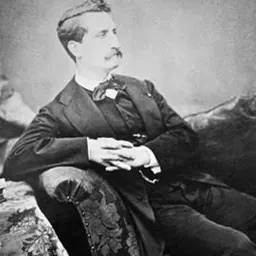
Lived 1806 – 1873 (aged 66). James Henry Coffin was an American mathematician, meteorologist, meteorological observer and astronomer, known for Buys Ballot's law and Wind theory.
James Henry Coffin (September 6, 1806 – February 6, 1873) was an American mathematician and meteorologist.
Biography
Life Coffin was born on September 6, 1806, in Williamsburg, Massachusetts. He was descended from Tristram Coffin, the first owner of Nantucket Island. Coffin was an orphan, and was raised by his uncle, the Reverend Moses Hallock. He attended Amherst College in Amherst, Massachusetts, from where he graduated in 1828. He had a son, Selden J. Coffin. He died in Easton, Pennsylvania on February 6, 1873.
Career After graduating from Amherst, Coffin became a teacher at various schools and colleges. His career in meteorology began in 1838. He worked at Williams College in Williamstown, Massachusetts, from 1840 to 1843, during which he installed an apparatus for detecting the wind's direction and velocity, atop Mount Greylock, the highest point in Massachusetts.
Contributions to meteorology Coffin made significant contributions to contemporaneous studies of winds. He is most noted for two publications: Winds of the Northern Hemisphere and The Winds of the Globe. Winds of the Northern Hemisphere was commissioned by the American Association for the Advancement of Science in an attempt to help predict the occurrence of storms. The second, also commissioned by the American Association for the Advancement of Science, was meant to extend the work of the previous publication in light of increased interest from agricultural, engineering, and manufacturing interests. Ultimately, both were published by the Smithsonian Institution, and provided novel theoretical contributions and a wealth of tabulated raw data for use by others. Finally, it is worth noting that much of The Winds of the Globe was written posthumously. Coffin gathered the data, but died before any detailed analysis could be made of them; Coffin's coworker, Dr. Alexander J. Woeikof performed that analysis instead.
The Winds of the Northern Hemisphere
Data In this book, Coffin aggregates measurements of the "lower strata"—any wind directly measurable by weather vane, windmill or other ground-based apparatus—from 579 stations across the Northern Hemisphere. The distribution of these stations, as well as the sum of the duration of measurements at each station is shown in Table 1. From each station, Coffin aggregated five measurements: the mean direction of wind, its mean speed, mean rate of change over the course of the year, direction and amount of "deflecting forces" that caused such changes, and the ratio of time spent blowing in the direction of the points of the compass.
Analysis
From this Coffin draws several general conclusions. First, Coffin was able to establish the existence of two of the three trade winds, the southwesterly band around 60° latitude, and the northeasterly band above it. He then unified two contemporary theories of global wind systems in order to explain the phenomena. Second, Coffin correlates the prevalence of monsoons with seasonal temperature differences caused by difference between the relatively stable temperature of large bodies of water, and the much less stable temperature of landmasses. Third, by the same principle, Coffin notes that lakes significantly disrupt wind flow. Coffin believes he can then straightforwardly claim that, though there are two prevailing trade winds, their course can, and often is, diverted by landmasses and smaller bodies of water.
The remainder of the book is spent discussing particular phenomena, and explaining them in terms of the above general principles. It also includes an appendix with excerpts of scientific correspondence that Coffin deemed relevant.
Limitations and criticism The most prominent criticism of The Winds of the Northern Hemisphere was its relatively sparse coverage outside the US and Europe; this ultimately became one of the motivation for writing The Winds of the Globe. Coffin also notes two other methodological issues. First, measurements of velocity were sometimes estimated qualitatively on a 1-10 scale. Second, since cloud height can only be estimated as well, what constitutes the "lower strata" is not entirely clear—especially when differences between upper and lower strata were apparent.
The Winds of the Globe
Data The Winds of the Globe had a much more expansive data set than its predecessor. In this book, Coffin aggregates measurements of the "lower strata" from 3223 stations across the world. A summary of the distribution of these stations, as well as the sum of the duration of measurements at each station is reproduced in Table 2.
Analysis The data in The Winds of the Globe leads to conclusions that generally agree with those of its predecessor. Woeikof confirms the existence of the two trade winds found above 30° latitude, and established the existence of a third, southwesterly band between 0°-30° latitude. The greater wealth of data also allows Woeikof to give a more accurately describe the extent of these winds, each of the three spanning 30° latitude from the equator on top of the other. The reverse happens in our winter. Contrarily, it served to problematize Hadley's contemporaneous theory about the movement of the upper atmosphere, and the effect of gravity on the shape of convection cells.
Woeikof then applied these general conclusions to particular instances. Most notably, he was able to explain the mechanism behind the dry and wet seasons of Asia and Australia, as well as their corresponding monsoons. Woeikof was also able to use the effect of landmasses on wind currents to explain the difference in climate between Asia and North America based on the differing geographies of the two regions.
Reception/legacy As stated in his The Winds of the Globe, Winds of the Northern Hemisphere was not received well due to its spotty coverage of Asia, the Oceans, and Central America. However, NOAA still calls The Winds of the Northern Hemisphere a "most important work" in the history of meteorology. Additionally, the Smithsonian Institution called Wind of the Northern Hemisphere "an important addition to meteorology." Finally, Winds of the Northern Hemisphere was given out as a reference book to the first sergeants of the US weather service.
Coffin's more universally acclaimed contributions to meteorology began with his Winds of the Globe, which helped pick out flaws in the prevailing theory by Hadley. Ferrel used Coffin's data to confirm theories of about the "general circulation of the atmosphere." Youmans argues that Northern Hemisphere was the first to establish that there are three large circulation cells in the Northern, and then later the Southern, hemispheres. This, in combination with Coffin's derivation Buys-Ballot's law, found in another piece, lead Youmans to go so far as to say that Coffin's results "have been referred to in all the treatises on meteorology which have appeared since their publication, and they have been employed with other materials as the basis of the wind-charts of the Atlantic and Pacific oceans, prepared and published by the English Board of Trade." Henry, the leader of the Smithsonian Institution, called The Winds of the Globe "perhaps the most important contribution to knowledge which the institution has given to the world."
Don’t just read it —
keep it.
Full-length biographies made to live with: read them, listen on the way to work, watch them tonight.
- E-book
- Audio
- Video
Instant download · yours to keep · every purchase keeps this site free
Important facts
People in James Henry Coffin's life
Named in this biography and alive at the same time

Related people
Same field, nearest in time



Contemporaries
People whose lives overlapped James Henry Coffin's





Frequently asked questions
Who was James Henry Coffin?
meteorologist and mathematician (1806-1873)
When was James Henry Coffin born?
James Henry Coffin was born on 6 September 1806 in Williamsburg.
When did James Henry Coffin die?
James Henry Coffin died on 6 February 1873 in Pennsylvania, Easton.
What was James Henry Coffin's occupation?
James Henry Coffin was a mathematician, meteorologist, meteorological observer and astronomer.
What was James Henry Coffin known for?
James Henry Coffin was known for Buys Ballot's law and Wind theory.
What nationality was James Henry Coffin?
James Henry Coffin was American.
Sources & further reading
· Wikipedia: James Henry Coffin
Cite this page
APA: Biography.guide. (2026). James Henry Coffin. https://biography.guide/james-henry-coffin/
MLA: "James Henry Coffin." Biography.guide, https://biography.guide/james-henry-coffin/.
Chicago: "James Henry Coffin." Biography.guide. https://biography.guide/james-henry-coffin/.
Data last updated: 2026-09-20 · Spot an error? Report a correction.
Page generated 2026-09-27 05:30 UTC