
James Henry Carpenter
American Civil War, Founder of Carpenter Technology Corporation
About James Henry Carpenter
Lived 1846 – 1898 (aged 51). James Henry Carpenter was an American military officer and carpenter Technology Corporation.
James Henry Carpenter (September 14, 1846 – March 6, 1898) was a 19th-century American engineer and industrialist who founded the Carpenter Steel Company (renamed in 1968 as the Carpenter Technology Corporation). Born in Brooklyn, New York, he joined the Union Navy as a "cabin boy" at age 15 during the American Civil War, during which he was wounded in action. He was promoted to master's mate in the United States Navy for meritorious conduct and was appointed to the United States Naval Academy at age 16. He resigned from the US Navy in 1865, aged 19, and studied engineering in New Jersey.
On June 7, 1889, he founded the Carpenter Steel Company of Reading, Pennsylvania, becoming its general manager. Under his management, the company was a successful supplier of armor plating and ordnance to the US Navy.
Early life Carpenter was born in New Jersey on September 14, 1846, to William H. Carpenter and Elizabeth Wallace. His father is believed to be a descendant of Rehoboth Carpenter family and of its founder William Carpenter (born about 1605 in England), who migrated to America in 1638 on the Bevis. Carpenter was the first of five children. His youngest brother, Dr. Frank E. Carpenter (born 10 Jul 1858) worked with him in the mid to late 1890s at the Carpenter Steel Company.
Carpenter spent time on Long Island as a child, both in Jamaica, Queens, and in Brooklyn. Fascinated by sailing ships and by how things worked, he learned to sail small boats and said he wanted to be a sailor. He went to sea as a cabin boy in 1860, aged 14, with his father's permission.
Civil War In May 1861, at the start of the American Civil War, the 15-year-old Carpenter enlisted as a "cabin boy" and was assigned to USS Santee, a recently commissioned 44-gun wooden-hulled three-mast frigate under the command of Captain Henry Eagle. Santee arrived in the Gulf of Mexico in July, headed for Galveston, Texas, for Union blockade duty.
Carpenter was present when Santee captured the Confederate States Navy schooner C.P. Knapp off the Florida coast and the CSN brig Delta off Galveston in October. He was selected for a night-time cutting out operation that was intended to capture and burn the Confederate armed steamer General Rusk. After the boats ran aground and it took time to free them, the officer in charge chose a picket boat called the Royal Yacht as an alternate target. They captured it at the cost of two lives, setting fire to it and taking a dozen prisoners. Carpenter was one of the wounded, having been stabbed in the thigh during the hand-to-hand fighting, and took part in the capture of several enemy vessels. Carpenter started there in December 1862, when he was 16. He lived, worked, and studied on the school ships Constitution and Santee, the latter having recently been decommissioned as a warship and recommissioned as a school ship.
Carpenter was one of the cadets who sailed on Santee on August 2, 1865, to return to the USNA at Annapolis, Maryland, where the strict pre-war discipline and decorum of spit and polish was re-instituted. It was harsh change for many cadet midshipmen, like Carpenter, who obtained many new demerits. They lived for several years in Paterson, New Jersey, where their daughter Serena (January 12, 1868 – October 30, 1870) and their first son Walter (September 2, 1870 – January 13, 1895) were born. Carpenter became a block engineer and tinkered with metallurgy. the family moved to Hartford, Connecticut, where Theodora died on February 2, 1883, from complications during childbirth. The baby, a daughter, was raised by Theodora's paternal grandmother. Walter, Ruth and Joseph would later stay with Theodora's parents while Carpenter focused on working.
Rob Engle describes Carpenter's approach as an employer in an essay for the Historical Society of Berks County: James Carpenter, founder of Carpenter Steel, believed strongly in the safety and welfare of his employees. Photographs of the era depict employees receiving medical care at company sponsored health clinics, clean dormitory rooms provided to workers, employees engaged in spirited games of baseball on a Carpenter Steel-maintained field at lunch time, and happy workers participating in a local parade. Far from being entirely company propaganda, Carpenter Steel's approach to employee relations is supported by the fact that five drives to unionize workers over the years all resulted in a rejection of union affiliation in favor of remaining a non-union shop. The company's policy was to "stay one step ahead of the union benefits and offer Carpenter employees all the advantages of union membership without joining.
Carpenter bought property and built an Italianate house at 606, North Fifth Street, Reading, which he called Swanona (not Swannanoa). The house is slightly over a mile south of the Carpenter foundry, and Carpenter often walked to work. He became involved in community affairs as a member of the Grand Army of the Republic and later became a Vice Commander of the Military Order of the Loyal Legion of the United States, also known as the Union Veteran Legion, in Reading. These organizations gained him business contacts and led him to learn that specialty steel was needed by the U.S. Navy.
From 1890, Carpenter used a process for treating steel ingots by air hardening. Application for a patent was delayed at first, because the process was deemed a state secret.
, the first modern United States battleship, was commissioned on November 20, 1895, and was considered a test bed for future battleships. This class of ship did not use Carpenter's steel, but Harvey armor, in which only the facing of the steel plates was hardened. The belt armor plates on Indiana were at most eighteen inches thick, and most plates were far less. A standard 13-inch gun used on the USS Indiana was expected to penetrate 10–12 inches of Harvey armor. Testing showed that Carpenter's projectiles fired from the same gun could achieve penetrations of up to 15 inches. In November 1896, the Navy informed Congress that Carpenter's projectiles had tested successfully, calling them "the first made that would pierce improved armor plate".
Within three months of his death, Carpenter's house and other belongings were sold to satisfy the debt collectors. It was not enough, and board members of Carpenter Steel Company had to pay the remainder. His wife and children became destitute and moved back to Brooklyn to be with the family. She was given $300 to restart her life, and from 1904 she received a widow's pension from the US Government. Carpenter special steel was used in the early airplanes of the Wright brothers and in Glenn Curtiss aircraft and continues to be used in many types of high-performance craft.
Gallery
Don’t just read it —
keep it.
Full-length biographies made to live with: read them, listen on the way to work, watch them tonight.
- E-book
- Audio
- Video
Instant download · yours to keep · every purchase keeps this site free
Important facts
People in James Henry Carpenter's life
Named in this biography and alive at the same time




Related people
Same field, nearest in time

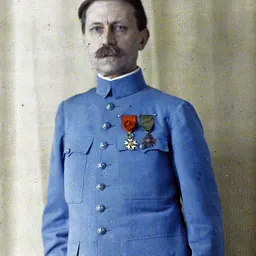


Contemporaries
People whose lives overlapped James Henry Carpenter's
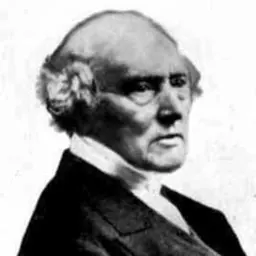

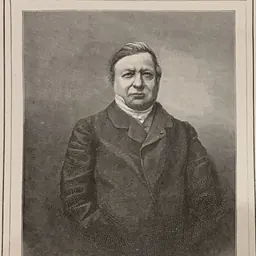



Frequently asked questions
Who was James Henry Carpenter?
American Civil War, Founder of Carpenter Technology Corporation
When was James Henry Carpenter born?
James Henry Carpenter was born on 14 September 1846 in Brooklyn.
When did James Henry Carpenter die?
James Henry Carpenter died on 6 March 1898 in Reading.
What was James Henry Carpenter's occupation?
James Henry Carpenter was a military officer and carpenter Technology Corporation.
What nationality was James Henry Carpenter?
James Henry Carpenter was American.
Sources & further reading
· Wikipedia: James Henry Carpenter
· DBpedia: James Henry Carpenter
Cite this page
APA: Biography.guide. (2026). James Henry Carpenter. https://biography.guide/james-henry-carpenter/
MLA: "James Henry Carpenter." Biography.guide, https://biography.guide/james-henry-carpenter/.
Chicago: "James Henry Carpenter." Biography.guide. https://biography.guide/james-henry-carpenter/.
Data last updated: 2026-09-25 · Spot an error? Report a correction.
Page generated 2026-09-27 05:13 UTC