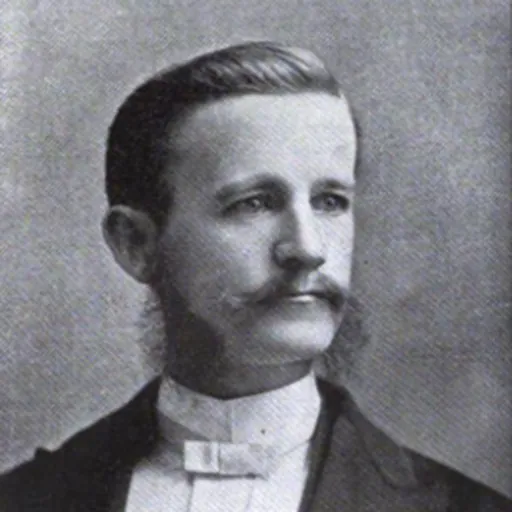
About James Hamilton Howe
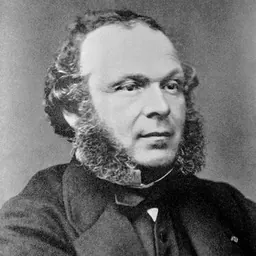
Lived 1856 – 1934 (aged 77). James Hamilton Howe was an American pianist.
James Hamilton Howe (November 14, 1856, – April 12, 1934) was an American pianist, composer, conductor, and academic. Howe was the first dean of the Music School at DePauw University. He was instrumental in creating Alpha Chi Omega collegiate women's fraternity, one of the first Greek letter organizations for women in the United States.
Howe was the conductor of the San Francisco Symphony Orchestra and director of numerous oratorio societies in San Francisco and Seattle. He was also a composer of music for the piano, organ, orchestra, and vocals. His parents were Mary Ann (née Lowe) and Edward Everett Howe. He enrolled in the College of Music of Boston University, graduating with an M.B. in 1882. Howe was a pianist.
Career
Boston Howe taught at the New England Conservatory of Music in Boston, Massachusetts. In addition, he worked as an organist and choir director in Boston. During his first year as dean, he performed the first recital of the School of Music. As a result, Alpha Chi Omega women's fraternity was established on October 16, 1885. Howe formally introduced the fraternity to the university with a soirée musical on February 26, 1886. It remained a local sorority until 1902, when a second chapter was established at Syracuse University, before affiliating with Mu Phi Epsilon in 1906. He was one of two oratorio leaders of San Francisco. In April 1897, Howe was the conductor for a music festival that featured the three oratorio socieities and a combined chorus of 200 to 250 singers. Ultimately, Howe was unable to secure enough money or find the material needed to carry out his long-term plans for the oratorio societies. His competition, H. B. Steward, also failed, and oratorio died out in San Francisco. The summer school provided two months of study with first-class musicians.
Howe was the organist and music director of St. Paul's Episcopal Church in San Francisco in 1900
Seattle Howe left San Francisco and moved to Seattle in 1906. However, he soon had a falling out with the members of the Ladies Musical Club who had chartered the society. In 1922, Howe was the dean of the American College of Music in Seattle. He taught classes, gave concerts and developed the college's course of study.
By December 1922, Howe had composed 200 works. His The Olympic Suite was inspired by a trip on the Great Northern Railway through the Cascade Range and Rocky Mountains in July 1922. It included twelve movements including "Ode to Mount Olympus", "The Red Velvet Rose of Seattle", "The Rippling Waters of Queets", and "Tahoma Suite". He premiered parts of The Olympic Suite in a series of radio concerts on KDZE that were heard by some 100,000 people. The radio show included Howe's narration, violinist Arnold Krauss, soprano Florita Munson-Wroten, soprano Dimples Marie David, and a chorus of twelve. He composed for the Seattle Oratorio Society in 1928. In 1929, he performed music and gave lecture-recitals for ladies clubs and colleges. One of his lectures, "The Red Devils of the Board of Trade", was not musical and showed his new interest in the stock market and consumer issues. She was originally from Rochester, England but was living in San Jose where she was the secretary of the Pacific Grove Summer School of Music. The church was decorated by the San Jose Oratorio Society.
After a long sickness, Howe died on April 12, 1934, in Seattle, Washington at the age of 75. He was buried in the Harmony Cemetery in Boxford, Massachusetts. Howe left his estate to Ruth G. Chastain, his student for two years and a former music teacher. Rather than a will, Howe wrote a certificate of gift on September 4, 1933, in consideration of his engagement with Chastain. Four Songs with Accompaniment of Pianoforte, Violin, and Violoncello. Boston: Arthur P. Schmidt & Co., 1884. Songs of DePauw: A Collection of College Songs. Boston: J. M. Russell, 1890. Boys of the U.S.A. Seattle: Harvey J. Woods, 1918. The Banner of Freedom and Fame: A National Song Dedicated to The American Legion and Veterans of Foreign Wars. Words by John Julius Jones and music by James Hamilton Howe. 1920. The Olympic Suite ... For Pianoforte, Voice, and Orchestra, etc., 1922.
Books The Dragon and Juggernaut of Speculation as Exemplified in Gambling in Prices of Our Food Products. Written especially for the Education and Protection of Our Young Men and Women, About to Enter the Business or Professional World; and a Warning to Our Produce Growers and Provision Packers. Seattle: The Dragon Publishing Company, 1916.
Don’t just read it —
keep it.
Full-length biographies made to live with: read them, listen on the way to work, watch them tonight.
- E-book
- Audio
- Video
Instant download · yours to keep · every purchase keeps this site free
Important facts
People in James Hamilton Howe's life
Named in this biography and alive at the same time


Related people
Same field, nearest in time





Contemporaries
People whose lives overlapped James Hamilton Howe's
Frequently asked questions
Who was James Hamilton Howe?
American musician (1856-1934)
When was James Hamilton Howe born?
James Hamilton Howe was born on 14 November 1856.
When did James Hamilton Howe die?
James Hamilton Howe died on 12 April 1934.
What was James Hamilton Howe's occupation?
James Hamilton Howe was a pianist.
What nationality was James Hamilton Howe?
James Hamilton Howe was American.
Sources & further reading
· Wikipedia: James Hamilton Howe
· DBpedia: James Hamilton Howe
Cite this page
APA: Biography.guide. (2026). James Hamilton Howe. https://biography.guide/james-hamilton-howe/
MLA: "James Hamilton Howe." Biography.guide, https://biography.guide/james-hamilton-howe/.
Chicago: "James Hamilton Howe." Biography.guide. https://biography.guide/james-hamilton-howe/.
Data last updated: 2026-09-23 · Spot an error? Report a correction.
Portrait: Wikimedia Commons · author & licence
Page generated 2026-09-27 05:04 UTC