
About James H. Moor
Lived 1942 – 2024 (aged 81–82). James H. Moor was a philosopher.
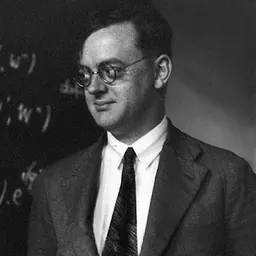
James Haller Moor (November 2, 1942 – September 11, 2024) was an American ethicist and moral philosopher, and is especially known for his pioneering work in computer ethics. He spent most of his career at Dartmouth College, where he was the Daniel P. Stone Professor of Intellectual and Moral Philosophy.
Education and career Moor studied mathematics at the Ohio State University, where he obtained a bachelor's degree in 1965. He went on to study philosophy at the University of Chicago, where he obtained a masters' degree. He worked as a teaching fellow at Findlay College before embarking on further studies at Indiana University Bloomington, where he earned his Ph.D. in the philosophy of science in 1972. His thesis titled Computer Consciousness was supervised by Wesley C. Salmon. Moor joined Dartmouth College in the same year as an assistant professor in philosophy. He became an associate professor in 1978 and a professor in 1985. Moor's 1985 paper entitled "What is Computer Ethics?" established him as one of the pioneering theoreticians in the field of computer ethics. Since 2009 at Dartmouth, Moor was the Daniel P. Stone Professor of Intellectual and Moral Philosophy, a title he held until his death.
Moor was the editor-in-chief of Minds and Machines (2001-2010), a peer-reviewed academic journal covering artificial intelligence, philosophy, and cognitive science.
Research Moor's research includes study in philosophy of artificial intelligence, philosophy of mind, philosophy of science, and logic. He has also written extensively on the Turing Test. In a 2009 paper, Moor listed four kinds of robots in relation to ethics. A machine can be more than one type of agent. Ethical impact agents: machine systems carrying an ethical impact whether intended or not. Moor gives the example of a watch causing a worker to be on work on time. As well as Ethical impact agents there are Unethical impact agents. Certain agents can be unethical impact agents at certain times and ethical impact agents at other times. Implicit ethical agents: machines constrained to avoid unethical outcomes. Explicit ethical agents: Machines which have algorithms to act ethical. Full ethical agents: Machines that are ethical in the same way humans are (i.e. have free will, consciousness and intentionality)
Moor gives the example of what he calls a 'Goodman agent', named after philosopher Nelson Goodman. The Goodman agent compares dates "this was generated by programming yearly dates using only the last two digits of the year, which resulted in dates beyond 2000 being misleadingly treated as earlier than those in the late twentieth century. Thus the Goodman agent was an ethical impact agent before 2000, and an unethical impact agent thereafter."
Moor has criticised Asimov's Three Laws of Robotics saying that if applied thoroughly they would produce unexpected results. He gives the example of a robot roaming the world trying to prevent harm from all humans.
In 2001, Moor identified the virtuality fallacy, an informal fallacy asserting that things that exist only in a virtual context are not real or do not have real effects. Moor has stated that this fallacy is used by people in defending their questionable behavior on the internet.
Awards SIGCAS Making a Difference Award, 2003 Barwise Prize, 2006 Weizenbaum Award, 2017 Future of Life Award, 2024
Don’t just read it —
keep it.
Full-length biographies made to live with: read them, listen on the way to work, watch them tonight.
- E-book
- Audio
- Video
Instant download · yours to keep · every purchase keeps this site free
Important facts
People in James H. Moor's life
Named in this biography and alive at the same time

Related people
Same field, nearest in time





Contemporaries
People whose lives overlapped James H. Moor's




Frequently asked questions
Who was James H. Moor?
American philosopher
When was James H. Moor born?
James H. Moor was born in 1942.
When did James H. Moor die?
James H. Moor died on 11 September 2024.
What was James H. Moor's occupation?
James H. Moor was a philosopher.
Sources & further reading
Cite this page
APA: Biography.guide. (2026). James H. Moor. https://biography.guide/james-h-moor/
MLA: "James H. Moor." Biography.guide, https://biography.guide/james-h-moor/.
Chicago: "James H. Moor." Biography.guide. https://biography.guide/james-h-moor/.
Data last updated: 2026-09-20 · Spot an error? Report a correction.
Page generated 2026-09-27 04:59 UTC