
James Grant
Texas politician, physician and military participant in the Texas Revolution
About James Grant
Lived 1793 – 1836 (aged 42). James Grant was a politician.
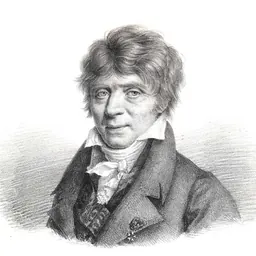
James Grant (1793–1836) was a 19th-century Texas politician, physician and military participant in the Texas Revolution.
Early life James Grant was born on July 28, 1793, in Ross-shire, Scotland, son of William Grant. His paternal grandfather, Alexander Grant, was a veteran of the Battle of Culloden of 1746 who later became a director of the East India Company and was the last man to escape from the Black Hole of Calcutta.
Grant attended medical school, and in 1812 he joined the East India Company. Despite his young age, with the influence of his cousin Charles Grant, 1st Baron Glenelg, he was named the surgeon for the General Stuart. Just before leaving on his maiden voyage, Grant married Margaret Urquhart, the daughter of an East India Company official.
Over the next seven years, Grant made three voyages with the East India Company to India and to China. In a brief visit home, he fathered a son, Stewart Majoribanks, who was born in 1817. His daughter Jamesina was born five years later. On his voyages, Grant, like most of his comrades, did a little trading of his own, resulting in a respectable fortune. In Coahuila, he was soon involved in politics, where he became secretary of the Executive Council. In 1832, he was a member of the legislature of Coahuila and Texas.
In 1832 and 1833, he tried his hand in colonizing a settlement near Goliad. In 1833, Grant moved to Nacogdoches, Texas. From March through April 1835, Grant was secretary of the legislature of Coahuila and Texas at Monclova, Mexico. In Coahuila, he acquired vast landholdings and was friends to the Federalist Mexicans and enemies to the Centralists. In 1834 and 1835 he was "Jefe de Armas" or Commander of the local military police. In the spring of 1836, Grant and the Mexican legislators were forced to flee Coahuila when President Santa Anna sent General Martín Perfecto de Cos with a regiment of the Mexican army to disperse the congress. In San Antonio, he would help plan the assault on Bexar and negotiate the surrender of Cos. He served as a Goliad delegate to the Consultation.
In early December, Grant was advocating for an expedition to invade Matamoros, suggesting Houston was not the person to be in charge of the Texian Army. By January 10, 1836, Grant and Frank W. Johnson, who were old partners in Monclova land deals, were seeking volunteers to join a Federal Volunteer Army of Texas to march on Matamoros.
On January 14, Sam Houston arrived in Goliad to take command of the army that Grant and Johnson had recruited. He soon discovered that Grant and Johnson had established themselves as commanders of the army. Houston went along with the Texian army, instilling camaraderie as they reached Refugio, Texas. In Refugio he approached the soldiers, telling them how a small army could not conquer a city of 12,000 and thereby convinced over half of the men to quit. That same day, Houston would receive word that he had been removed by the council as commander of the army and had been replaced by James Fannin. Houston left the army and traveled to negotiate with the Cherokees in the eastern region of Texas. For several months it was unclear if Grant, Fannin, Johnson, or Houston was in charge of the Texian army. Grant was informed that Mexican Captain Nicolás Rodríguez and a small company formerly from Fort Lipantitlán was in the area. Grant confronted and overtook them, confiscated their horses and took the men as prisoners to San Patricio. Within a few days the prisoners had escaped, alerting Mexican forces. Splitting into smaller groups, the Texians searched for mounts and supplies, proceeding all the way to Santa Rosa Ranch. Grant and a group of fifteen Texians while foraging, were attacked by members of General José de Urrea's cavalry. Grant was killed in the battle of Agua Dulce at 10:30 a.m. on March 2, 1836.
Don’t just read it —
keep it.
Full-length biographies made to live with: read them, listen on the way to work, watch them tonight.
- E-book
- Audio
- Video
Instant download · yours to keep · every purchase keeps this site free
Important facts
People in James Grant's life
Named in this biography and alive at the same time






Related people
Same field, nearest in time

Contemporaries
People whose lives overlapped James Grant's




Frequently asked questions
Who was James Grant?
Texas politician, physician and military participant in the Texas Revolution (1793-1836)
When was James Grant born?
James Grant was born on 28 July 1793 in Scotland.
When did James Grant die?
James Grant died on 2 March 1836 in Nueces County.
What was James Grant's occupation?
James Grant was a politician.
Sources & further reading
· DBpedia: James Grant (Texas politician)
Cite this page
APA: Biography.guide. (2026). James Grant. https://biography.guide/james-grant-politician-1793/
MLA: "James Grant." Biography.guide, https://biography.guide/james-grant-politician-1793/.
Chicago: "James Grant." Biography.guide. https://biography.guide/james-grant-politician-1793/.
Data last updated: 2026-09-20 · Spot an error? Report a correction.
Page generated 2026-09-27 05:24 UTC