
About James Gould Cozzens
Lived 1903 – 1978 (aged 74). James Gould Cozzens was an American novelist, writer and screenwriter.
James Gould Cozzens (August 19, 1903 – August 9, 1978) was a Pulitzer prize-winning American writer whose work enjoyed an unusual degree of popular success and critical acclaim for more than three decades. His 1949 Pulitzer win was for the WWII race novel Guard of Honor, which more than one critic considered one of the most important accounts of the war. which was later made into a popular 1961 film.
Culturally conservative critics' widespread acclaim for By Love Possessed, along with a controversial 1957 interview that Cozzens gave to Time, led to an aggressive backlash by author Irving Howe in the New Republic and avant-garde critic Dwight Macdonald in Commentary. Macdonald's essay is still considered "the most persuasively devastating review of the century" more than fifty years later. The criticism, aimed as much at critics catering to a middle- rather than highbrow sensibility as the author himself, did extensive damage to Cozzens' reputation, both during the last 20 years of his life, and posthumously. Writer Joseph Epstein has offered similar praise, both in an essay for Commentary magazine, as well as in a chapter for his book Plausible Prejudices. The late biographer and academic editor Matthew J. Bruccoli extended those efforts in a biography and related scholarly work. There has also been recent interest in screenplays based on his work: in 2018, the Hollywood Reporter reported that the rights to Sam Peckinpah's screenplay Castaway, based on Cozzens' novella, had been acquired by a producer.
Writing
Cozzens published his first novel Confusion, in 1924 while still a student at Harvard. A few months later, ill and in debt, he withdrew from school and moved to New Brunswick, where he wrote Michael Scarlett, a second novel. Neither book sold well or was widely read, and to sustain himself, Cozzens traveled to Cuba to teach children of American residents, which is where he began to write short stories and gather material for the novels Cock Pit (1928) and The Son of Perdition (1929).
He met Sylvia Bernice Baumgarten, a literary agent with Brandt & Kirkpatrick, whom he married at city hall in New York City on December 27, 1927, and who successfully edited and marketed his books. Except for military service during World War II, the Cozzenses lived in semi-seclusion near Lambertville, New Jersey, and shied away from all but local contact. Other early novels include S.S. San Pedro (1931) which won the Scribner's Prize, The Last Adam (1933), and Castaway (1934).
During World War II, Cozzens served in the U.S. Army Air Forces, at first updating manuals, then in the USAAF Office of Information Services, a liaison and "information clearinghouse" between the military and the civilian press. One of the functions of his office was in controlling news, and it became Cozzens's job to defuse situations potentially embarrassing to Gen. Henry H. Arnold, the chief of the Army Air Forces. In the course of his job, he became arguably the best informed officer of any rank and service in the U.S., and he had achieved the rank of major by the time he was discharged at the end of the war. These experiences formed the basis of his 1948 novel Guard of Honor, which won the 1949 Pulitzer Prize.
Style and themes Philosophical in nature, his novels take place during the course of just a few days, exhibit little action, and explore a variety of concepts such as love, duty, racial sensitivities, and the law. Cozzens' novels disregarded modernist literary trends, and are characterized by the use of often unfamiliar, archaic words, traditional literary structures, and conservative themes. As a result, many contemporary critics regarded his work as old-fashioned or moralistic, and he was viciously attacked as a reactionary by his harshest critics. As sometimes happened with his prose, this style did not translate well into print, and the results were further distorted because the information seemed to be gathered by one reporter but the article written by someone different.
As a result, sales of all his books suffered, and Cozzens has become virtually unknown to the general public; he remains, however, fairly well known among those familiar with the literary criticism of George Steiner John Derbyshire and Matthew Bruccoli,
Cozzens was a critic of modernism, and of realism more leftist than his own, and he was quoted in a featured article in Time as saying (perhaps somewhat in jest), "I can't read ten pages of Steinbeck without throwing up."
Works
Confusion (1924) Michael Scarlett (1925) Cock Pit (1928) The Son of Perdition (1929) S.S. San Pedro (1931) The Last Adam (1933), a.k.a. A Cure of Flesh Castaway (1934) Men and Brethren (1936) Ask Me Tomorrow (1940) The Just and the Unjust (1942) Guard of Honor (1948) By Love Possessed (1957) Children and Others (1964), short stories Morning, Noon, and Night (1968)
Short stories
+ Title Publication Collected in "Remember the Rose" The Harvard Advocate (June 1923) - "Abishag" Linonia (June 1925) - "A Letter to a Friend" Pictorial Review (May 1926) - "Foreign Strand" Paris Comet (September 1928) - "Future Assured" The Saturday Evening Post (November 2, 1929) - "The Defender of Liberties" Alhambra (January 1930) - "Lions Are Lower Today" The Saturday Evening Post (February 15, 1930) - "Someday You'll Be Sorry" The Saturday Evening Post (June 21, 1930) - "October Occupancy" The American Magazine (October 1930) - "We'll Recall It With Affection" The Saturday Evening Post (October 4, 1930) Children and Others "The Guns of the Enemy" The Saturday Evening Post (November 1, 1930) "Fortune and Men's Eyes" Woman's Home Companion (February 1931) - "Farewell to Cuba" Scribner's Magazine (November 1931) Children and Others "The Way to Go Home" The Saturday Evening Post (December 26, 1931) "Every Day's a Holiday" Scribner's (December 1933) "My Love to Marcia" Collier's (March 3, 1934) "Love Leaves Town" The American Magazine (September 1934) - "Straight Story" Collier's (November 17, 1934) - "Success Story" Collier's (April 20, 1935) - "Clerical Error"a.k.a. "Foot In It" Redbook (August 1935) - "Total Stranger" The Saturday Evening Post (February 15, 1936) Children and Others "Whose Broad Stripes and Bright Stars" The Saturday Evening Post (May 23, 1936) "Something About a Dollar" The Saturday Evening Post (August 15, 1936) "The Animals' Fair" The Saturday Evening Post (January 16, 1937) "Child's Play" The Saturday Evening Post (February 13, 1937) "Men Running" The Atlantic (July 1937) "Son and Heir" The Saturday Evening Post (April 2, 1938) - "One Hundred Ladies" The Saturday Evening Post (July 11, 1964) Children and Others "Candida by Bernard Shaw" The Saturday Evening Post (July 25, 1964) "King Midas Has Ass's Ears" Children and Others (1964) "Eyes to See" "A Flower in Her Hair" A Flower in Her Hair (1974) -
Awards and honors
1960 William Dean Howells Medal for By Love Possessed 1958 National Book Award finalist By Love Possessed 1957 Pulitzer Prize nomination By Love Possessed 1949 Pulitzer Prize for Guard of Honor 1931 O. Henry Award for "A Farewell to Cuba" 1936 O. Henry Award for "Total Stranger" 1931 Scribner's Prize for S.S. San Pedro
Personal background
Born in Chicago, Illinois, Cozzens grew up on Staten Island. His father, Henry William Cozzens Jr., who died when Cozzens was 17, was an affluent businessman and the grandson of William C. Cozzens, a governor of Rhode Island. His mother, Mary Bertha Wood, came from a family of Connecticut Tories who left for Nova Scotia following the American Revolution. Cozzens grew up in the same privileged lifestyle that formed the background of his most acclaimed works.
An Episcopalian, Cozzens attended the Episcopal Kent School in Connecticut from 1916 to 1922, and after graduation attended Harvard University. A few months later, ill and in debt, he withdrew from school and moved to New Brunswick. From there, Cozzens went to Cuba to teach children of American residents, and there began to write short stories and gather material. After a year he accompanied his mother to Europe, where he tutored a young polio patient in order to earn money.
During World War II, Cozzens served in the U.S. Army Air Forces, at first updating manuals, then in the USAAF Office of Information Services, a liaison and "information clearinghouse" between the military and the civilian press. One of the functions of his office was in controlling news, and it became Cozzens's job to defuse situations potentially embarrassing to Gen. Henry H. Arnold, the chief of the Army Air Forces. In the course of his job, he became arguably the best informed officer of any rank and service in the U.S., and he had achieved the rank of major by the time he was discharged at the end of the war.
He met Sylvia Bernice Baumgarten, a literary agent with Brandt & Kirkpatrick, whom he married at city hall in New York City on December 27, 1927, and who successfully edited and marketed his books. She was his apparent antithesis — Jewish and a liberal Democrat — but their marriage lasted successfully until both died in 1978. They had no children. During 1958, they relocated to another country home near Williamstown, Massachusetts. Cozzens was on the Harvard Board of Overseers's Visiting Committee for the English Department from 1960 to 1966. Except for military service during World War II, the Cozzenses lived in semi-seclusion near Lambertville, New Jersey, and shied away from all but local contact.
James and Bernice Cozzens spent their last years in relative obscurity in Martin County, Florida, where they lived in Rio, but used a Stuart post office box as their address. After Bernice's death in January 1978, Cozzens's health deteriorated rapidly. He died on August 9, 1978, of complications from spinal cancer and pneumonia, 10 days short of his 75th birthday.
Don’t just read it —
keep it.
Full-length biographies made to live with: read them, listen on the way to work, watch them tonight.
- E-book
- Audio
- Video
Instant download · yours to keep · every purchase keeps this site free
Important facts
People in James Gould Cozzens's life
Named in this biography and alive at the same time


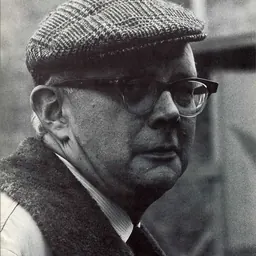



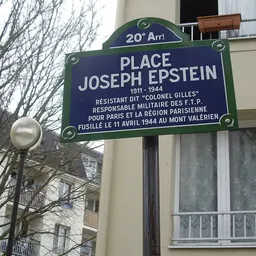

Related people
Same field, nearest in time
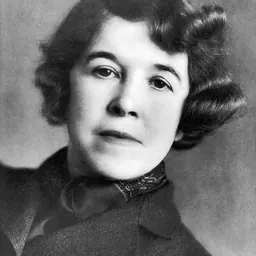
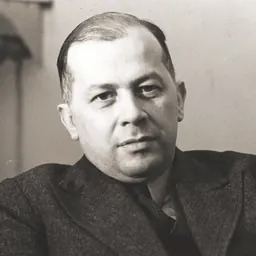



Contemporaries
People whose lives overlapped James Gould Cozzens's

Frequently asked questions
Who was James Gould Cozzens?
American novelist (1903-1978)
When was James Gould Cozzens born?
James Gould Cozzens was born on 19 August 1903 in Chicago.
When did James Gould Cozzens die?
James Gould Cozzens died on 9 August 1978 in Stuart.
What was James Gould Cozzens's occupation?
James Gould Cozzens was a novelist, writer and screenwriter.
What nationality was James Gould Cozzens?
James Gould Cozzens was American.
Sources & further reading
· Wikipedia: James Gould Cozzens
· DBpedia: James Gould Cozzens
Cite this page
APA: Biography.guide. (2026). James Gould Cozzens. https://biography.guide/james-gould-cozzens/
MLA: "James Gould Cozzens." Biography.guide, https://biography.guide/james-gould-cozzens/.
Chicago: "James Gould Cozzens." Biography.guide. https://biography.guide/james-gould-cozzens/.
Data last updated: 2026-09-20 · Spot an error? Report a correction.
Page generated 2026-09-27 05:02 UTC