
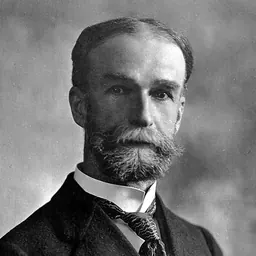
James Gareth Endicott
Canadian minister, Christian missionary and socialist
About James Gareth Endicott
Lived 1898 – 1993 (aged 94). James Gareth Endicott was a British and Canadian missionary, journalist and christian missionary.
James Gareth Endicott (December 24, 1898 – November 27, 1993) was a Canadian Christian minister, missionary, and socialist.
Family and early life
Endicott was born in Sichuan Province, China, the third of five children to a Methodist missionary family and became fluent in Chinese.
After the war, he spoke at student demonstrations, urging opposition to the Nationalist government and provoking criticism from the church in Canada. This led to his resignation from the ministry and the mission on May 5, 1946, after the United Church of Canada gave him an ultimatum to either modify his public statements or quit. At Zhou Enlai's urging, he moved to Shanghai to publish the underground anti-Kuomintang Shanghai Newsletter. The newsletter was aimed at westerners in the Kuomintang stronghold as well as at trying to convince western governments that Chiang's regime was corrupt and dictatorial.
Return to Canada In 1947, he returned to Canada. At a time when western countries were backing Chiang and were optimistic about his government, Endicott advised the Canadian government that the Kuomintang regime's fall was imminent and then went public with his predictions and his denunciation of the Kuomintang as corrupt. His comments were denounced as traitorous by the media and he was labelled the most reviled Canadian of the year for his support of the Chinese Communist Revolution and the Chinese Communist Party and was criticized by the United Church for his support of the revolution.
He continued his support for the Chinese Communist Party by giving lectures and publishing the Canadian Far Eastern Weekly which had 5,000 subscribers at its peak.
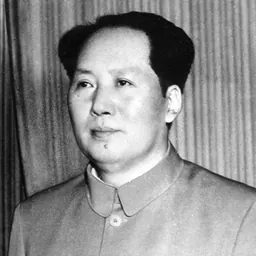
Korean War Endicott returned on a visit to China in 1952, during the Korean War and, on his return to Canada, charged the United States with using chemical and biological weapons during the war. His charges led him to be vilified in the Canadian press as "public enemy number one" and he was censured by the United Church for his support of Mao Zedong and the Chinese Communists.
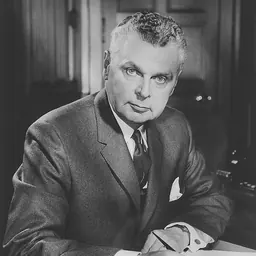
He was condemned by Canadian politicians, including Lester Pearson who had been a college friend. Pearson called him the "bait on the end of a Red hook" and a "Red stooge" while John Diefenbaker called his statements "damnable," and Conservative leader George Drew referred to Endicott as a "jackal of the Communists."
Later work
Endicott was awarded the Stalin Peace Prize in 1952 for his efforts working for "peaceful coexistence between the Christians and the Communists".
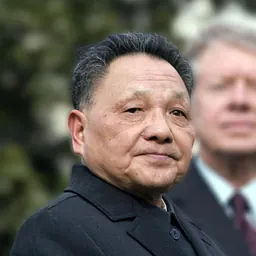
Tiananmen Square and later views on China In an interview shortly before his death, Endicott said that he thought the Communist Manifesto is "still as true as ever," though he feels the "old men" who are Communist leaders like Deng Xiaoping are not progressive enough.
Though ambivalent about the policies of Deng and initially supportive of the Tiananmen Square protests of 1989, Endicott was sympathetic to the Chinese government's dilemma in dealing with what he came to see as a counterrevolutionary movement. He told an interviewer, What is more clear to me now is that there was a core of students who were concerned mainly with getting something done about corruption in the party and in the society. I said at the time they should be supported. But a lot of the leaders, who at the time appeared to be idealistic, turned out to be agents for a capitalist restoration. It appears now that the Communist government was relatively correct in saying that very few people were killed in Tiananmen – perhaps two or three hundred, at most. But in another western section of Beijing, a lot of people were killed. There was practically a shoot-out between the capitalist roaders and the socialists – if you can call the army socialists.
Arguing that there was an attempt to overthrow the Chinese government, Endicott stated, What took place was a minor civil war. The army's action in upholding the constitution probably prevented the capitalist roaders from really making an attempt to take over by military force. What was the government to do? Not react?
Relationship with Canadian Communists In 1971, William Kashtan, general secretary of the Communist Party of Canada asked him to resign from the Canadian Peace Congress and as Canada's delegate to the World Council of Peace accusing the Canadian Far East Newsletter of being anti-Soviet and pro-Mao. Endicott agreed to leave the organization rather than stop publication of the newsletter or withdraw his support for China in its conflict with the Soviet Union. He founded the Canada-China Society shortly after leaving the Canadian Peace Congress and publicly broke with the Soviet Union.
Though friendly with Tim Buck, Stanley Ryerson, Leslie Morris and other Canadian Communists, Endicott never joined the Communist Party of Canada though three of his children joined its legal front, the Labor-Progressive Party. He had joined the Co-operative Commonwealth Federation while living in Toronto on sabbatical from 1941 to 1944, and campaigned for the party in the 1942 federal by-election in which Joseph Noseworthy won an upset victory, but his membership lapsed when he returned to China. When he applied to rejoin the CCF in 1948 his membership application was rejected; no reason was given but it is almost certain it was rejected due to Endicott's perceived association with Communism.
Don’t just read it —
keep it.
Full-length biographies made to live with: read them, listen on the way to work, watch them tonight.
- E-book
- Audio
- Video
Instant download · yours to keep · every purchase keeps this site free
Important facts
Family & relationships
People in James Gareth Endicott's life
Named in this biography and alive at the same time




Related people
Same field, nearest in time


Contemporaries
People whose lives overlapped James Gareth Endicott's


Frequently asked questions
Who was James Gareth Endicott?
Canadian minister, Christian missionary and socialist (1898–1993)
When was James Gareth Endicott born?
James Gareth Endicott was born on 24 December 1898 in Leshan, Sichuan.
When did James Gareth Endicott die?
James Gareth Endicott died on 27 November 1993 in Toronto, Ontario.
What was James Gareth Endicott's occupation?
James Gareth Endicott was a missionary, journalist and christian missionary.
What nationality was James Gareth Endicott?
James Gareth Endicott was British and Canadian.
Sources & further reading
· Wikipedia: James Gareth Endicott
· DBpedia: James Gareth Endicott
Cite this page
APA: Biography.guide. (2026). James Gareth Endicott. https://biography.guide/james-gareth-endicott/
MLA: "James Gareth Endicott." Biography.guide, https://biography.guide/james-gareth-endicott/.
Chicago: "James Gareth Endicott." Biography.guide. https://biography.guide/james-gareth-endicott/.
Data last updated: 2026-09-20 · Spot an error? Report a correction.
Page generated 2026-09-27 05:27 UTC