
About James FitzGibbon
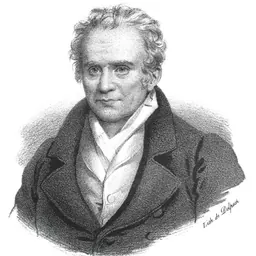
Lived 1780 – 1863 (aged 83). James FitzGibbon was an Irish military personnel.
James FitzGibbon (16 November 1780 – 10 December 1863) was a public servant, prominent freemason of the masonic lodge from 1822 to 1826 (holding the highest position in Upper Canada of deputy provincial grand master), member of the Family Compact, and an Irish soldier in the British Army in Europe before and in the Canadas during the War of 1812 who received messages of warning from two Canadian folk heroes: Laura Secord (Ingersoll) and Billy Green. He first fought in battle in 1799 at Egmond aan Zee, the Netherlands. He later served as a marine in the Battle of Copenhagen, for which he received the Naval General Service Medal.
Arrival in Canada He went to the Canadas in 1802, by which time he was a sergeant. He apparently played a key role in the suppression of a near-mutiny at Fort George, Upper Canada, but there is no mention of this in his official biography.
In 1806, when he was the regiment's sergeant-major, his commanding officer, Isaac Brock, made him an officer. This was extremely unusual at the time as most officers' commissions were bought. Later the same year he was appointed regimental adjutant. In 1809, he was promoted to the rank of lieutenant.
War of 1812
The "main body" of FitzGibbon's enlisted regiment - the 49th Regiment of Foot (though without its modern renaming) - were present during the Battle of Fort George, at the Fort itself. However, it appears that FitzGibbon was not, as there is a notable lack of evidence within FitzGibbon's official biography of any presence or action of James; it is likely that if a figure held in such high historical esteem as FitzGibbon was present at the battle, this information would be readily available.
In August 1812, FitzGibbon escorted a brigade of ships holding military stores from Montreal to Kingston, going through "the rapids" (the "International Rapids") of the St. Lawrence River, while in view of the American shore. This led to the Battle of Beaver Dams near present-day Thorold, Ontario, where FitzGibbon's force, together with about 400 Mohawk and Odawa warriors, defeated the Americans and took 462 prisoners. The victory made FitzGibbon a popular hero and he was promoted to captain in the Glengarry Light Infantry Fencibles.
After the Battle of Beaver Dams, FitzGibbon would operate almost exclusively in reconnaissance and observing the movement of the American troops.
FitzGibbon married his one and only wife, Mary Haley, in 1814. They would have five children together - four sons and one daughter - with the daughter "living beyond infancy". In 1824 the Lieutenant-Governor of Upper Canada Peregrine Maitland sent FitzGibbon to negotiate an end to riots in the Bathurst District of York between Irish settlers and previous residents.
From 1822 to 1826, FitzGibbon held the position of highest-ranking member of the Masonic lodge in Upper Canada as deputy provincial grand master. The next position up - provincial grand master - would have to be retained in England. Mackenzie would claim that FitzGibbon's appointment as clerk of the House of Assembly came as reward for this action, and would select FitzGibbon as "a prime example of government patronage".
During the Upper Canada Rebellion of 1837, FitzGibbon was appointed Acting Adjutant-General of Militia. He organised and led the forces that defended Toronto from William Lyon Mackenzie's rebel force. The book follows his interactions with fictional character Thomas Roberts, whom he takes under his wing during the events surrounding the Battle of Beaver Dams.
Don’t just read it —
keep it.
Full-length biographies made to live with: read them, listen on the way to work, watch them tonight.
- E-book
- Audio
- Video
Instant download · yours to keep · every purchase keeps this site free
Important facts
People in James FitzGibbon's life
Named in this biography and alive at the same time





Related people
Same field, nearest in time



Contemporaries
People whose lives overlapped James FitzGibbon's




Frequently asked questions
Who was James FitzGibbon?
British Army officer
When was James FitzGibbon born?
James FitzGibbon was born on 16 November 1780 in County Limerick, Glin.
When did James FitzGibbon die?
James FitzGibbon died on 10 December 1863 in Windsor Castle, London.
What was James FitzGibbon's occupation?
James FitzGibbon was a military personnel.
What nationality was James FitzGibbon?
James FitzGibbon was Irish.
Sources & further reading
Cite this page
APA: Biography.guide. (2026). James FitzGibbon. https://biography.guide/james-fitzgibbon/
MLA: "James FitzGibbon." Biography.guide, https://biography.guide/james-fitzgibbon/.
Chicago: "James FitzGibbon." Biography.guide. https://biography.guide/james-fitzgibbon/.
Data last updated: 2026-09-20 · Spot an error? Report a correction.
Page generated 2026-09-27 05:21 UTC