
About James Clark Strong
Lived 1826 – 1915 (aged 88–89). James Clark Strong was an American lawyer.
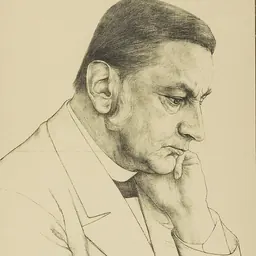
James Clark Strong (May 26, 1826–1915) was a Union Army officer during the American Civil War and a prominent New York attorney in the post-war period. An advocate for Native Americans, he litigated That Portion of the Cayuga Indians Residing in Canada v. State (N.Y. 1885) and Seneca Nation of Indians v. Christy (U.S. 1896) on behalf of the Cayuga and Seneca, respectively, two of the earliest litigations of aboriginal title in New York.
Early life Strong was born on May 26, 1826, in Phelps, New York.
Career A lifelong Democrat before the war, Strong became a prominent member of the Republican Party after the war. Strong was a supporter of Ulysses Grant, and thus an opponent of Horace Greeley.
Legal career After the war, Strong joined the law firm of his brother John C. Strong in Buffalo, New York. According to historian Laurence M. Hauptman, "Strong was a prominent lawyer and civic-minded resident of Buffalo." Strong omits any discussion of his law practice in his autobiography, jumping from his return to Buffalo on June 30, 1866—to "resume[] the duties of civic life"—to the fall of 1892 when he "went abroad and lectured through England on the North American Indian," on the same page.
As Strong concluded in his 1893 book, The Red-men are fast passing away. The beautiful land of their nativity will soon known them no more. It is beyond our power to undo the wrongs inflicted upon them by our ancestors; but we can, and ought to be just—even generous—towards the few who are still with us. Let us hasten to remove from our national escutcheon its one foul blot—the stigma of inhumanity and injustice towards the proud but hapless Indian.
Cayuga claim
Strong represented the Cayuga people residing in Canada in a claim against New York state for a proportion of treaty annuities, which had not been paid since the 1809. With interest, the Cayuga's claim was valued at $400,000 to $500,000. The state Board of Claims rejected the claim, and Strong's petition for mandamus relief in the courts—which reached the New York Court of Appeals in 1885—was rejected on the grounds that the Canadian Cayugas were not a party to the treaty.
Strong moved to Los Gatos, California, in January 1896. Strong's 1910 autobiography was published in Los Gatos.
Publications James Clark Strong, Wah-kee-nah and Her People (G.P. Putnam 1893). James Clark Strong, Biographical Sketch of James Clark Strong (1910).
Don’t just read it —
keep it.
Full-length biographies made to live with: read them, listen on the way to work, watch them tonight.
- E-book
- Audio
- Video
Instant download · yours to keep · every purchase keeps this site free
Important facts
People in James Clark Strong's life
Named in this biography and alive at the same time



Related people
Same field, nearest in time


Contemporaries
People whose lives overlapped James Clark Strong's





Frequently asked questions
Who was James Clark Strong?
American lawyer and Civil War general (1826–1915)
When was James Clark Strong born?
James Clark Strong was born on 26 May 1826 in Phelps.
When did James Clark Strong die?
James Clark Strong died in 1915 in Oakland.
What was James Clark Strong's occupation?
James Clark Strong was a lawyer.
What nationality was James Clark Strong?
James Clark Strong was American.
Sources & further reading
· Wikipedia: James Clark Strong
Cite this page
APA: Biography.guide. (2026). James Clark Strong. https://biography.guide/james-clark-strong/
MLA: "James Clark Strong." Biography.guide, https://biography.guide/james-clark-strong/.
Chicago: "James Clark Strong." Biography.guide. https://biography.guide/james-clark-strong/.
Data last updated: 2026-09-20 · Spot an error? Report a correction.
Page generated 2026-09-27 05:02 UTC