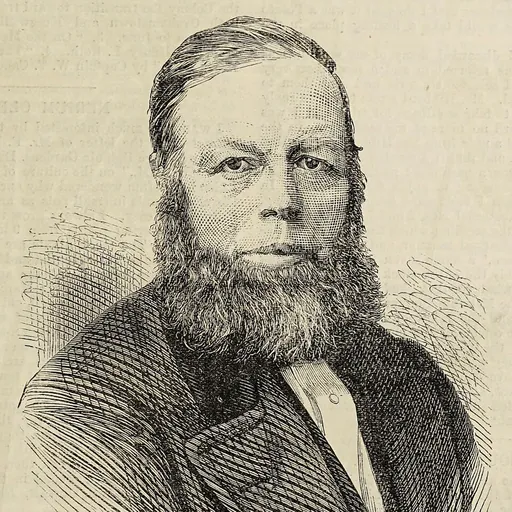
About James Clark
Lived 1825 – 1890 (aged 65). James Clark was a British horticulturist.
James Clark (1 May 1825 – 5 June 1890), was an English market gardener and horticulturist in Christchurch, Dorset who specialised in raising new varieties of potato. His most noted success was Magnum Bonum, described by The Times as "the first real disease-resisting potato ever originated and offered to the world".
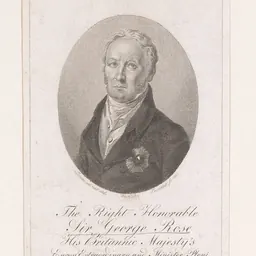
Early life James Clark was born in Tuckton near Christchurch, Hampshire (now Dorset) on 1 May 1825. His father Thomas was a farm labourer. Clark had only a poor education and at the age of nine was sent to work on a farm in the neighbouring hamlet of Iford. When he was aged twelve his family moved closer to Christchurch and his father became an under-gardener at nearby Sandhills, the seaside estate of Sir George Henry Rose, the Member of Parliament for Christchurch. Clark also became a gardener, working for the town's wealthier residents.
It was during this period that a fungus unwittingly transported to Europe from America devastated the potato crop in Ireland, causing the Great Famine of 1845–1850. In the wake of this tragedy potato breeders sought to find a reliable alternative to the disgraced Lumpers and Cups that had been the mainstay of the Irish planting.
Career
In 1855 Clark became the gardener at a local boarding school. It was there that he first developed an interest in growing potatoes and became fascinated by the varieties produced by a single root. However, the onset of a life-long heart complaint compelled him to quit this job and take on less arduous gardening work.
In the following two seasons Clark saw that one of his new seedlings had survived when other local potato plants had been devastated by blight. He realised that this new variety held great promise, so he nurtured them and in the spring of 1874 he sent some of his seedlings to the noted horticulturist Shirley Hibberd for him to test at his trial-ground in Hornsey. Hibberd's tests confirmed the robust good qualities of the new variety and he recommended it to seed merchants Messrs Sutton & Son of Reading, who purchased Clark's entire stock and released it to the public as Sutton's Magnum Bonum in 1876.
Magnum Bonum indeed proved to be a commercial success and soon became the best-selling variety grown in Great Britain. Its ability to survive hard frosts recommended it to Scottish growers in particular. It was a white, kidney-shaped late maincrop with a floury texture and a blandly sweet flavour that grew vigorously, withstood disease, and gave good yields. In 1880, reporting on the 7th annual Potato Show held at the Crystal Palace, The Times said: "To ascertain and announce which is the most serviceable potato would be a great national service. There is a very considerable consensus of opinion that in a great number of soils Messrs. Sutton's 'Magnum Bonum' has survived in bad years, and yielded abundantly in good. It is a recent introduction, and the breeder who first raised it in 1871, Mr. Clark, of Christchurch, was present yesterday at the show. It has been supplied to the Marquis of Lansdowne and other landed proprietors in Ireland, and to one of the Dublin relief funds, and is stated to have answered admirably in the humid soil of Ireland."
The popularity of Magnum Bonum peaked in about 1890, after which it degenerated and became susceptible to blight. Nevertheless, it was used to breed numerous other disease-resistant varieties.
Clark subsequently produced a number of other varieties released by Sutton & Son. These included Maincrop/Langworthy (1876), Reading Hero (1881), Sutton's Seedling (1886), Abundance (1886), Best of All (1887), Satisfaction (1887), Masterpiece (1887), White Kidney (1888), Early Market (1888), Matchless (1889), Nonesuch (1889), Perfection (1892), Triumph (1892), Supreme (1893), Epicure (1897), No Plus Ultra (1897), Reliance (1897), Ninetyfold (1897), Ideal (1898), Inevitable (1898), Centenary (1900), and Favourite (1902). Of these, Ninetyfold was a successful variety that was grown commercially until the 1960s and Epicure proved an outstanding variety that is still grown today.
James Clark died at his Christchurch home on 5 June 1890 aged 65 years.
Don’t just read it —
keep it.
Full-length biographies made to live with: read them, listen on the way to work, watch them tonight.
- E-book
- Audio
- Video
Instant download · yours to keep · every purchase keeps this site free
Important facts
People in James Clark's life
Named in this biography and alive at the same time


Related people
Same field, nearest in time
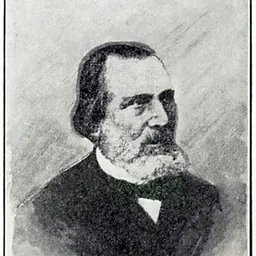
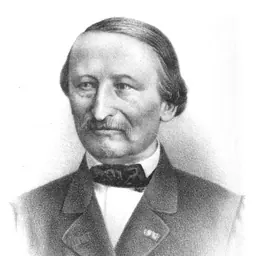
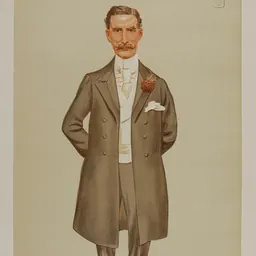
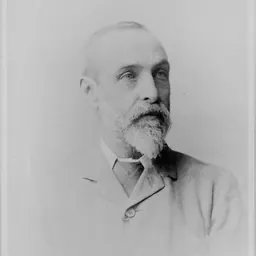
Contemporaries
People whose lives overlapped James Clark's



Frequently asked questions
Who was James Clark?
English horticulturist, born 1825
When was James Clark born?
James Clark was born on 1 May 1825 in Tuckton.
When did James Clark die?
James Clark died on 5 June 1890.
What was James Clark's occupation?
James Clark was a horticulturist.
What nationality was James Clark?
James Clark was British.
Sources & further reading
· DBpedia: James Clark (horticulturist)
Cite this page
APA: Biography.guide. (2026). James Clark. https://biography.guide/james-clark-horticulturist/
MLA: "James Clark." Biography.guide, https://biography.guide/james-clark-horticulturist/.
Chicago: "James Clark." Biography.guide. https://biography.guide/james-clark-horticulturist/.
Data last updated: 2026-09-21 · Spot an error? Report a correction.
Portrait: Wikimedia Commons · author & licence
Page generated 2026-09-27 04:59 UTC