
James Cameron
19th century Scottish artisan missionary
About James Cameron
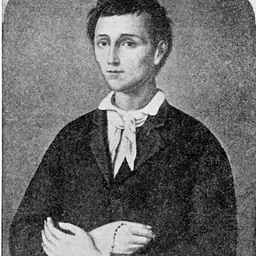
Lived 1800 – 1875 (aged 75). James Cameron was a British artisan, handicrafter, carpenter and missionary.
James Cameron (1799–1875) was a 19th-century British artisan missionary with a background in carpentry who, over the course of twenty-three years of service in Madagascar with the London Missionary Society (1826–1835; 1861–1875), played a major role in the Christianisation and industrialisation of that island state, then under the rule of the Merina monarchy.
Early life Cameron was baptised in Little Dunkeld in Perthshire, Scotland on 6 January 1800 and was a direct lineal descendant of MacIain Chief of Glencoe. His early years were spent in and around Murthly Castle where he learned carpentry. His father Thomas spent his life in the service of the Laird of Murthly Castle. The LMS mission in Madagascar, established in 1820, accepted Cameron's petition to serve five years later when he was 25 years of age. Prior to arriving in Madagascar in September 1826 during the reign of the progressive King Radama I, he spent a year in Manchester assisting with the development of machinery which would eventually be installed at Amparibe, Madagascar, to modernize the production of cotton yarn.
First mission to Madagascar From Cameron's residence at Ambatonakanga where he constructed the first Christian temple and the first Western-style school in Madagascar, he employed and educated 600 young Malagasy in the construction of machinery and other public works projects. He introduced brick-making in 1826, a technology that was later to be used in a new Malagasy architectural style that was widely adopted throughout the Highlands of Madagascar. Cameron's brick house in Ambatonakanga would serve as a model for the new architectural style. He was instrumental in overseeing the installation of the first printing press on the island, which was used to print a translation of the Bible in the Malagasy language. Cameron was also a key contributor to the manufacture of gunpowder in Imerina and the introduction of hydraulic power drawn Lake Anosy, a man-made lake in the center of modern-day Antananarivo created for this purpose. According to a speech delivered at Cameron's funeral, it was thanks to his intervention that the LMS was able to maintain a presence on the island until 1835, restricted though it might have been:
In 1835, pressure on the missionaries had increased to the point that the entire LMS team left the island.
Years in South Africa From 1835 to 1863, Cameron continued his missionary activities at the Cape of Good Hope in South Africa, where he lived with his wife, children, and grandchildren, engaged in commerce and worked as a surveyor to the Corporation of Cape Town. His son the Rev. James Cameron was the first registrar of the University of the Cape of Good Hope. In 1853 the government of Mauritius employed Cameron to successfully negotiate with Ranavalona I regarding the terms of an agreement to restore trade between Madagascar and Mauritius that had been disrupted in 1845 by French and English attacks on the eastern Malagasy trading port of Toamasina.
Second mission to Madagascar Ranavalona's death in 1861 and her succession by her son Radama II reopened Madagascar to foreign influence and the activities of Christian missionaries there. Cameron immediately returned and once again undertook a wide variety of secular activities in addition to his continued activities as a missionary. He constructed several buildings on the Rova compound in Antananarivo, including the Manampisoa (1866), a royal tomb (1868) and the stone shell of the Queen's Palace (the Manjakamiadana) in 1869. The towers of the Manjakamiadana are similar to the towers of Murthly House in Scotland. He oversaw the construction of the Memorial Church at Faravohitra and another at Analakely, a hospital, several mission houses and village churches, and a water wheel to supply the munitions factory at Anosimahavelona. He was also the first to survey and map Imerina and the region around Fianarantsoa.
Don’t just read it —
keep it.
Full-length biographies made to live with: read them, listen on the way to work, watch them tonight.
- E-book
- Audio
- Video
Instant download · yours to keep · every purchase keeps this site free
Important facts
Related people
Same field, nearest in time





Contemporaries
People whose lives overlapped James Cameron's






Frequently asked questions
Who was James Cameron?
19th century Scottish artisan missionary (1800–1875)
When was James Cameron born?
James Cameron was born on 6 January 1800.
When did James Cameron die?
James Cameron died on 3 October 1875.
What was James Cameron's occupation?
James Cameron was an artisan, handicrafter, carpenter and missionary.
What nationality was James Cameron?
James Cameron was British.
Sources & further reading
· DBpedia: James Cameron (missionary)
Cite this page
APA: Biography.guide. (2026). James Cameron. https://biography.guide/james-cameron-artisan/
MLA: "James Cameron." Biography.guide, https://biography.guide/james-cameron-artisan/.
Chicago: "James Cameron." Biography.guide. https://biography.guide/james-cameron-artisan/.
Data last updated: 2026-09-20 · Spot an error? Report a correction.
Page generated 2026-09-27 05:20 UTC