
About James Blair Seaborn
Lived 1924 – 2019 (aged 95). James Blair Seaborn was a Canadian diplomat.
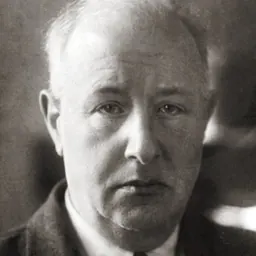
James Blair Seaborn CM (March 18, 1924 – November 11, 2019) was a Canadian diplomat and civil servant best remembered for the Seaborn Mission of 1964–1965 in connection with the Vietnam War and for heading the "Seaborn Panel" of the 1990s that examined the subject of how to dispose of nuclear waste in Canada. Seaborn would ultimately become the best-known of all of Canada's ICC representatives, but the Canadian historian Victor Levant noted that "he did not gain this notoriety until long after his tour of duty." The Seaborn Mission is a controversial subject with opinions sharply divided to its purpose and morality.
Early life and career St Cyprian's Anglican Church, Toronto, 2009. Seaborn's father was the rector at St. Cyprian's in the 1920s. Seaborn was born in Toronto, Ontario, the son of Reverend Richard Seaborn and Muriel Seaborn. His father was the rector at St. Cyprian's Anglican Church, and he had eight siblings. When he was six, his father died and his mother raised him on a clergyman's pension. Seaborn called his military service his "Khaki holiday" as he served in the Royal Canadian Artillery.
At the same time, the Polish Commissioner to the ICC, Mieczysław Maneli, was also working as a "back channel" to find a way to end the war and had the additional advantage over Seaborn of being allowed to meet Ho Chi Minh. Lodge was in contact with Maneli to whom he was introduced via the Italian ambassador, Giovanni d'Orlandi, but preferred to use Seaborn, whom he had known for some time, rather than Maneli, whom he did not know that well. Maneli disliked Lodge, found the snobbish manners of the Boston Brahmin Lodge off-putting, and later said that Lodge was one of the most arrogant men whom he had ever met.
Maneli defected to the United States in 1968 and in 1971 he published a book, The War of the Vanquished, which recounted his experiences on the ICC. He wrote that Seaborn and the rest of Canadian delegation tended to be very pro-American but that he was "struck" by its "loyal co-operation" in attempting to make the ICC work. The rules of the ICC required the chairman to be an Indian, and Seaborn often clashed with the Indian delegation, whom he accused of being very biased towards North Vietnam and against South Vietnam.
In 1964 and 1965, Seaborn was involved in what historians have called the "Seaborn Mission," a Canadian attempt to end the Vietnam War through shuttle diplomacy. Seaborn repeatedly flew back and forth from Washington to Hanoi. Seaborn was to deliver messages between Washington and Hanoi, but he was made responsible to Ottawa, which also had the right to amend the messages that he was asked to carry. Before leaving for Hanoi, Seaborn was briefed by William H. Sullivan, an aide to Assistant Secretary of State for Asia, William Bundy, on the American objectives in North Vietnam. Seaborn was to assess the state of public opinion in North Vietnam and to see if it was growing weary of the war that had been essentially continuous since 1945. He was also to assess the effects of the Sino-Soviet split on North Vietnam and to determine whether Ho favoured China or the Soviet Union. Finally, Seaborn was to assess whether there were any splits within the North Vietnamese Politburo. Seaborn flew into North Vietnam abroad a rickety Air France Stratoliner, whose two pilots had an alarming habit of drinking champagne on the job.
The Austrian-born Canadian journalist Peter C. Newman wrote in 1971 about the Seaborn Mission, "There was something particularly distasteful about the fact that in the ugly deceptions that led to the United States' escalation of the Vietnam war — as revealed to the world by the New York Times earlier this summer — Canada's role was to act as an American messenger boy. The Pentagon's dispatch of J. Blair Seaborn, then our representative on the International Control Commission, to carry its threats of bombing raids to North Vietnam, even though we were supposed to be neutrals, sums up in one telling incident just how seriously the Americans regard our valiantly 'independent' posture in foreign affairs." Newman saw diplomats such as Seaborn as reflecting all the worse flaws of the "Canadian Mandarins" and wrote "the old-fashioned mandarin mind, one of the very best models which he still determinedly uses to set the pattern of our foreign relations. This mentality, formed in the Thirties and Forties, continues to dominate both the ideology and techniques of certain federal departments, particularly External Affairs. It's an approach that reflects a colonial attitude which, when it proclaims that it's acting in 'good faith,' is really acting out of obedience and little more. Discreet, neat, dead from the neck down, deeply attached to the British tradition of muddling through, these old-fashioned mandarins (and there are exceptions) tend to view life as an intellectual tumbling exercise. Substituting good manners for compassion, light on both feet and ready to move in any direction, they believe that the duty of the responsible public man is to exercise restraining influence on risk-taking." The fact that the double game of the Johnson administration in 1964 was not revealed until the leaked Pentagon Papers in 1971 increased the sense that Johnson and others in his administration had been duplicitous to the American people. Within the electricity industry, nuclear power was seen as a glamorous futuristic way of generating electricity, which led to an institutional preference for nuclear power over other forms of power generation such as hydroelectricity, which was viewed as a boring backward way of generating power. The Canadian scholar Genevieve Fuji Johnson wrote in the 1970s that nuclear power was presented in Canada in "hyperbolic terms" and was portrayed as the glittering "technology of the future" that would power endless economic growth. The Arab oil shock of 1973-1974 and the resulting economic turmoil made many policymakers in Canada as elsewhere favour nuclear power as a way to end the dependence upon oil imports from the troublesome Middle East. The problem of disposing of nuclear waste was treated by the nuclear industry as a small problem, and executives and engineers in the nuclear power industry tended to be "abrasive" towards those who raised the question of disposing of nuclear waste. Having decided on nuclear power for reasons of ego, rather than of economic rationality, the "nuclear cult" of engineers succeeded in having vast sums of money spent on building nuclear power plants over other forms of electricity generation, despite the problems inherent in nuclear energy. In a 2014 opinion piece, the diplomat Jeremy Kinsman listed the Seaborn Mission as an example of the sort of diplomacy that Canada should practice and argued the attempt to play an "honest broker" in attempting to end the Vietnam War, even if unsuccessful, had still been a noble endeavour. In 2015, Seaborn spoke to the media about an incident that occurred on December 14, 2014, when a criminal, named Ian Bush, was wanted for three murders, broke into the home of his 101-year old neighbour, Ernest Côté, and tied a plastic bag around his head: "He had the wits about him to realize he had to get the damn bag off his head if he was going to live. He crawled across the floor to where he knew there was some scissors and cut the thing off."
In 2019, a fall badly injured Seaborn, who died on November 11. A devout member of the Church of England, his funeral service was held at the Anglican Christ Church Cathedral in Ottawa.
Articles by Seaborn
Seaborn, J. Blair. Mission to Hanoi: The Canadian Channel, essay in Canadian Peacekeepers in Indochina 1954–1973, Recollections, Arthur Blanchette, Editor, 2002.
Don’t just read it —
keep it.
Full-length biographies made to live with: read them, listen on the way to work, watch them tonight.
- E-book
- Audio
- Video
Instant download · yours to keep · every purchase keeps this site free
Important facts
People in James Blair Seaborn's life
Named in this biography and alive at the same time




Related people
Same field, nearest in time

Contemporaries
People whose lives overlapped James Blair Seaborn's

Frequently asked questions
Who was James Blair Seaborn?
Canadian diplomat
When was James Blair Seaborn born?
James Blair Seaborn was born on 18 March 1924 in Ontario, Toronto.
When did James Blair Seaborn die?
James Blair Seaborn died on 11 November 2019 in Ontario.
What was James Blair Seaborn's occupation?
James Blair Seaborn was a diplomat.
What nationality was James Blair Seaborn?
James Blair Seaborn was Canadian.
Sources & further reading
· Wikipedia: James Blair Seaborn
Cite this page
APA: Biography.guide. (2026). James Blair Seaborn. https://biography.guide/james-blair-seaborn/
MLA: "James Blair Seaborn." Biography.guide, https://biography.guide/james-blair-seaborn/.
Chicago: "James Blair Seaborn." Biography.guide. https://biography.guide/james-blair-seaborn/.
Data last updated: 2026-09-22 · Spot an error? Report a correction.
Page generated 2026-09-27 05:34 UTC