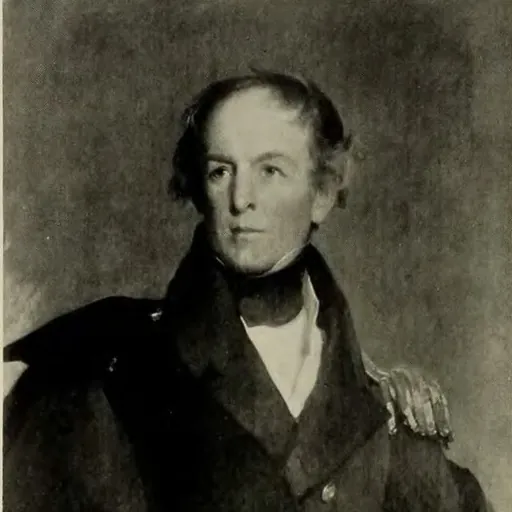
About James Biddle
Lived 1783 – 1848 (aged 65). James Biddle was an American military officer, naval officer and soldier.
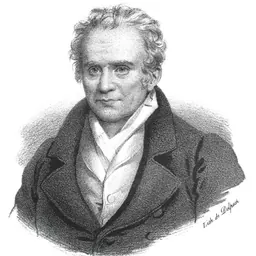
James Biddle (February 18, 1783 – October 1, 1848), of the Biddle family, brother of financier Nicholas Biddle and nephew of Capt. Nicholas Biddle, was an American commodore. His flagship was .
Education and early career Biddle was born in Philadelphia, where he attended the University of Pennsylvania. After graduating, he entered service in the United States Navy as a midshipman in 1800.
Retained in the navy reduction of 1801, Biddle served in the war against the Barbary pirates. The ship he was in, , struck rocks off Tripoli, and along with his commodore, William Bainbridge, he was kept imprisoned for 19 months.
During the War of 1812, Biddle was first lieutenant in . He was in command of the sloop in 1815 when she defeated . In 1817, he was sent to the Columbia River in to formally take over the Oregon Country for the United States, which was completed in 1818.
After the war, Biddle performed various duties in the Gulf of Mexico, the South Atlantic, and the Mediterranean. In 1830, Biddle and US consul David Offly negotiated and concluded a treaty with the Sublime Porte. The treaty was later used by U.S. diplomats to claim extraterritorial privileges for U.S. citizens in the Ottoman Empire.
Biddle and the USS Macedonian In the early nineteenth century, the prevalence of yellow fever in the Caribbean "led to serious health problems" and alarmed the United States Navy as numerous deaths and sickness curtailed naval operations and destroyed morale. A tragic example occurred in May 1822 when the frigate USS Macedonian left Boston and became part of Commodore James Biddle's West Indies Squadron. Secretary of the Navy Smith Thompson had assigned the squadron to guard United States merchant shipping and suppress piracy. During their deployment seventy six of the Macedonian officers and men died. Seventy four of these deaths were attributed to yellow fever. Biddle reported another fifty two of his crew were on sick-list. In his report to the Secretary of the Navy, Biddle and Surgeon's Mate Dr. Charles Chase state the cause as "fever". As a consequence of this loss Biddle noted his squadron was forced to return to Norfolk Navy Yard early. The Macedonian crew upon arrival were provided medical care and quarantined at Craney Island. Biddle upset at the loss of his crew wrote Smith Thompson " how deeply my feelings have been afflicted at the disturbing mortality & sickness and …. I hope you will order an investigation into the cause of the sickness on board."
Biddle told Thompson the Macedonian had been improperly fitted out in Boston and while there, the frigate's hold was never properly cleaned and that the filth and debris he discovered in the hold had led to the fever. Biddle consequently brought charges against Commodore Isaac Hull then in command at the Boston Naval Yard. Medical testimony during a court of inquiry however supported the conclusion that a drastic change in temperatures, dampness and tropical climate were the proximate cause of the fever, and "Much to Biddle's chagrin the court of inquiry found Hull not guilty." thumb
Expeditions to Asia
In December 1845, Biddle exchanged ratifications of the Treaty of Wanghia with China.
On July 20, 1846, he anchored with the two warships and in Uraga Channel at the mouth to Edo Bay in an attempt to open up Japan to trade with the United States, but was ultimately unsuccessful. Biddle delivered his request that Japan agree to a similar treaty to that which had just been negotiated with China. A few days later a Japanese junk approached Biddle's flagship, and requested his presence on board their ship to receive the Tokugawa shogunate's official response.
Seven years later, Commodore Matthew Perry did the task with four warships. Perry was well aware of Biddle's reception, and strove to make sure that he would not be treated in the same manner.
Biddle died in Philadelphia, and is buried at Christ Church Burial Ground in the family plot.
Don’t just read it —
keep it.
Full-length biographies made to live with: read them, listen on the way to work, watch them tonight.
- E-book
- Audio
- Video
Instant download · yours to keep · every purchase keeps this site free
Important facts
People in James Biddle's life
Named in this biography and alive at the same time



Related people
Same field, nearest in time

Contemporaries
People whose lives overlapped James Biddle's



Frequently asked questions
Who was James Biddle?
American commodore 1783-1848
When was James Biddle born?
James Biddle was born on 18 February 1783 in Philadelphia.
When did James Biddle die?
James Biddle died on 1 October 1848 in Philadelphia.
What was James Biddle's occupation?
James Biddle was a military officer, naval officer and soldier.
What nationality was James Biddle?
James Biddle was American.
Sources & further reading
Cite this page
APA: Biography.guide. (2026). James Biddle. https://biography.guide/james-biddle/
MLA: "James Biddle." Biography.guide, https://biography.guide/james-biddle/.
Chicago: "James Biddle." Biography.guide. https://biography.guide/james-biddle/.
Data last updated: 2026-09-23 · Spot an error? Report a correction.
Portrait: Wikimedia Commons · author & licence
Page generated 2026-09-27 05:06 UTC