
About James A. Bayard Jr.
Lived 1799 – 1880 (aged 80). James A. Bayard Jr. was an American politician and lawyer.
James Asheton Bayard Jr. (November 15, 1799 – June 13, 1880) was an American lawyer and politician from Delaware. He was a member of the Democratic Party and served as U.S. Senator from Delaware.
Early life
Bayard was born in Wilmington, Delaware, on November 15, 1799. He was a son of Nancy (née Bassett) Bayard and James A. Bayard, a member of the Federalist Party who served as U.S. Representative and U.S. Senator from Delaware.
His paternal grandparents were Dr. James Asheton Bayard and Ann (née Hodge) Bayard. The Bayard family was descended from a sister of Director-General Petrus Stuyvesant and came to Bohemia Manor, Cecil County, Maryland, in 1698. His maternal grandfather was Richard Bassett, a signatory to the United States Constitution and U.S. Senator from Delaware. the Philadelphia, Wilmington and Baltimore Railroad (for which service he is named on the 1839 Newkirk Viaduct Monument), and the Pennsylvania Railroad.
In 1846, Bayard represented slave owners in a civil suit against Thomas Garrett, a Wilmington iron merchant who was also a "stationmaster" on the Underground Railroad. The plaintiffs demanded damages from Garrett for helping around 10 slaves escape to freedom. The suit was tried in the U.S. District Court in New Castle, Delaware, before Chief Justice of the Supreme Court Roger B. Taney (sitting as a circuit judge). (Taney later issued the notorious Dred Scott decision as Chief Justice.) Bayard won a judgement that all but bankrupted Garrett, who declared on the spot that he would redouble his anti-slavery efforts: "Friend, I haven't a dollar in the world, but if thee knows a fugitive who needs a breakfast, send him to me".
Bayard was a conservative and adhered to his interpretation of tradition throughout the American Civil War. He believed the South should be allowed to secede peacefully, and privately hoped for the secession of Delaware and a state convention to address the issue. Citing property rights of owners, he opposed abolitionist measures. He also stated both his opposition to the Civil War and his opposition to any presidential or congressional acts used to suppress the independence of the Southern states.
Bayard's consistently pro-Southern position during the Civil War made him the target of frequent criticism from Republicans in Delaware and across the nation. In 1864, the Senate required all senators to swear an oath of loyalty to the Union. Bayard protested, stating that such an oath would be unconstitutional, and after taking the oath and giving a long speech disputing its legality, he resigned from the Senate.
Personal life
On July 8, 1823, Bayard was married to Anne Francis (1802–1864) by the Right Rev. Bishop William White.
James Asheton Bayard (1825–1848), who died unmarried. George Harrison Bayard (1832–1836), who died in childhood. Mabel Bayard (1838–1897), who married Dr. John Kintzing Kane Jr. (1833–1886), son of Judge John K. Kane, in 1863. After his death, she married Levi Clark Bird (1842–1902). Florence Bayard (1842–1898), who married Benoni Lockwood IV (1834–1909).
His wife died on March 11, 1864. Bayard died at Wilmington on June 13, 1880, and is buried there in the Old Swedes Episcopal Church Cemetery.
Descendants Through his son Thomas, he was a grandfather of U.S. Senator Thomas F. Bayard Jr., who married Elizabeth Bradford du Pont, and was the father of five, including Alexis I. du Pont Bayard, the Lieutenant Governor of Delaware from 1949 to 1953.
Almanac Senators were elected by the state legislature at this time – in this case the Delaware General Assembly – to a six-year term beginning March 4. Bayard was elected to a term beginning March 4, 1863, but resigned in 1864. George R. Riddle was appointed to serve the rest of the term, but died in 1867. Bayard was then appointed to serve the remainder of the term.
United States congressional service Dates Congress Chamber Majority President Committees Class/District1851–185332ndU.S. SenateDemocraticMillard Fillmoreclass 11853–185533rdU.S. SenateDemocraticFranklin Pierceclass 11855–185734thU.S. SenateDemocraticFranklin Pierceclass 11857–185935thU.S. SenateDemocraticJames Buchananclass 11859–186136thU.S. SenateDemocraticJames Buchananclass 11861–186337thU.S. SenateRepublicanAbraham Lincolnclass 11863–186538thU.S. SenateRepublicanAbraham Lincolnclass 11867–186940thU.S. SenateRepublicanAndrew Johnsonclass 1
Don’t just read it —
keep it.
Full-length biographies made to live with: read them, listen on the way to work, watch them tonight.
- E-book
- Audio
- Video
Instant download · yours to keep · every purchase keeps this site free
Important facts
Family & relationships
People in James A. Bayard Jr.'s life
Named in this biography and alive at the same time

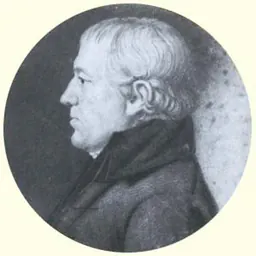


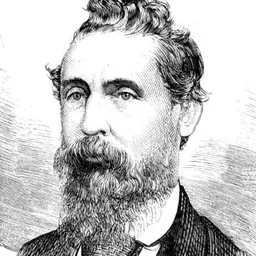


Related people
Same field, nearest in time
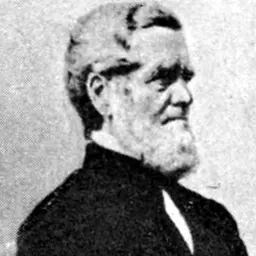
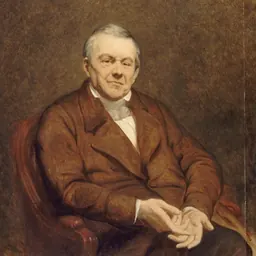



Contemporaries
People whose lives overlapped James A. Bayard Jr.'s





Frequently asked questions
Who was James A. Bayard Jr.?
American politician (1799-1880)
When was James A. Bayard Jr. born?
James A. Bayard Jr. was born on 15 November 1799 in Wilmington.
When did James A. Bayard Jr. die?
James A. Bayard Jr. died on 13 June 1880 in Wilmington.
What was James A. Bayard Jr.'s occupation?
James A. Bayard Jr. was a politician and lawyer.
What nationality was James A. Bayard Jr.?
James A. Bayard Jr. was American.
Sources & further reading
· Wikipedia: James A. Bayard Jr.
· DBpedia: James A. Bayard Jr.
Cite this page
APA: Biography.guide. (2026). James A. Bayard Jr.. https://biography.guide/james-a-bayard-jr/
MLA: "James A. Bayard Jr.." Biography.guide, https://biography.guide/james-a-bayard-jr/.
Chicago: "James A. Bayard Jr.." Biography.guide. https://biography.guide/james-a-bayard-jr/.
Data last updated: 2026-09-26 · Spot an error? Report a correction.
Page generated 2026-09-27 05:13 UTC